After an early wake up call and trip to the airport after our one night in Johannesburg we landed at Windhoek Airport just before 9 am. We met our guide Berron for our three day desert and dunes tour of Namibia in the airport. He drove us into the capital city where we had a few hours to explore since our tour did not officially start until the afternoon.
Windhoek is a smaller city with a population of 400k but quite bustling nonetheless. In fact the whole country of Namibia is fairly low population of only 2.2m despite its geographic size. It has one of the lowest population densities in the world (and after our drives later in the day we could certainly see why). The landscape driving to the capital is very arid with mostly low bushes, and lots of red soil with rocks. We even saw baboons and warthogs along the way. Because the capital is situated at a fairly high altitude (1700m) and between a few different mountain ranges, the airport is quite far away where there is more flat ground.
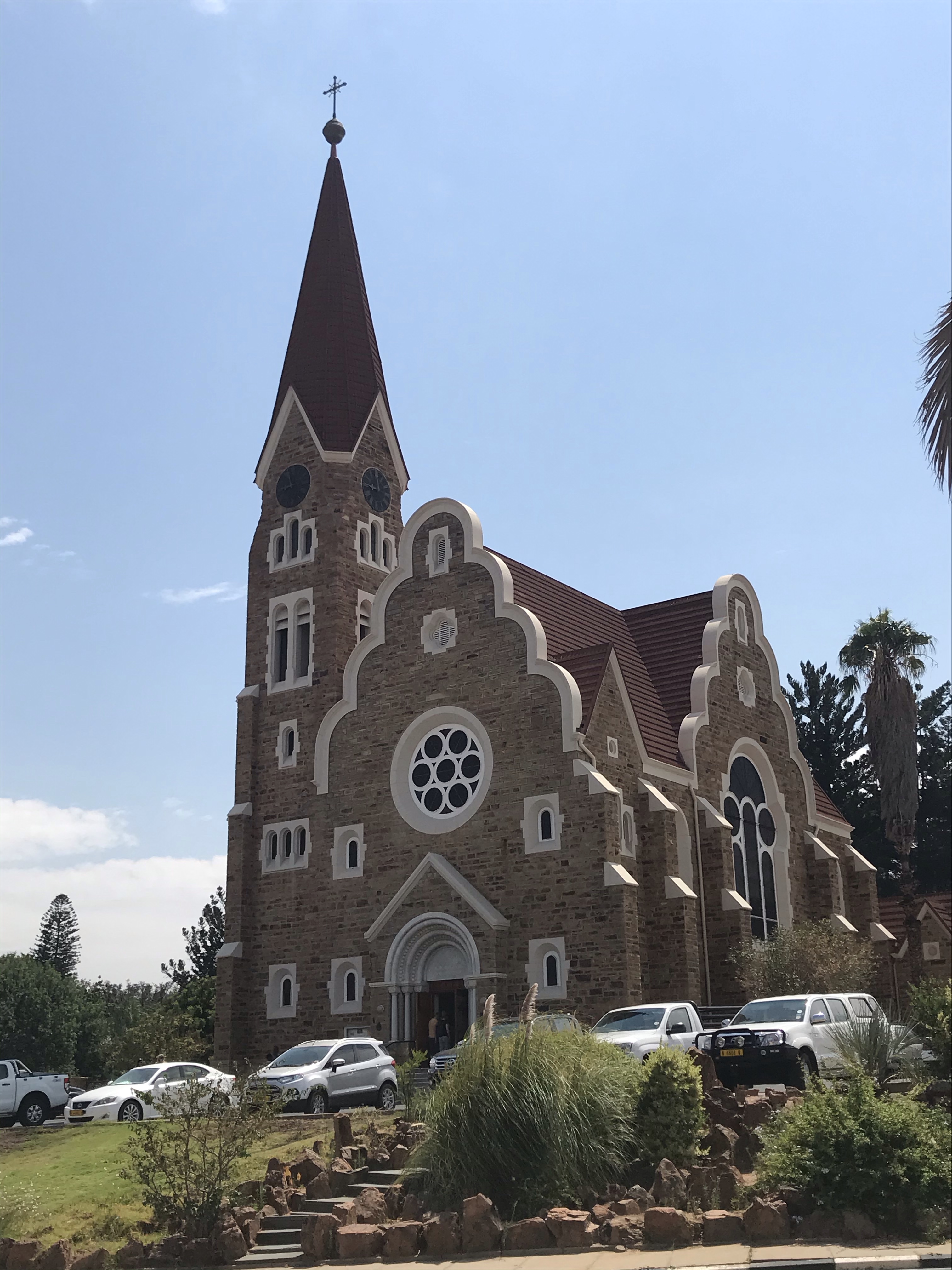
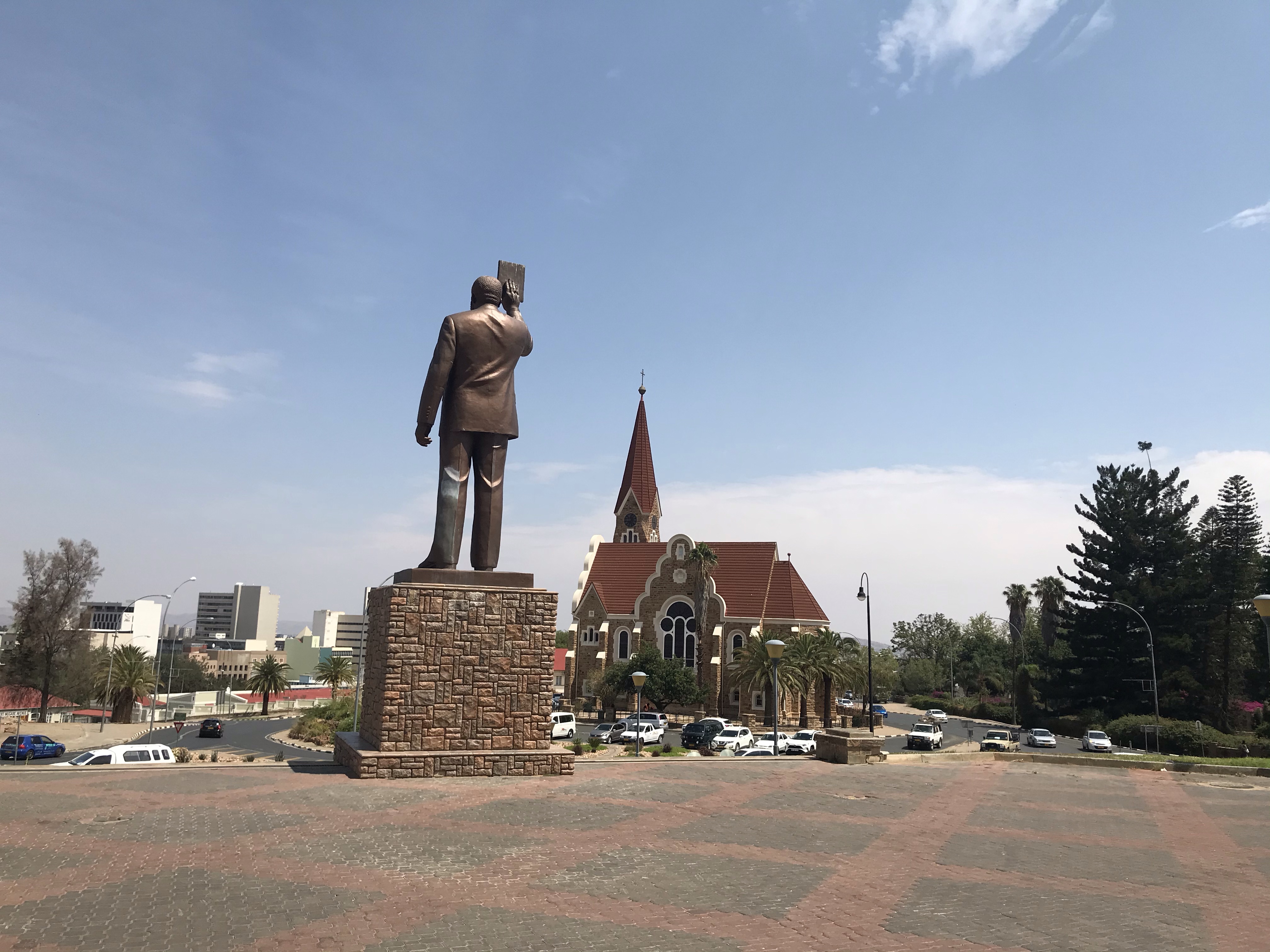
In our few hours in the city we walked around the Main Street, visited the well know church, and spent some time at the Namibian Independence Museum learning a bit more about the history, from German colonization which lasted until around 1915, followed by South Africa taking over the county to ‘look after them’ but ultimately in later years instituting apartheid, and finally Namibian independence which was gained in 1990. It is a young country at only 29 years old but as our guide later explained very peaceful and with no ill resentment toward its former colonizers.
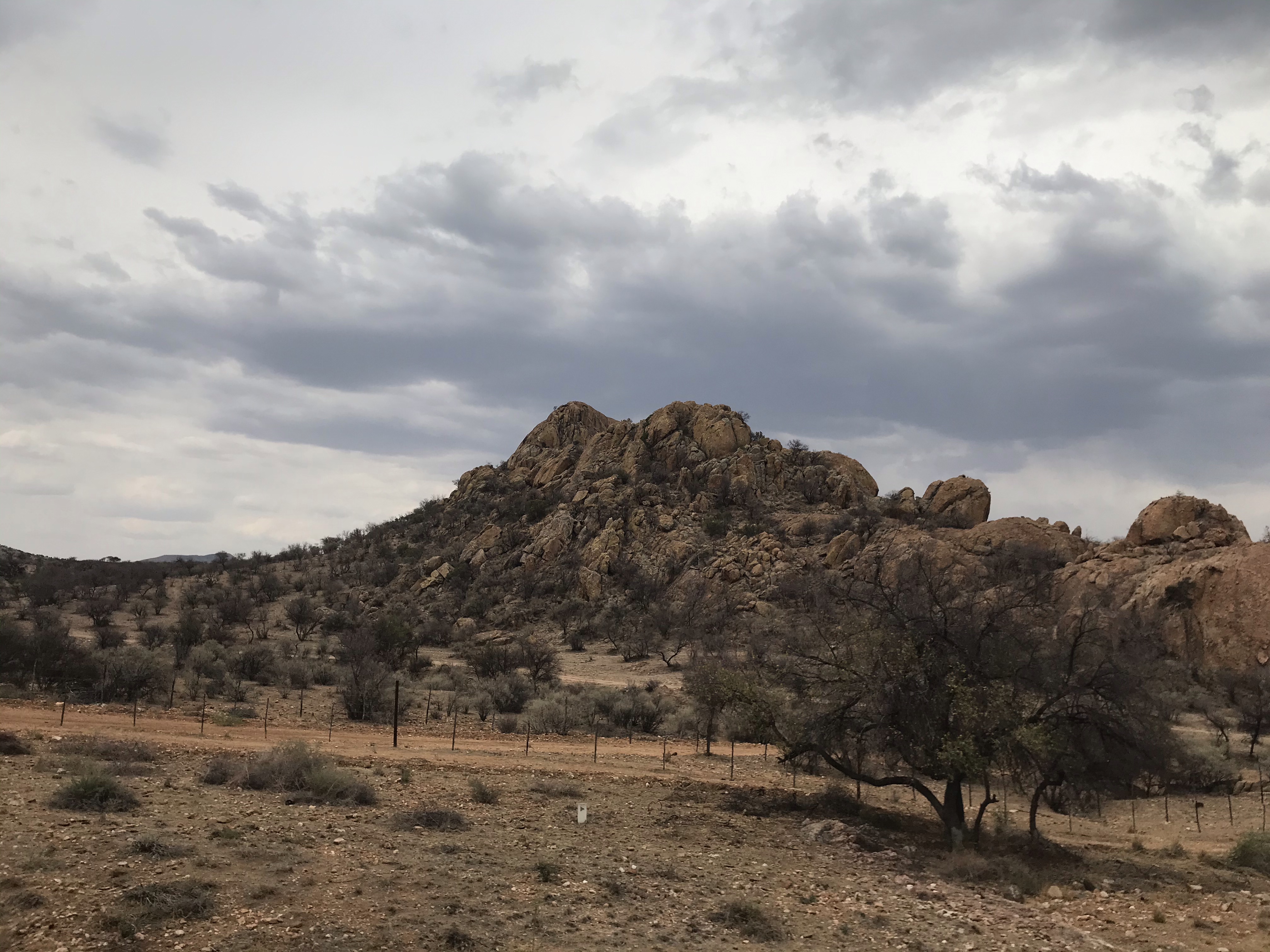
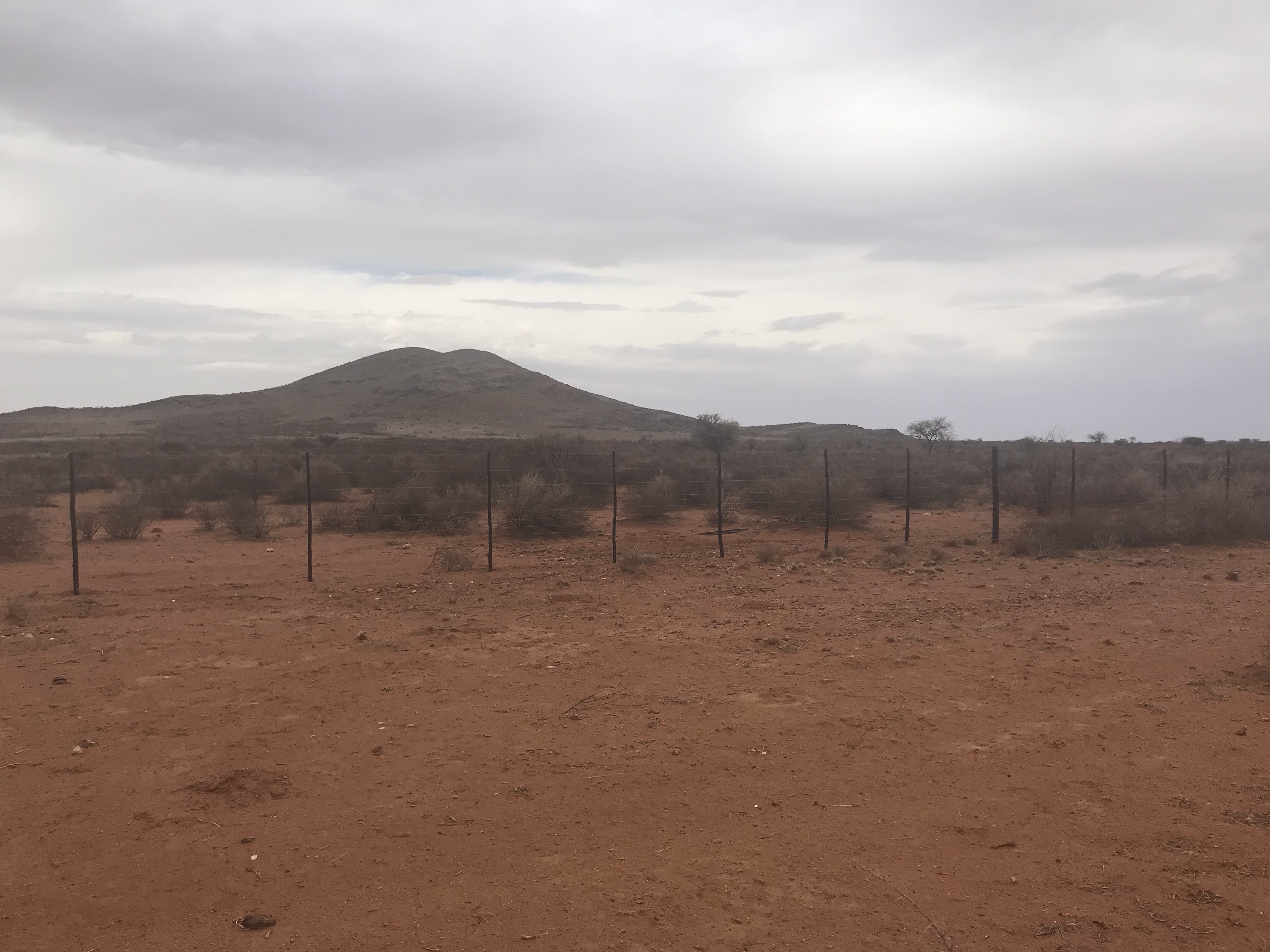
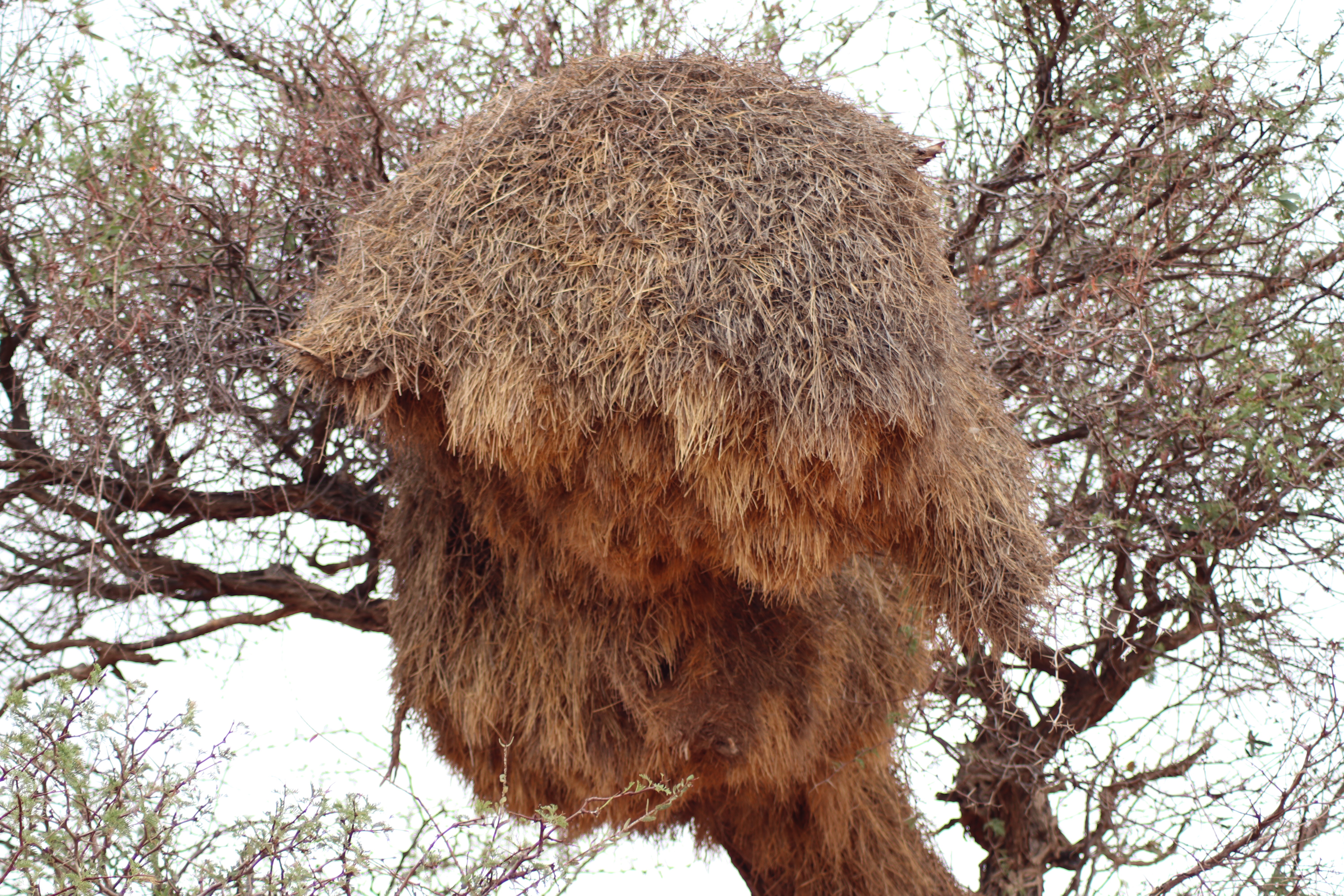
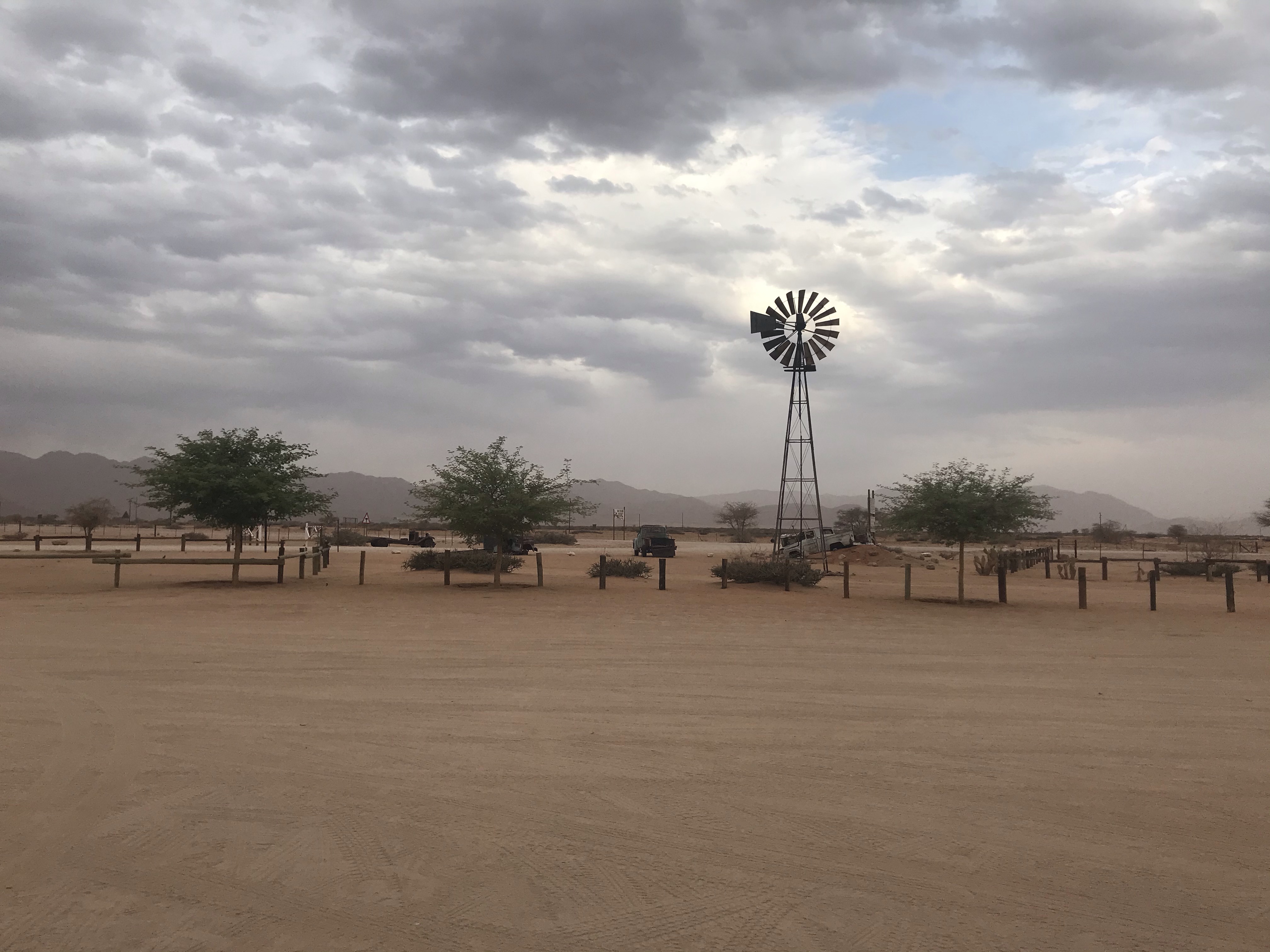
We re-met Berron and the rest of our group after lunch and set off in our vehicle on a 4-5 hour drive bouncing around mostly gravel roads to the lodge we are staying in the next two nights in the desert. There are four others in the group besides us – 2 from Australia and 2 from Austria. Along the way we saw a lot of interesting landscapes and made a few stops in the desert, including at Spreetsgoogte Pass, which is one of the steepest and most beautiful passes in Namibia, overlooking miles of mountains and sands. We also stopped at a town appropriately called Solitaire which had a gas station, general store, lodge, and very few houses. One other stop along the way was to learn about nests built by the weaver birds – which are a type of sparrow that build these massive nests out of twigs that they live in for years and years. There was really not much civilization on this drive – a few farmhouses here and there, but not much else. Agriculture is a big industry in Namibia which consists mostly of beef because the soil types and climate make it difficult to grow a lot of different crops. The other major industries are mining, fishing, and tourism. We also saw our first glimpse of wildlife – springbok, the national animal of South Africa, and the oryx which is the national animal of Namibia – both of which are types of antelope.
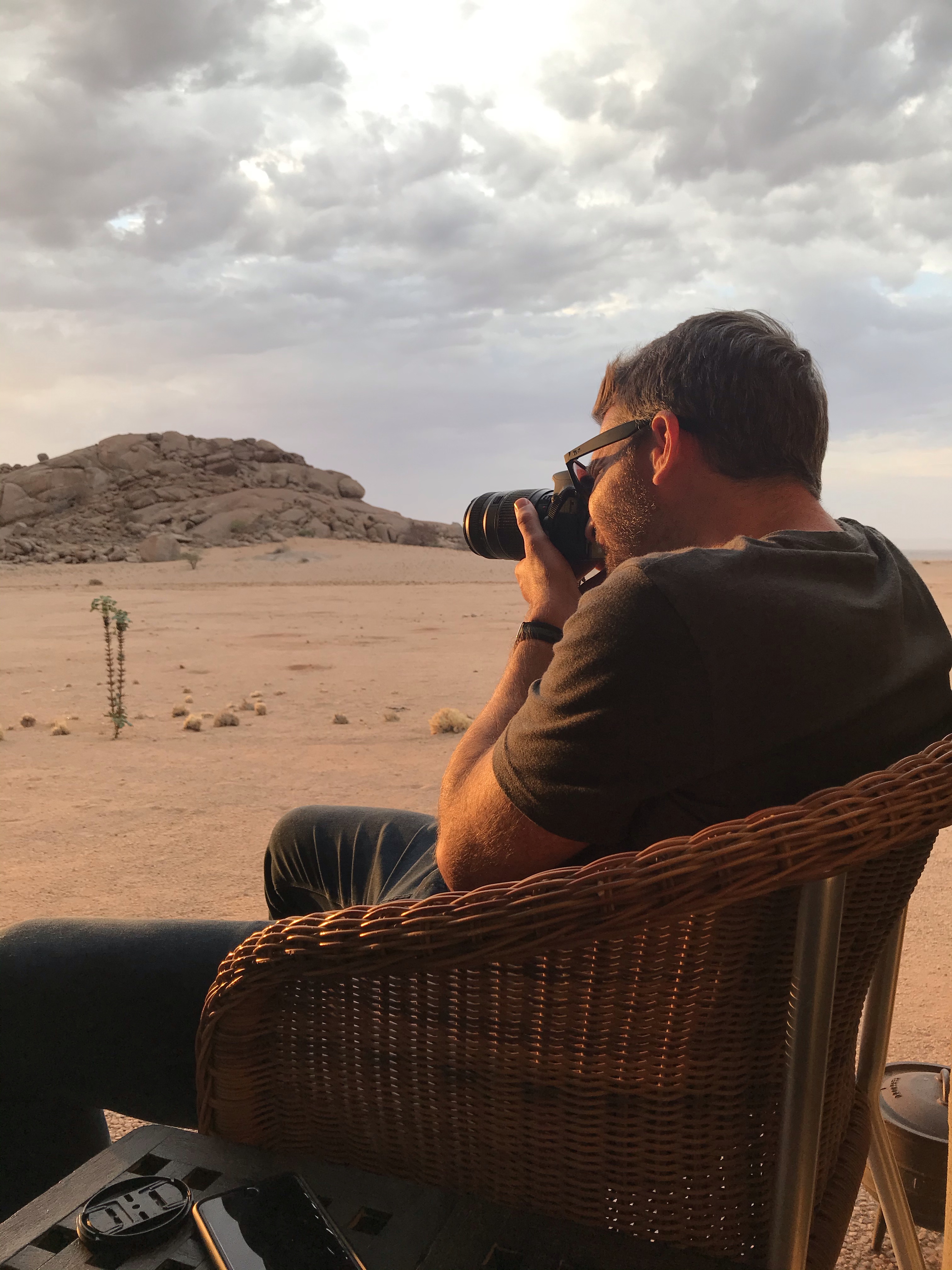
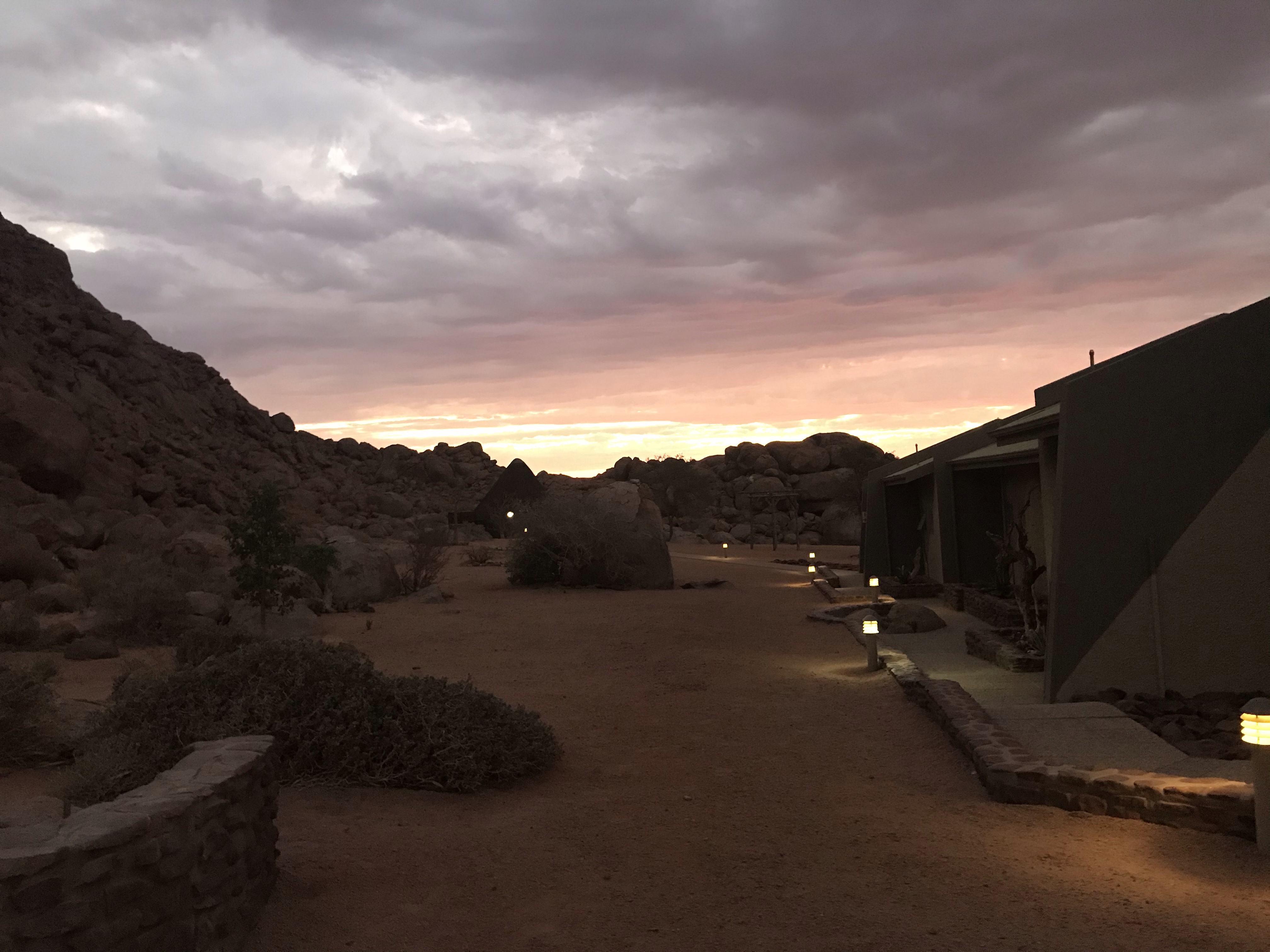
We arrived to the lodge and were shown to our rooms. As soon as we opened the curtains we saw that our patio had an incredible view out to the desert ahead. With any luck we might see some animals wandering by over the next few days. We sat on the patio and watched as the sun went behind the clouds and the horizon, lighting up the surrounding area in beautiful colors. Our hour of free time after checkin ended quickly and it was time for dinner where we moved back to the lodge our new friends and guide. The meal consisted of butternut squash soup, oryx and polenta (yes that same oyrx that is the national animal and we saw earlier that day), and a delicious (and probably very local) beef filet. We would have a very early wake up call tomorrow – 4:15 to be exact – and headed to bed quite early. The next day we were headed for the sand dunes in Sossusvlei, about 2 hrs drive fr the lodge. The key was getting there just after sunrise before the sands and dunes were too hot and the desert heat rolled in and also prior to the dozens of tourist drivers after gate opening at 6:15AM.
The next morning, ready to go with a cup of coffee in us, we set off at 5:15 am. It was a one hour drive to the entrance of the national park where the gates opened there at 6:15 and nearly another hour until we would reach our first stop in the Namib Naukluft Park. Compared to where our lodge was, the weather was significantly cooler when we reached the park due to the proximity to the ocean. We were now only 40km from the sea with cool Atlantic breezes blowing in. (This would quickly change, however, as the sun came out and temperature hit close to 100 prior to our departure).
The scenery really began to change once we entered the park with less of the rocky/gravel formations we had become used to with large red and orange sand dunes coming into view. The color comes mostly from the iron oxide in the sand – but you also find small streaks of black in the sand from the magnitite, a magnetic metallic material. Our guide even showed us with a magnet at one point how you could separate these particles from the sand – and told us people with real compasses (not the iPhone one) are in real trouble here because they will not work. The weight of these materials in the sand is also part of the reasons the dunes do not shift at their bases; merely the shape of the crests will change if there is heavy wind. The dunes are over 50 million years old and sit along and within the Tsauchab river bed – which has been dry since 2011. That’s right – 2011. Historically there have been significant rains filling the riverbed for a few months every 7 to 10 years, so they could be due for one soon.
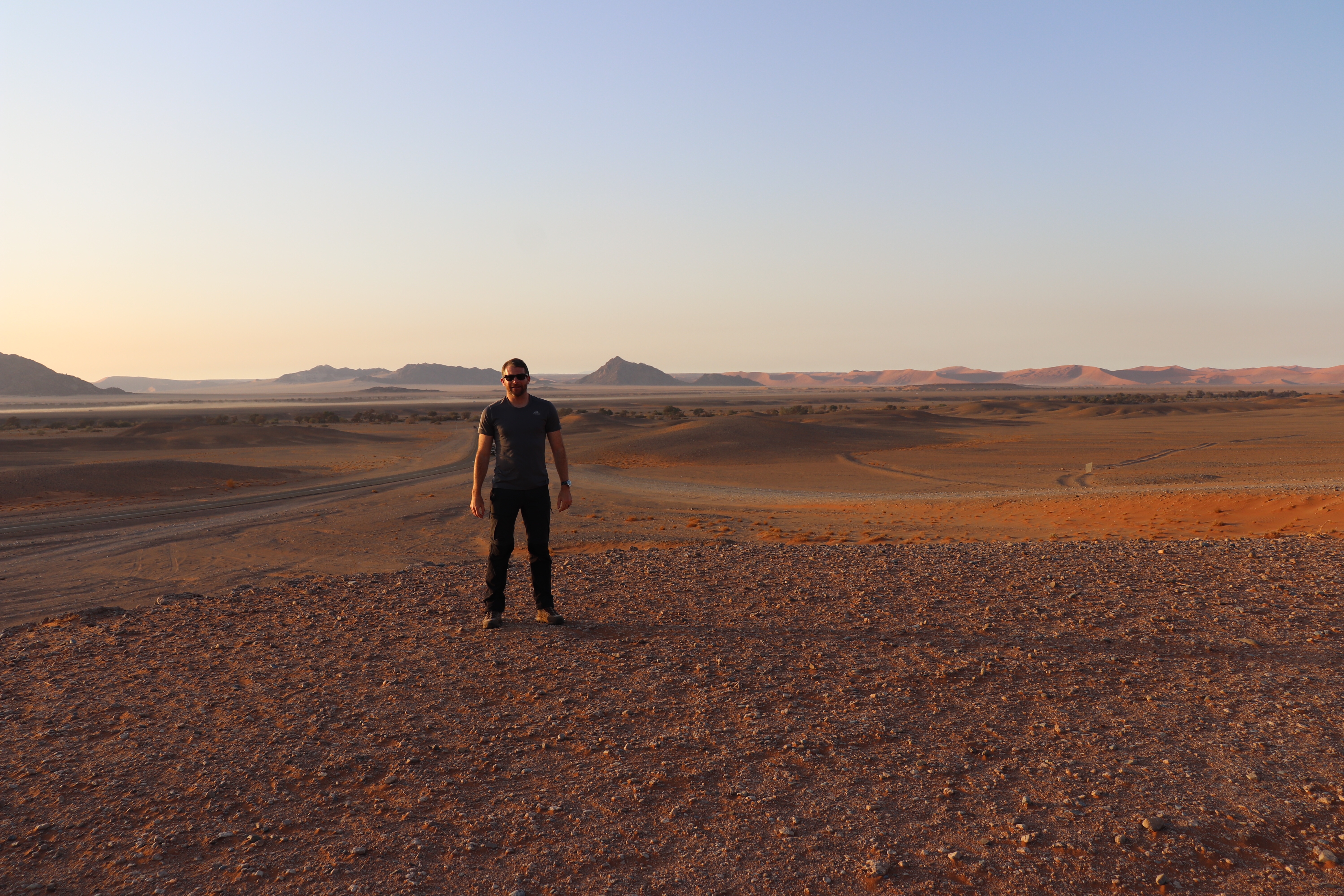
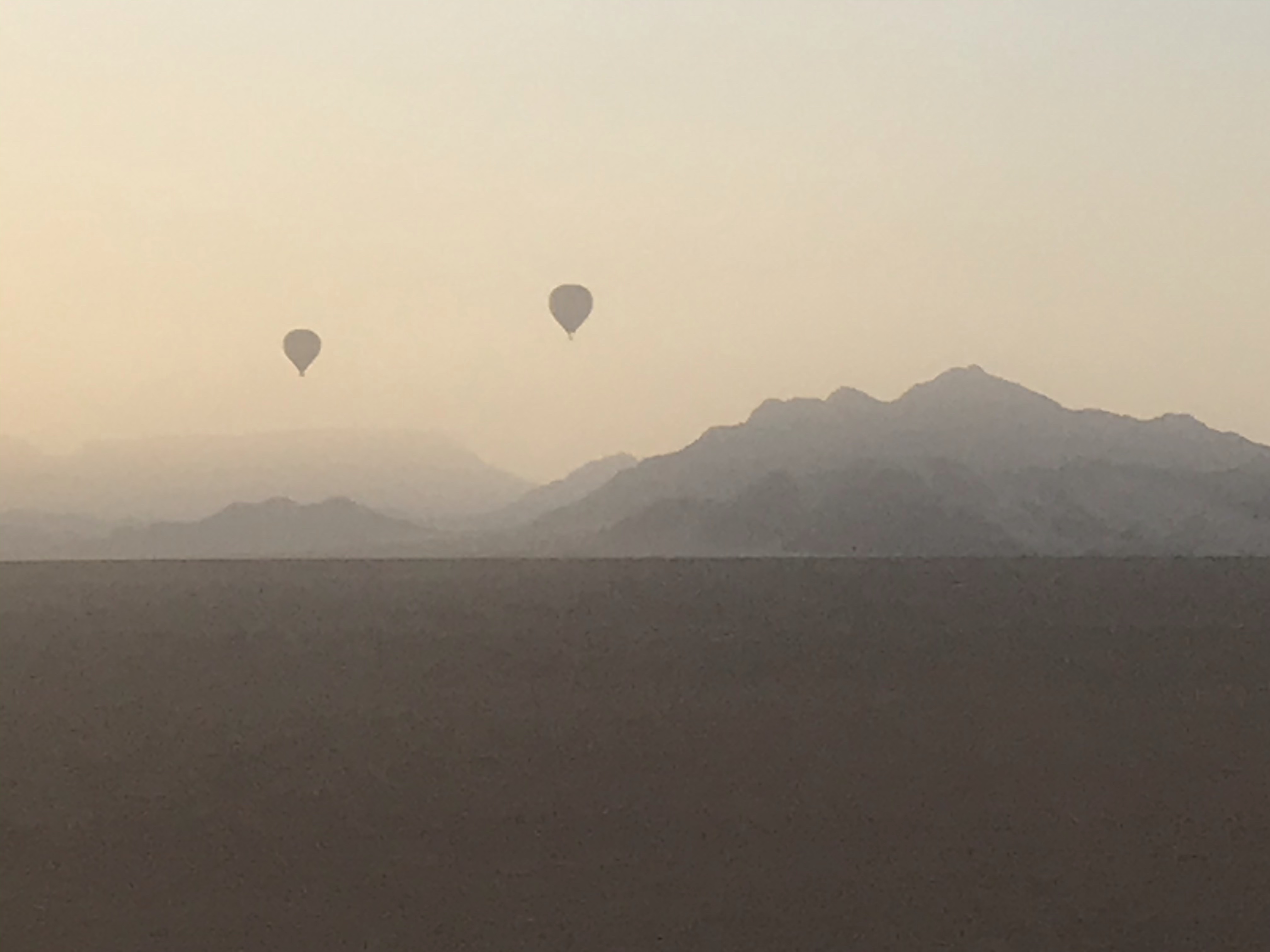
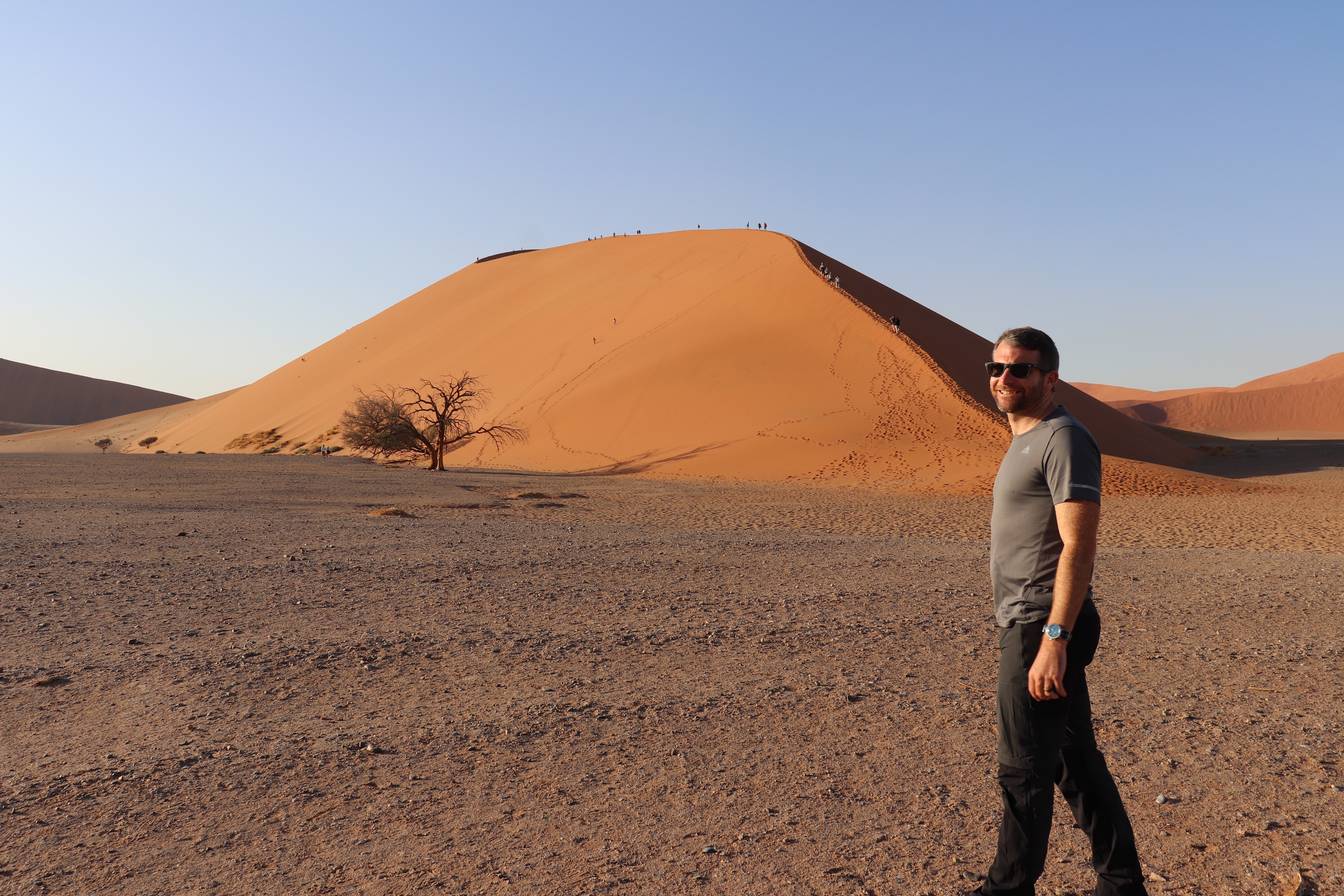
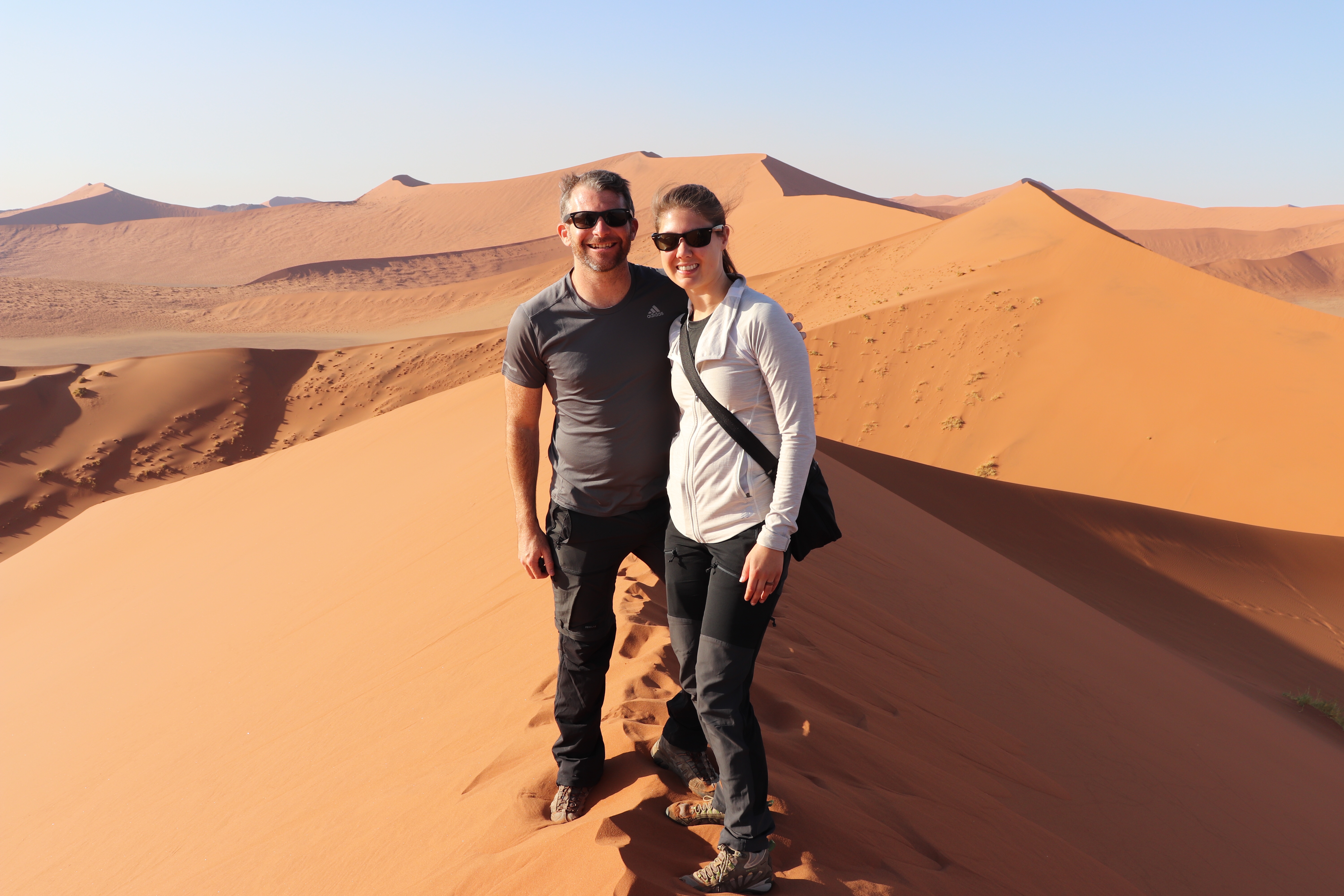
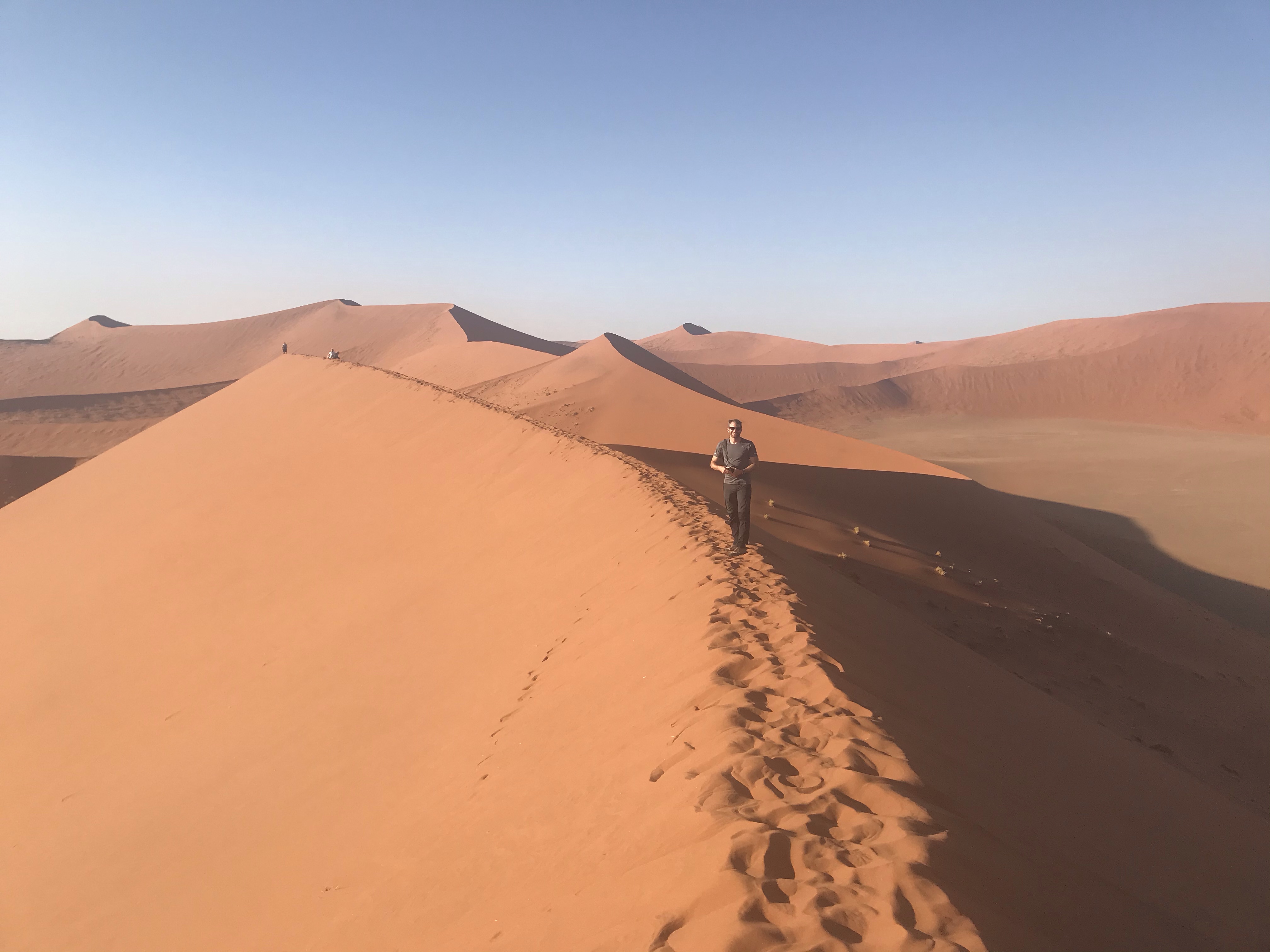
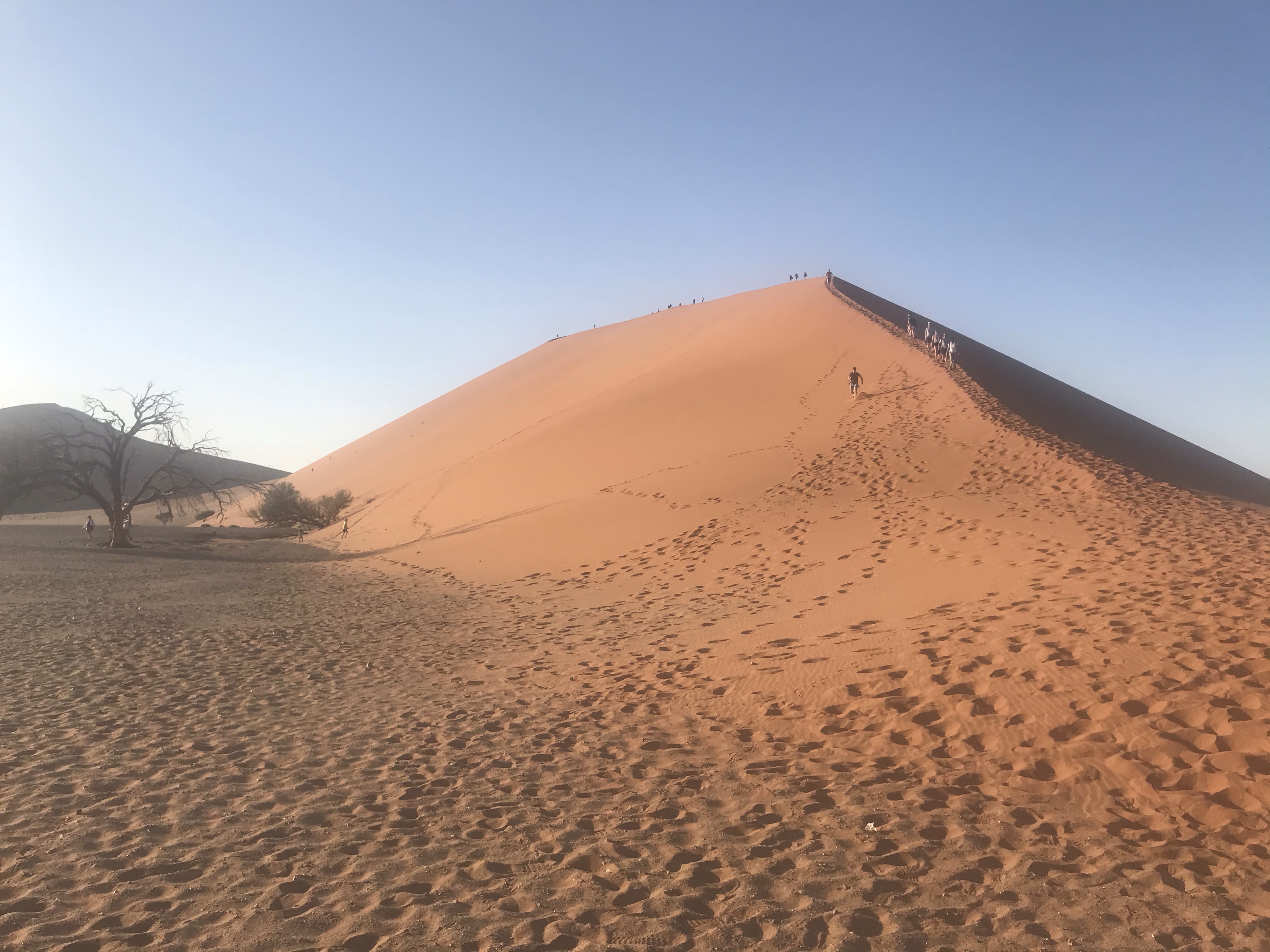
We came to kilometer 45 along the road and saw the (aptly named) Dune 45 next to it – the 200m dune we would have our hand at climbing. We thought we had left behind hiking as the sun came up in Tanzania, but the climb to the top of the dune was really spectacular and worth the early wake up. It was a bit tougher on the legs than the the daily hikes we had done recently in that we were climbing through sand the entire time, sinking in a bit with each step. We made our way to the top along the crest of the dune in about 30 minutes and enjoyed the magnificent views in every direction along the way. Coming down is a much easier affair and you have a few options. You can take that same path or you can go for a run / tumble / slide down any point you wish. Fred went for the slide but with the thick sand it was hard to get too far and he ended up astronaut walking the rest of the way. Later in the day as we passed back by the dune on our drive out we could see all the footprints, tumbles, and slides had been wiped away in the sand by the wind.
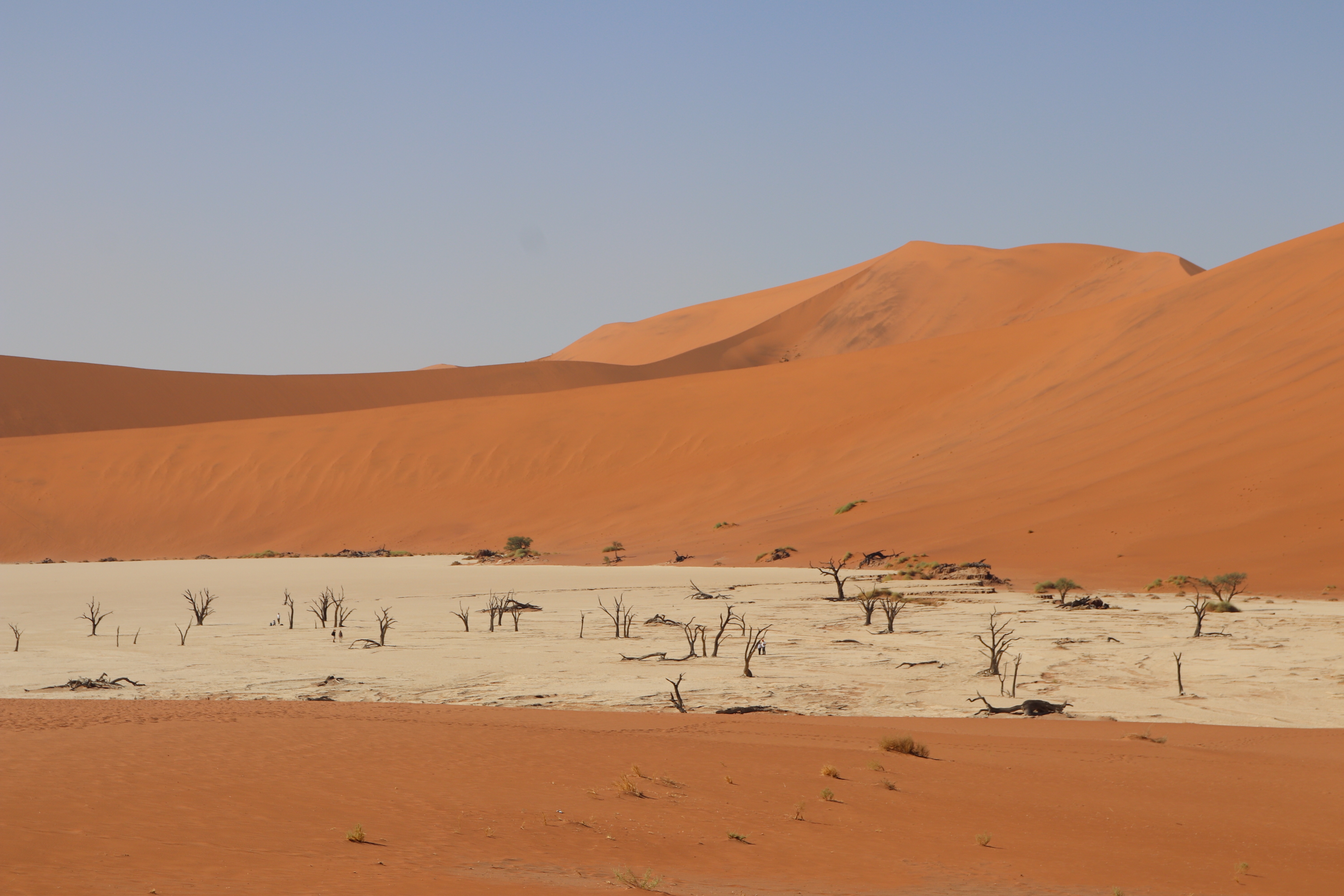
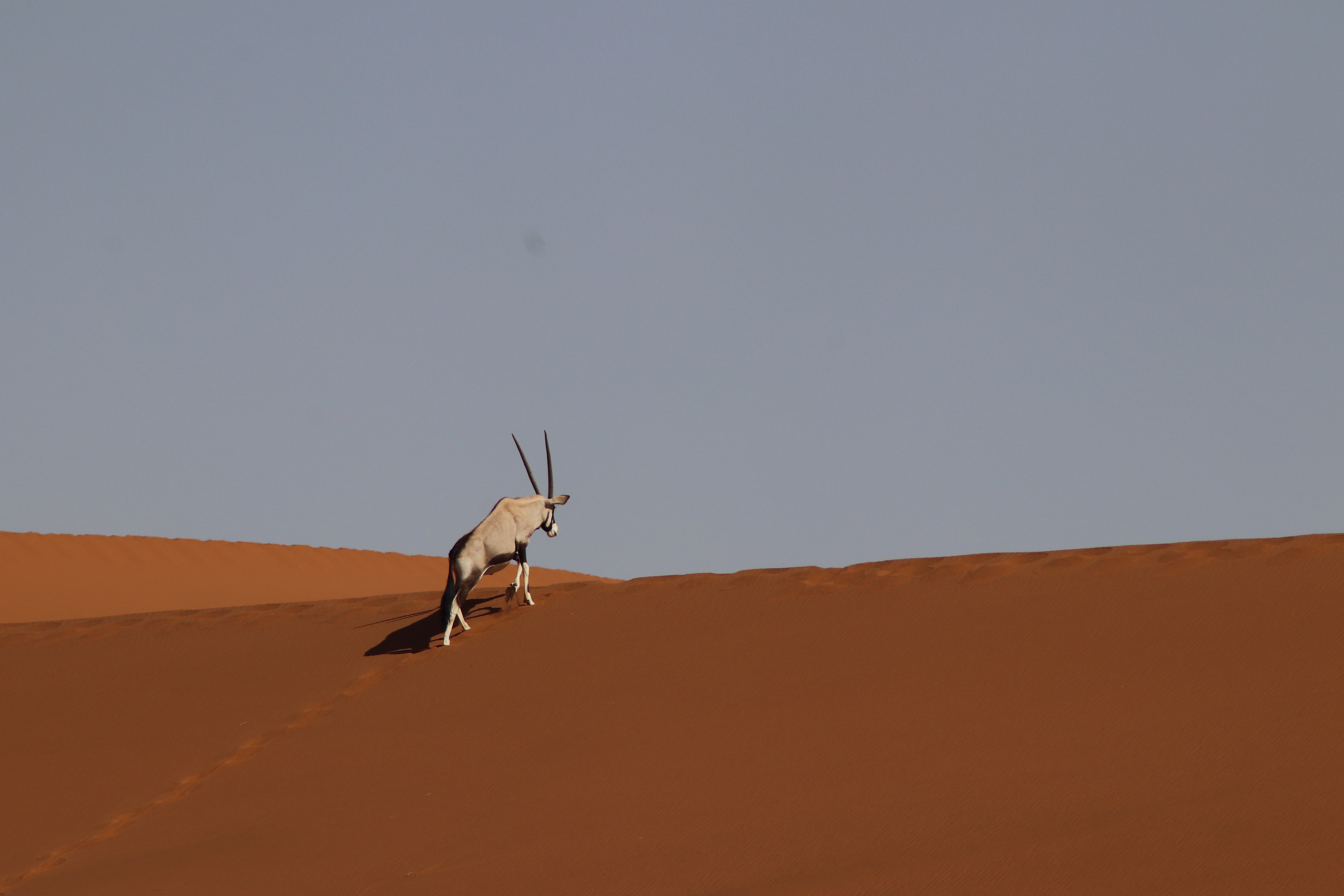
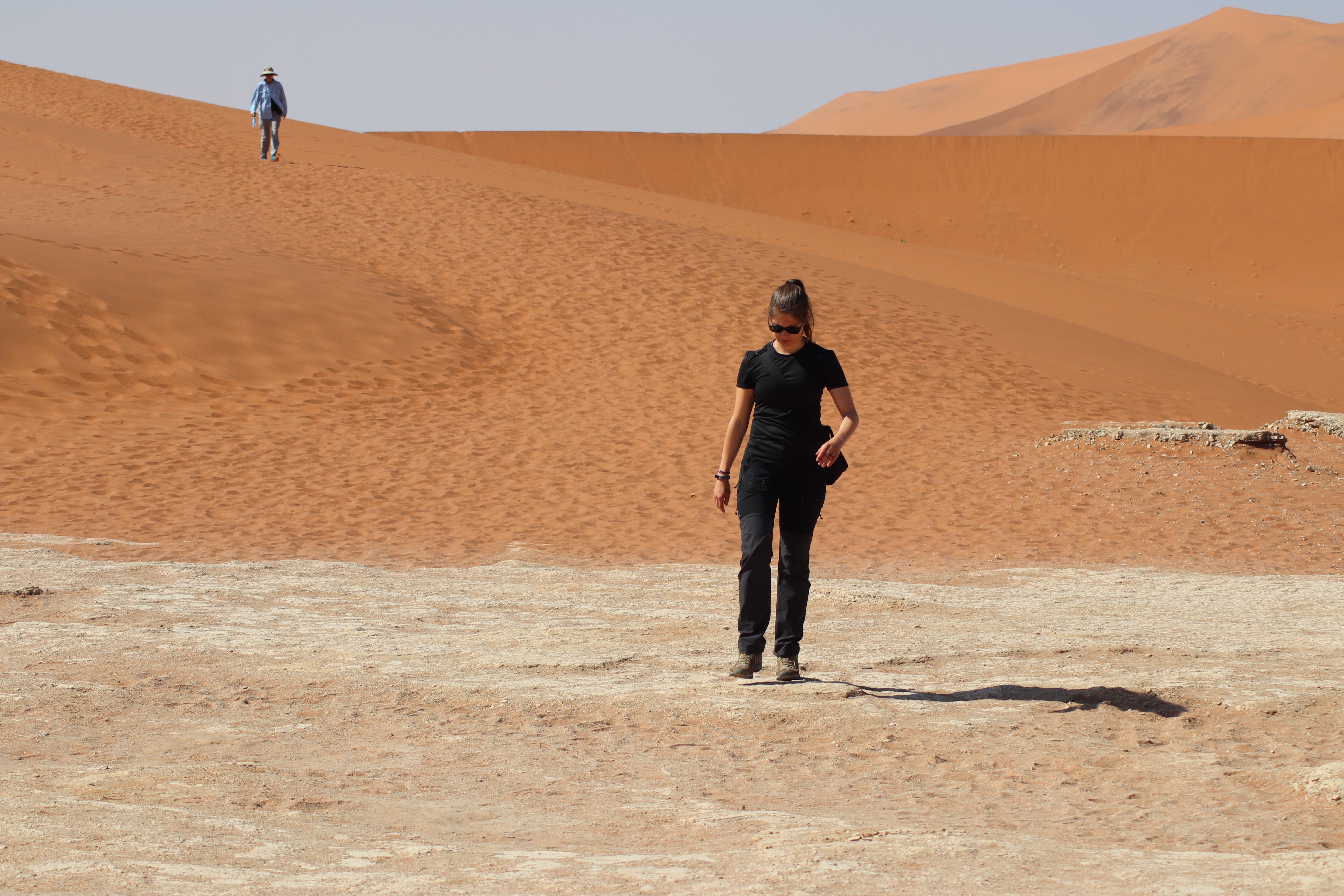
The path through the main part of the park is tarred (since there would be too much dust with so many cars traveling on it) but soon it was back to off-roading time – this time sand instead of gravel. Only 4×4 cars are allowed past this point – we could understand why when we saw a smaller vehicle being pushed as it was stuck in the sand. We bounced around much more in the car on the sand but luckily we didn’t have too far to go, and soon approached the tallest dune (350m tall) which is also know as Big Daddy. Our guide told us it typically takes 2-2.5 hours to reach the top, and we watched as people were starting to climb it even as the heat was rolling in. Our destination however was next to Big Daddy and we walked for a bit through patches of the dunes to reach Dead Vlei. This is an old dried up water bed that has not had water from the river in hundreds of years and has dead trees that are all 900+ years old sitting all throughout it. While we were walking through an oryx came by and we paused for a bit to admire and catch some great pictures on its slow walk.
Then it was time for a picnic breakfast under one of the massive camel thorn trees which are found in the park. These are one of the few trees that can survive in the desert because their roots are so long they can stretch under the ground up to 60m long to find underground water sources and are not dependent on rain. After breakfast we saw Sossusvlei (cue Fred singing Phil Collins all day) which is the river bed that marks the end of the Tsauchab River, which no longer flows all the way to the Atlantic as it is now – and has been for years – blocked by the dunes. We could really feel the heat now and made a quick stop at the Sesriem Canyon before making the drive back to the lodge.
Back at the lodge we were greeted with a complementary beer as South Africa had just won the Rugby World Cup and the bartender and others were celebrating the win. We had a small lunch outside and then spent some time sitting by the pool, observing as some weaver birds were bringing sticks back and forth and building what would eventually turn into one of the massive nexts we saw. It was interesting to watch these tiny birds bring twig after twig to the nest and put them in place.
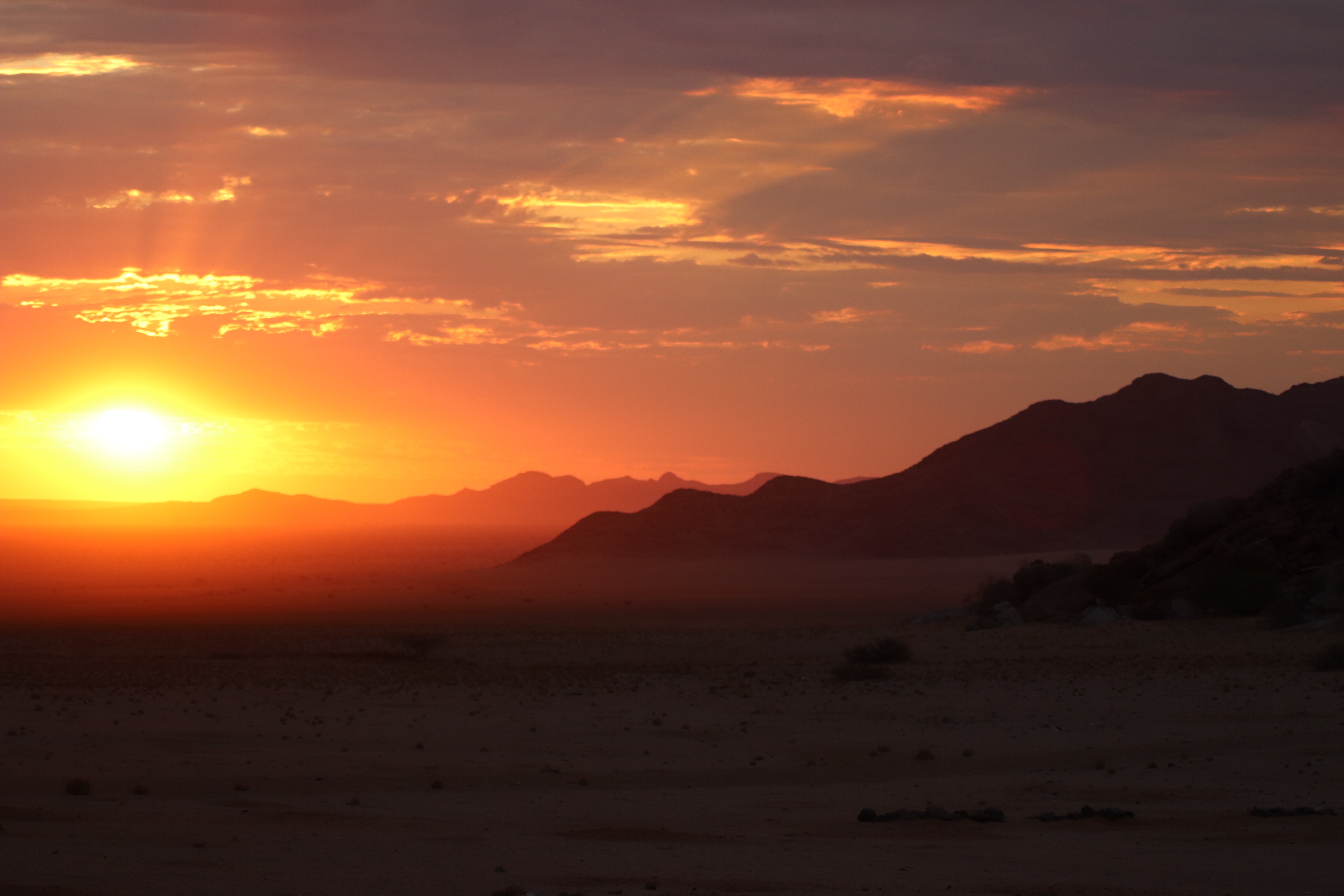
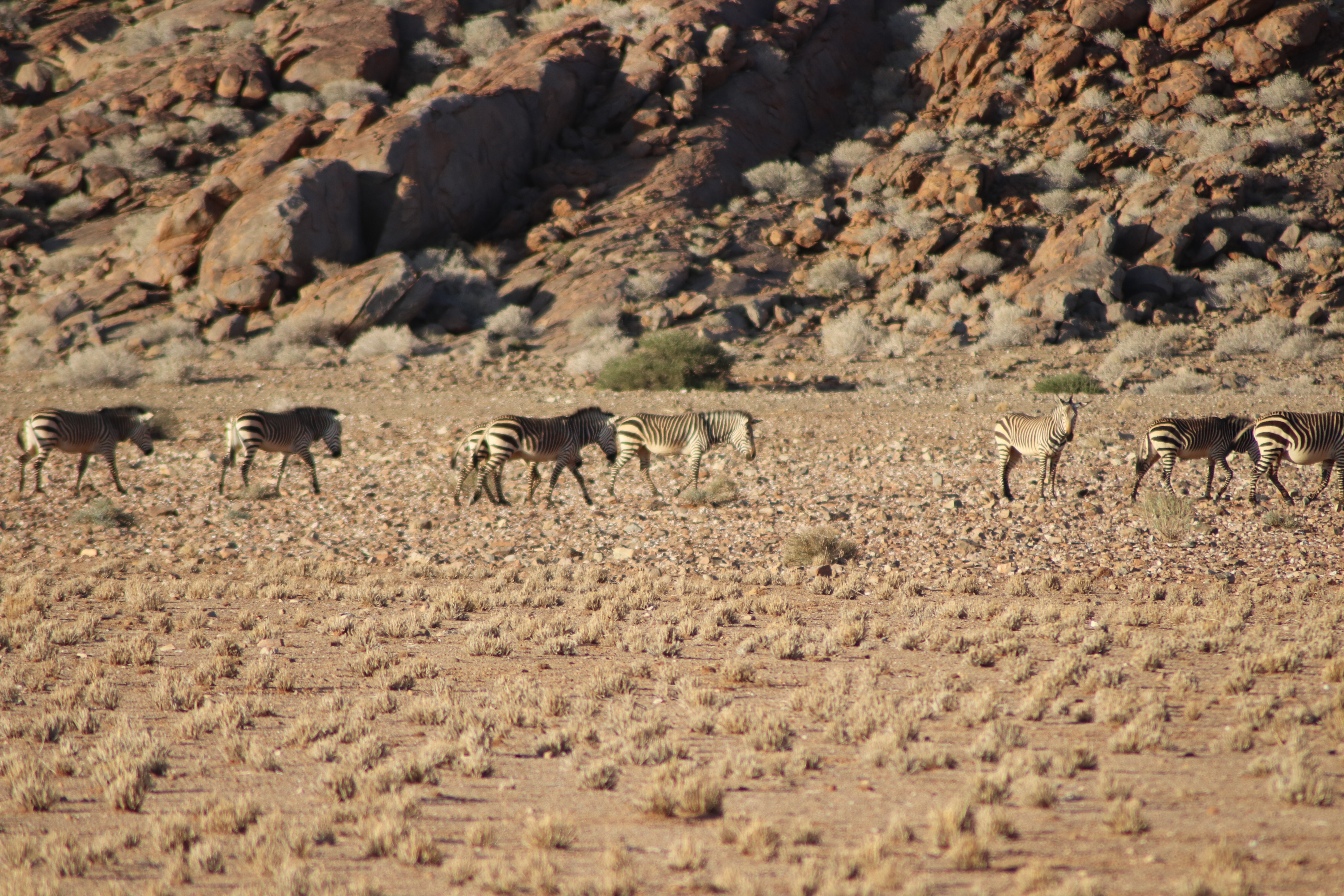
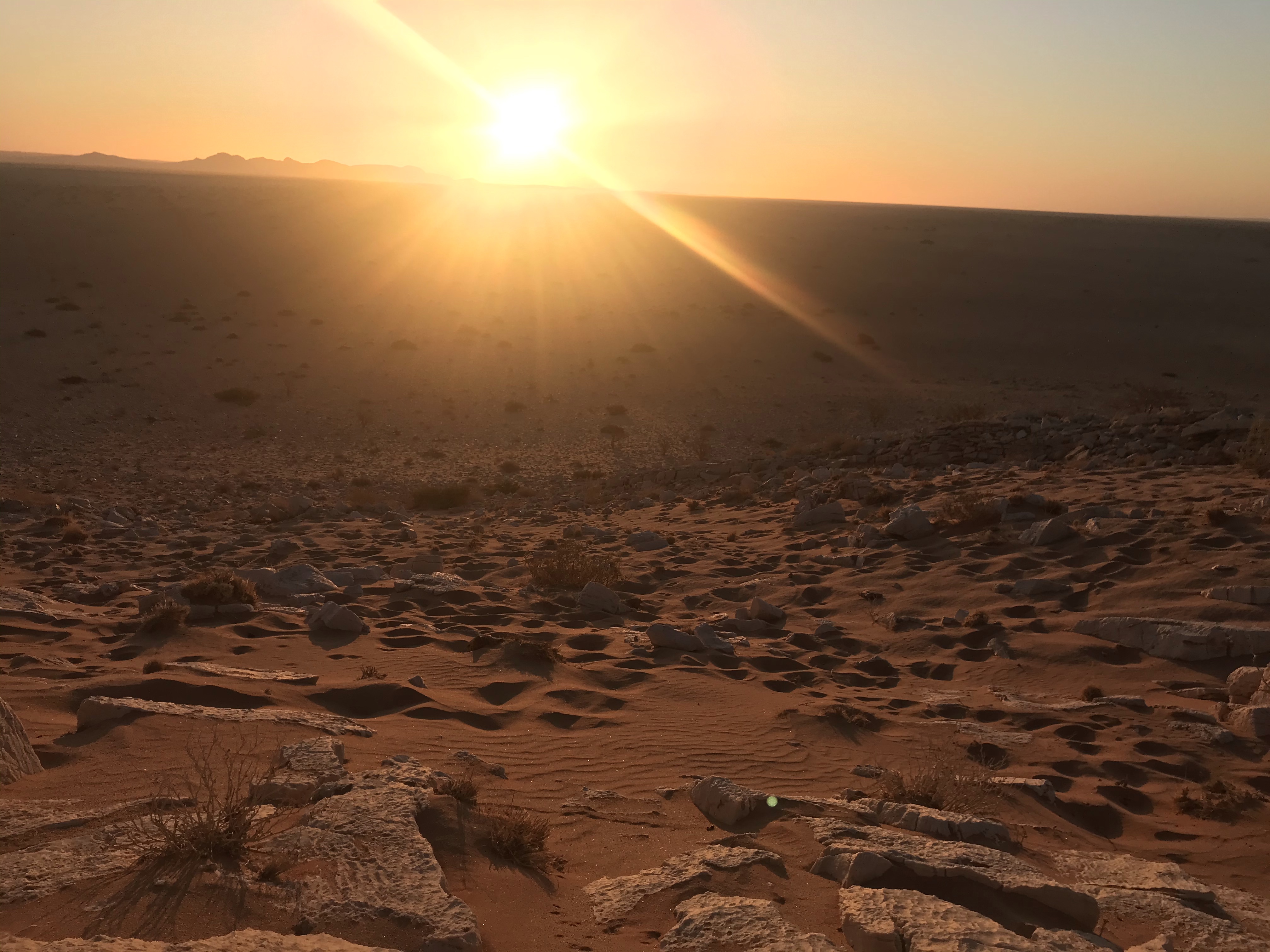
That evening we went for a sundowner drive on the property of the lodge which is quite large. We drove 15km from where the lodge was to watch the sunset and still had not reached the end of the property. Along the way we had another few spottings of Namibian wildlife – more oryx and springbok and our first view of a pack of mountain Zebras. We watched them for a while in the distance but it was also clear they were watching us. Finally we came to the Marble Mountains which were mountains on the property that were in fact made of marble. We learned that due to the extreme heat and cold over the years the marble could not be mined due to their fragmented state. So as we began our sunset watch, we found smashed pieces of marble to sit on, sipped on a sundowner drink, and watched as the sky filled with reds and yellows and purples in front of us as the sun went beyond the horizon. We returned to the lodge by twilight where we had another delicious dinner. While we were sitting eating on the patio, two wildebeest came up out of the darkness the watering hole just a few feet away for a drink. It was another reminder that we were really sleeping and living among the wildlife over the past days.
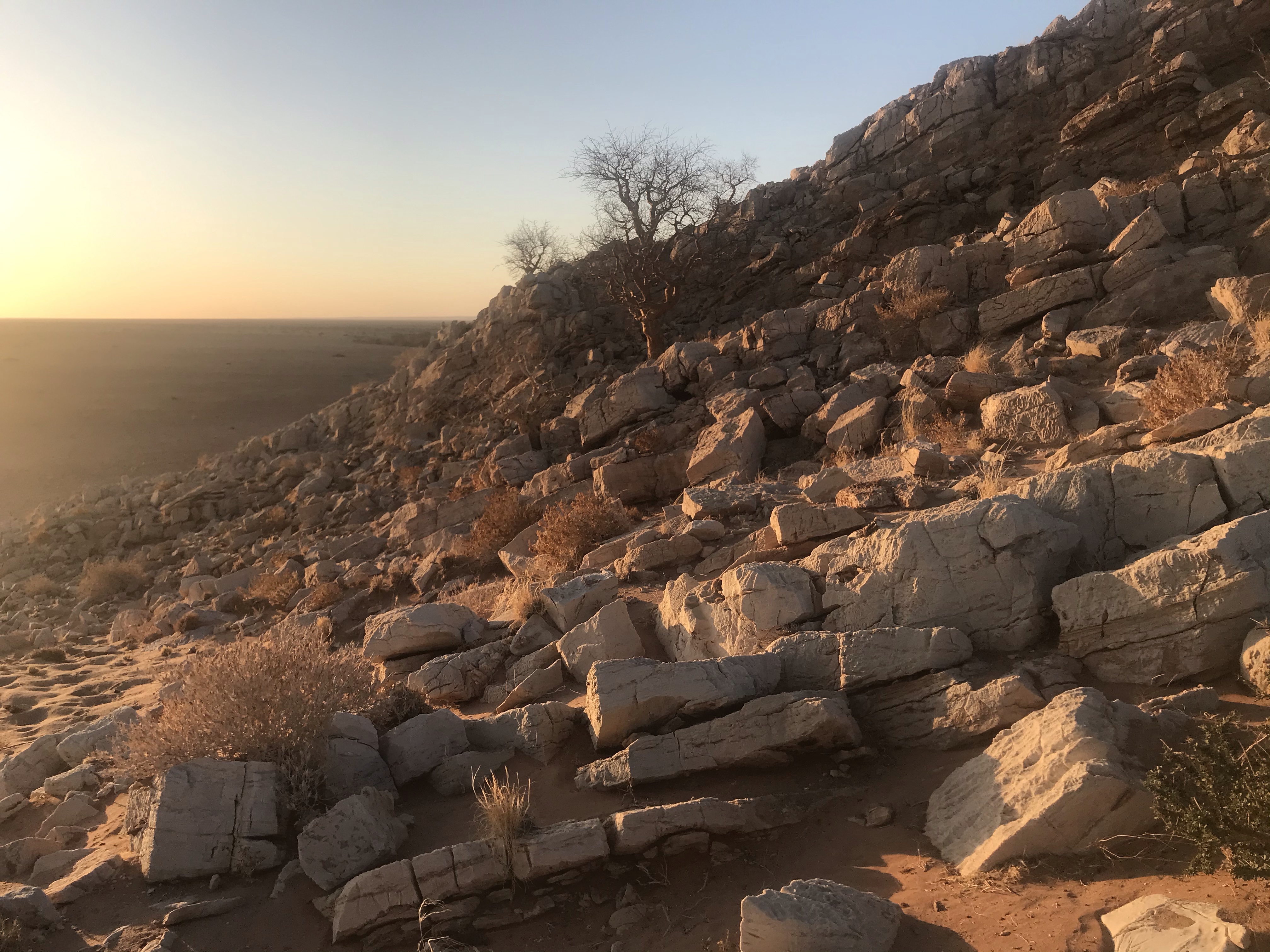
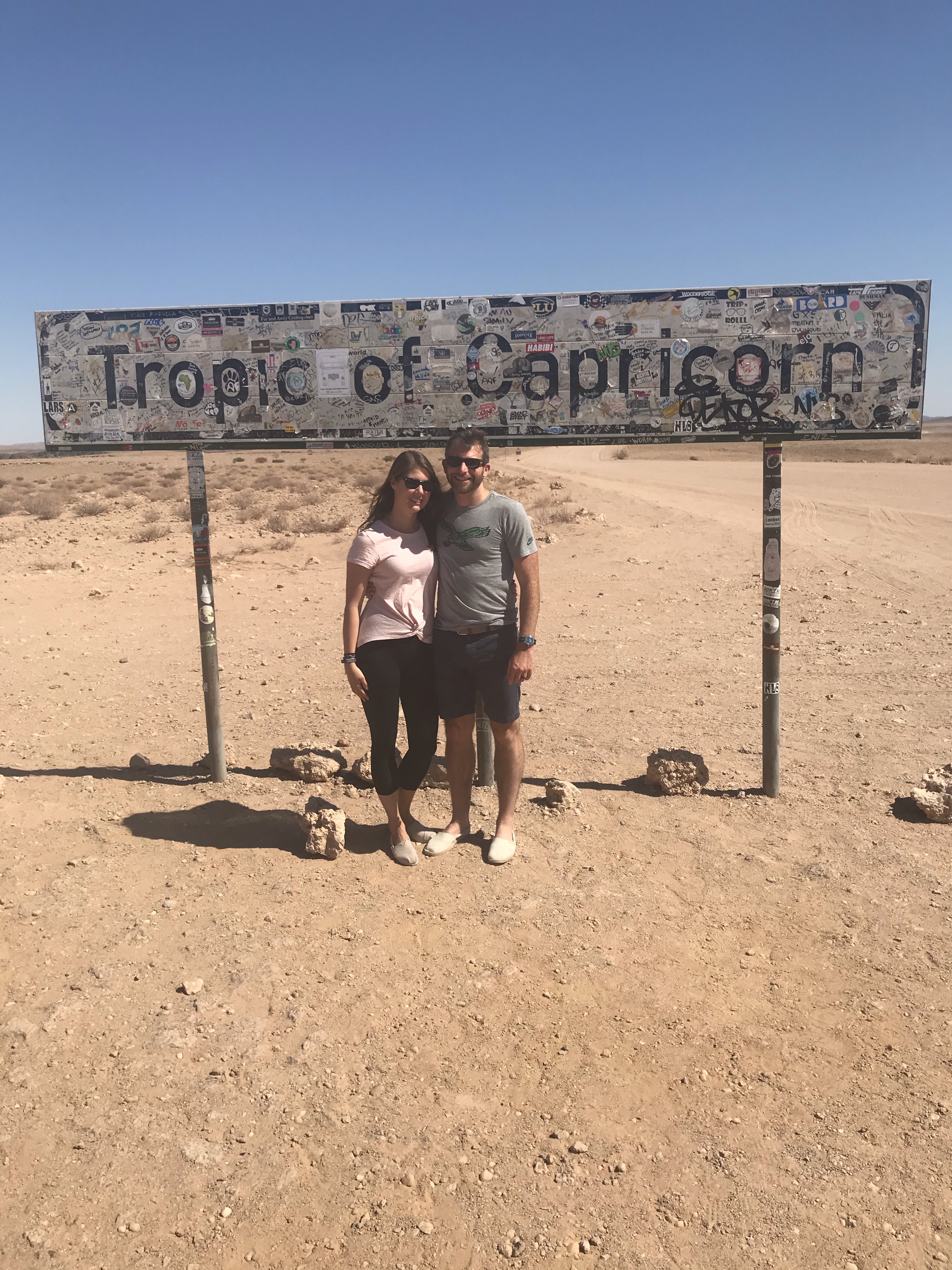
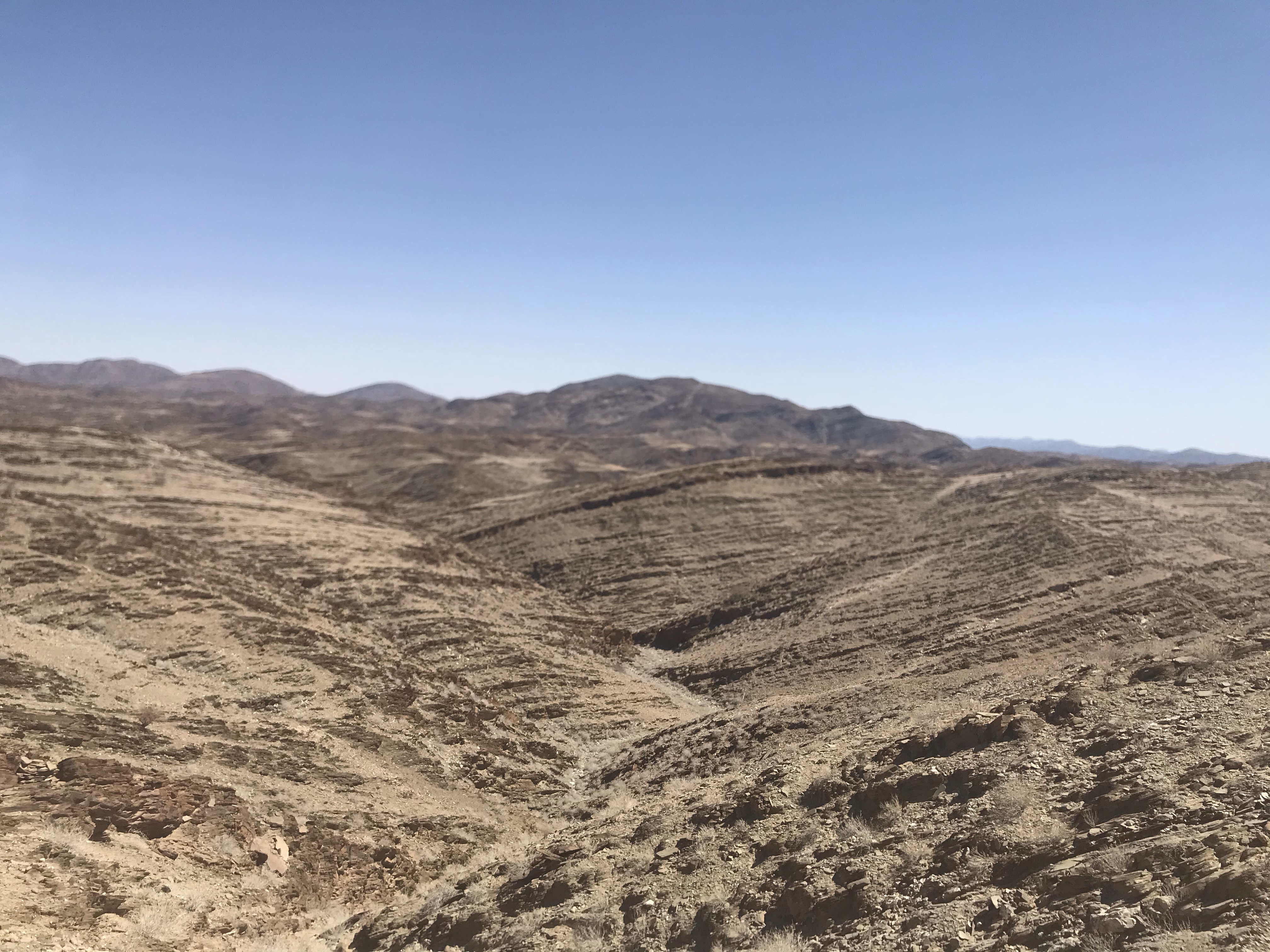
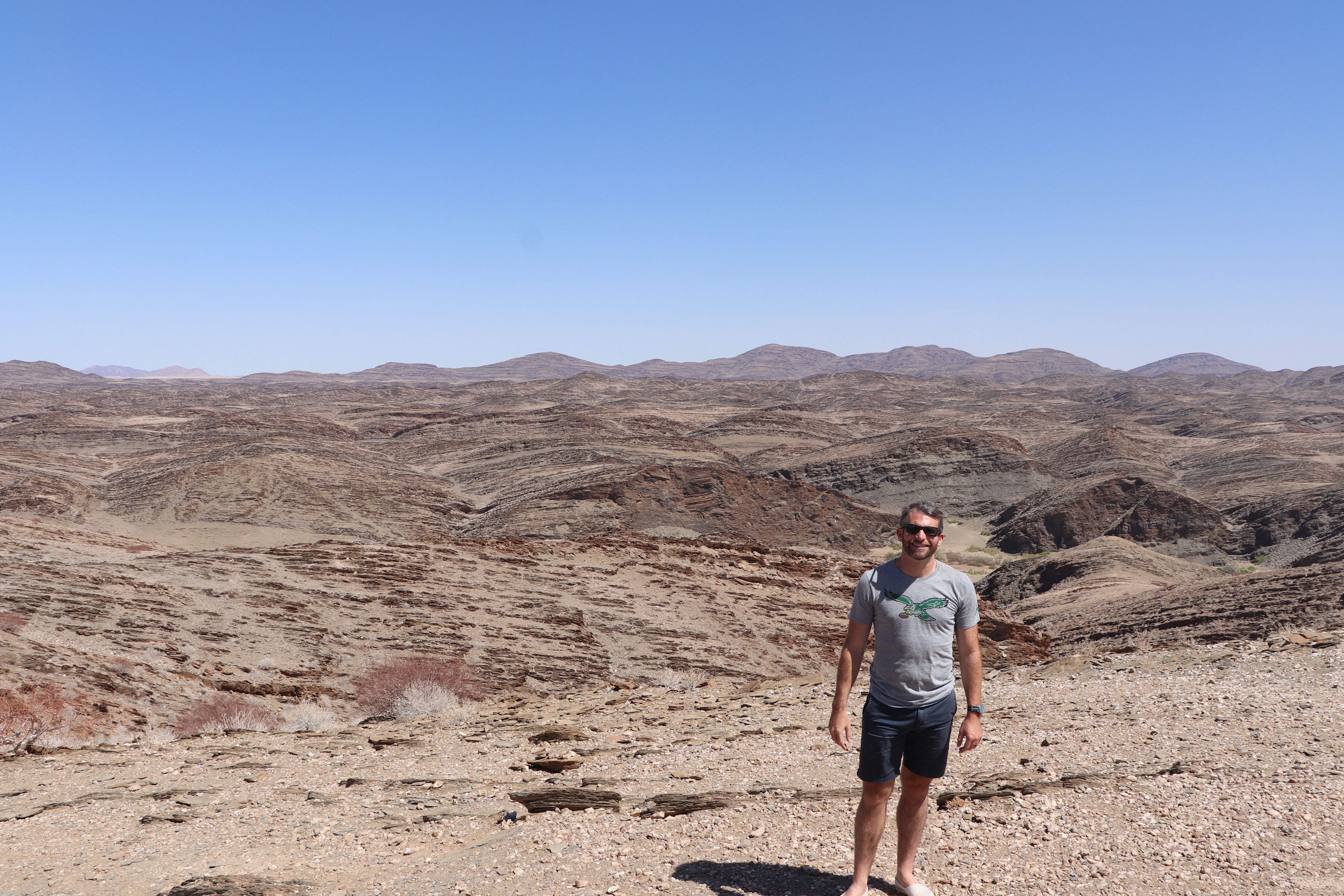
The next morning we had breakfast and headed off for another 4 hour drive towards Swakopmund, a small coastal town where we would be spending our next few days. Some highlights along the way included a stop along the Tropic of Capricorn and at a view point over mountains made of fragmented limestone broken by the heat. The scenery on this part of the drive as we headed toward the coast was very different than the first day. We starting driving through canyons and mountains and gravel which ultimately gave way to sand, stones, and little vegetation. You really felt like you were truly in the desert the closer we got to the coast when there was nearly nothing to be seen on the horizon.
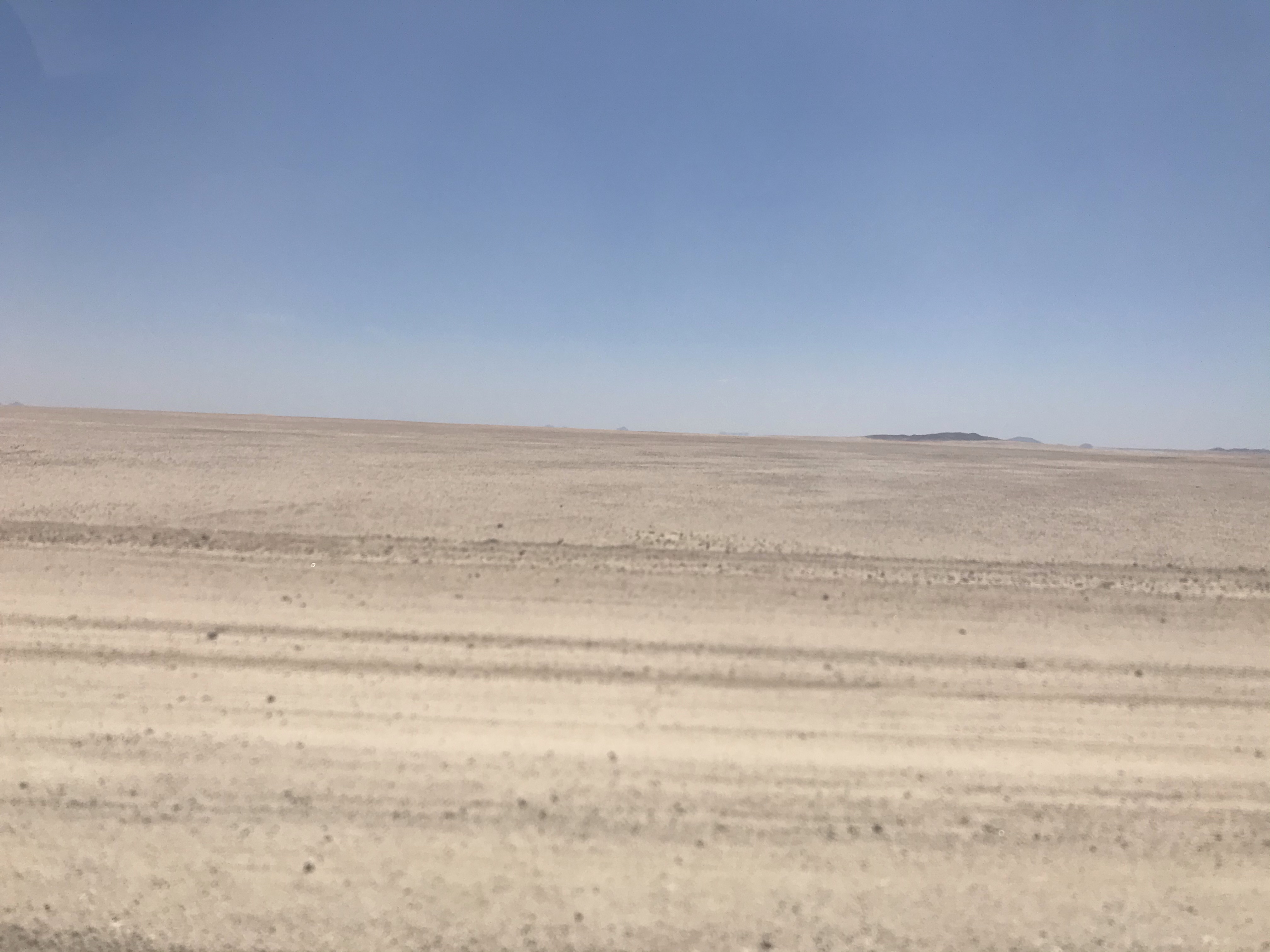
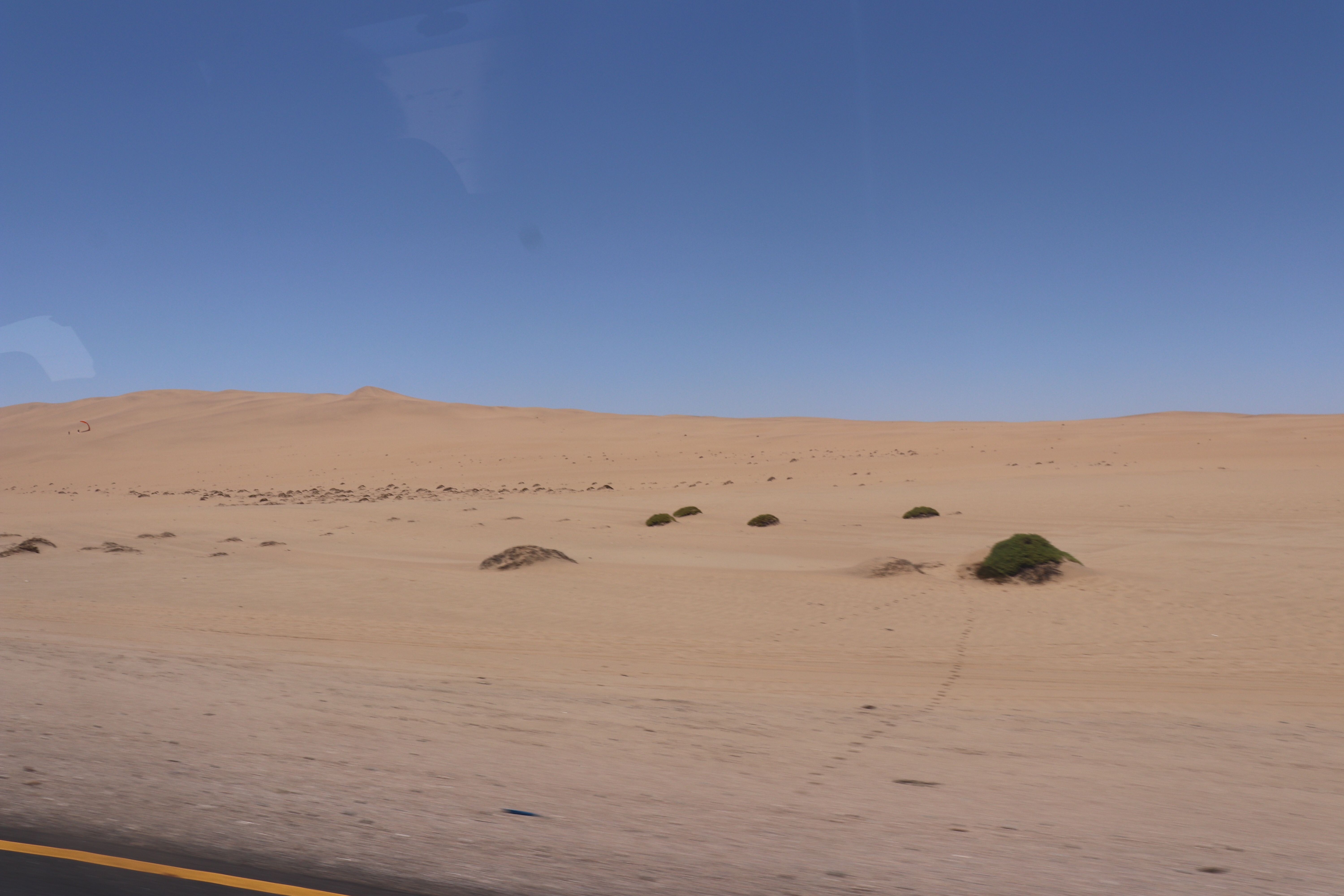
As we got closer to the coast, we again saw large sand dunes which surround the coastal port town of Walvis Bay and where we were headed in Swakopmund. While the dunes here contain the same minerals as the ones we had seen and climbed the prior day, they take on a different color of a lighter peach / tan due to the sea air. We first drove through the town of Walvis Bay which is the main port of Namibia and also used as a link to the coast for nearby countries Botswana and Zimbabwe. We then continued the drive toward Swakopmund – with the Atlantic Ocean to our left and giant sand dunes towering over us to our right until we came to the town and found our accommodation.
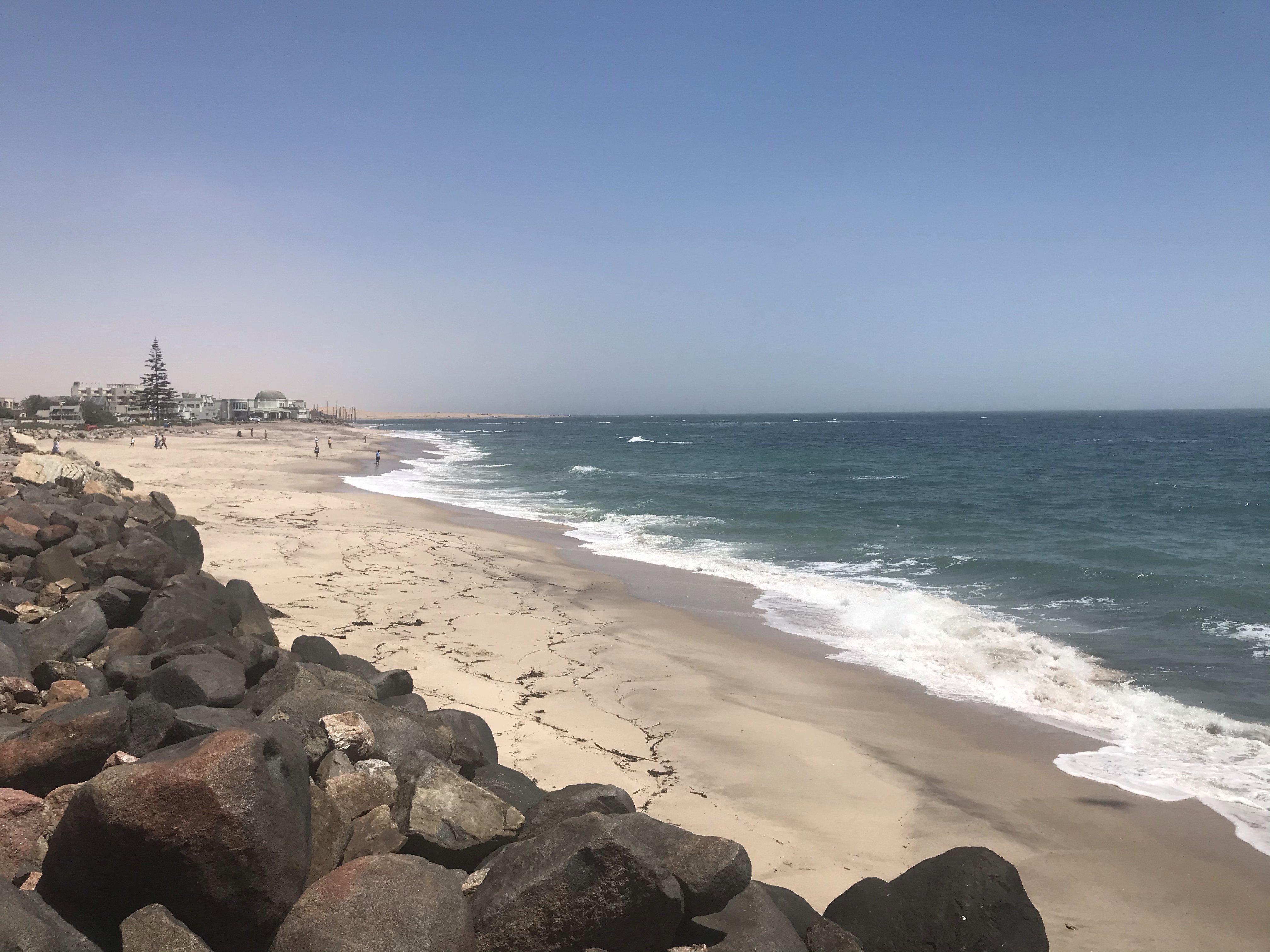
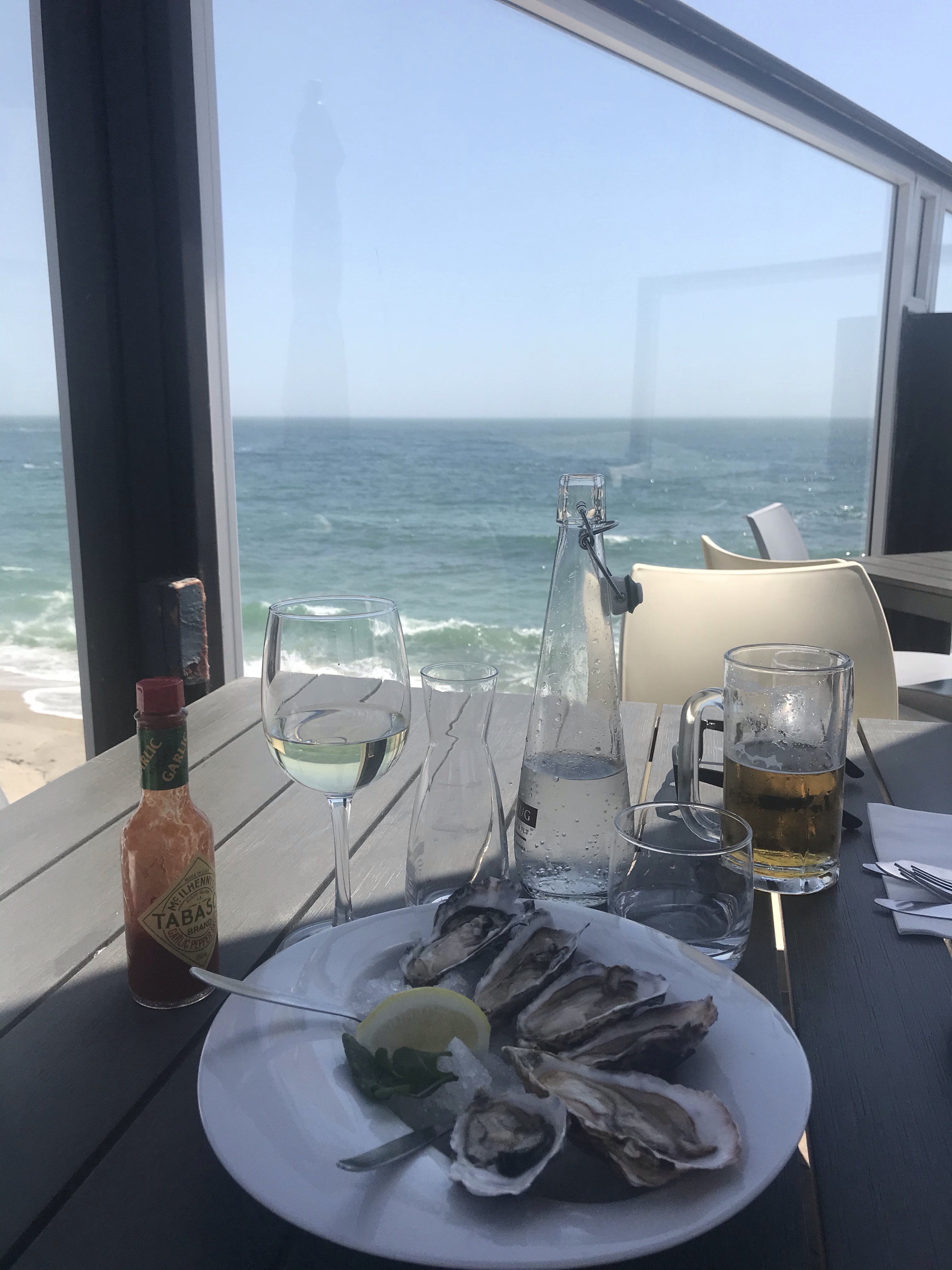
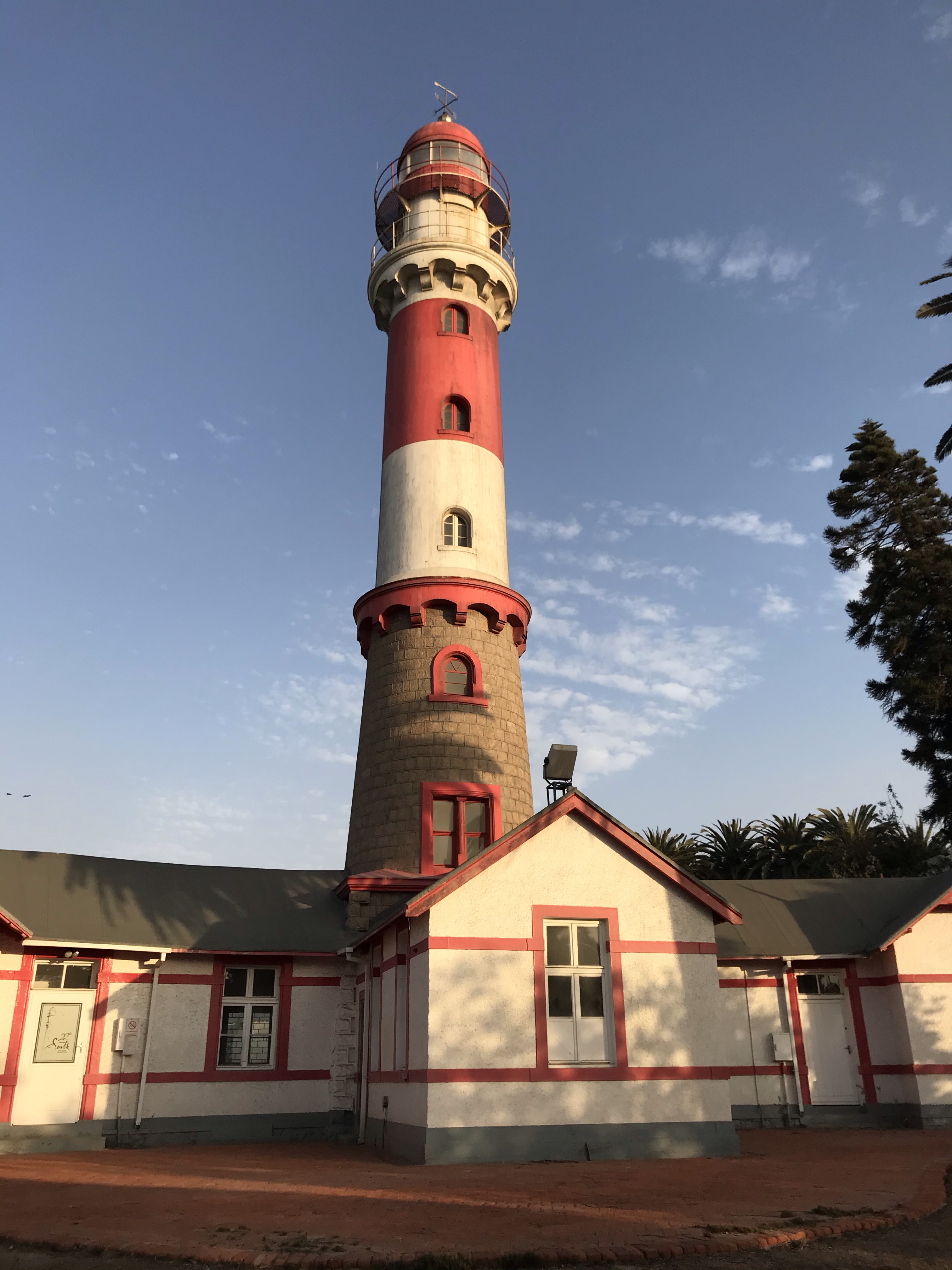
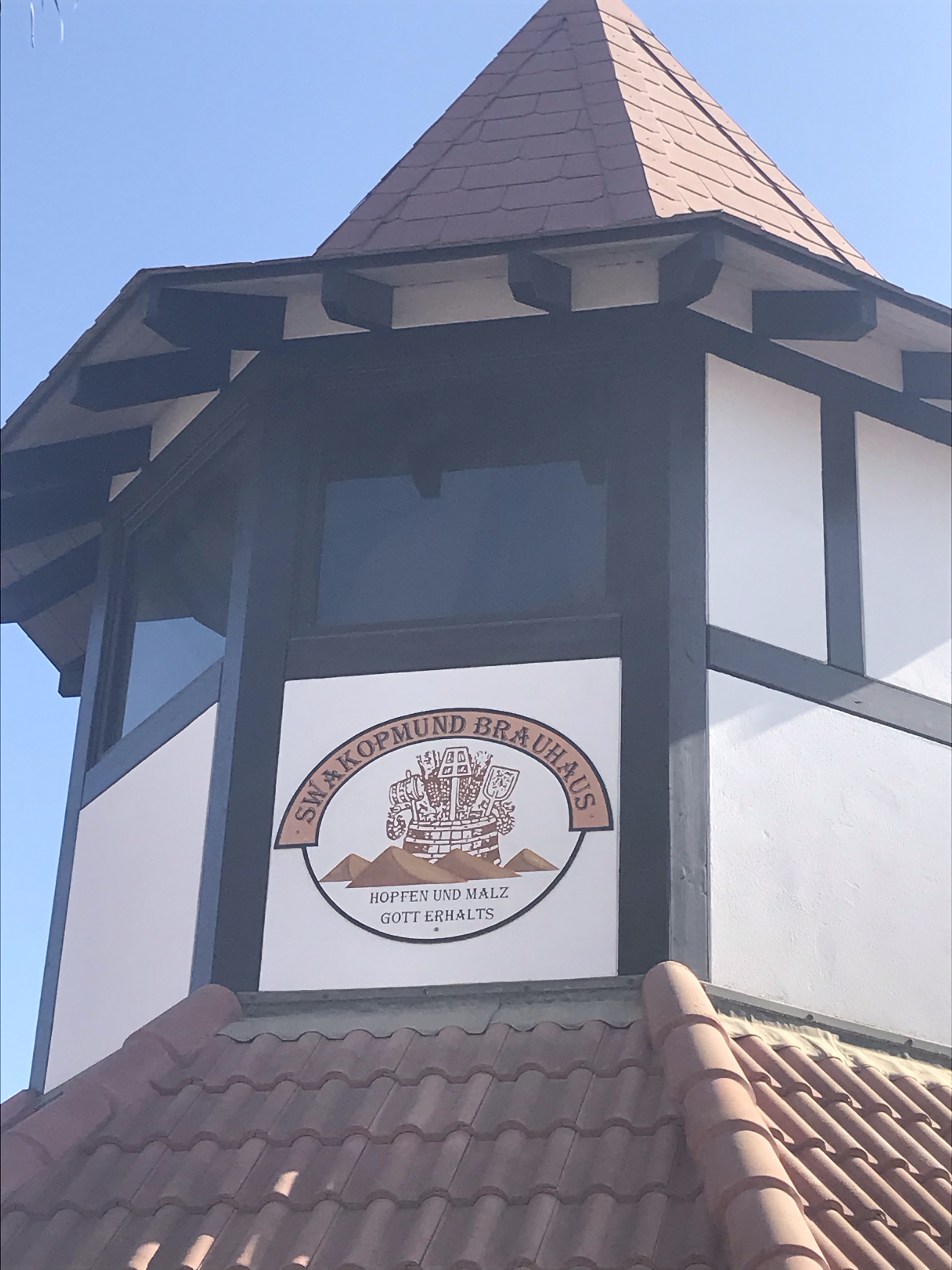
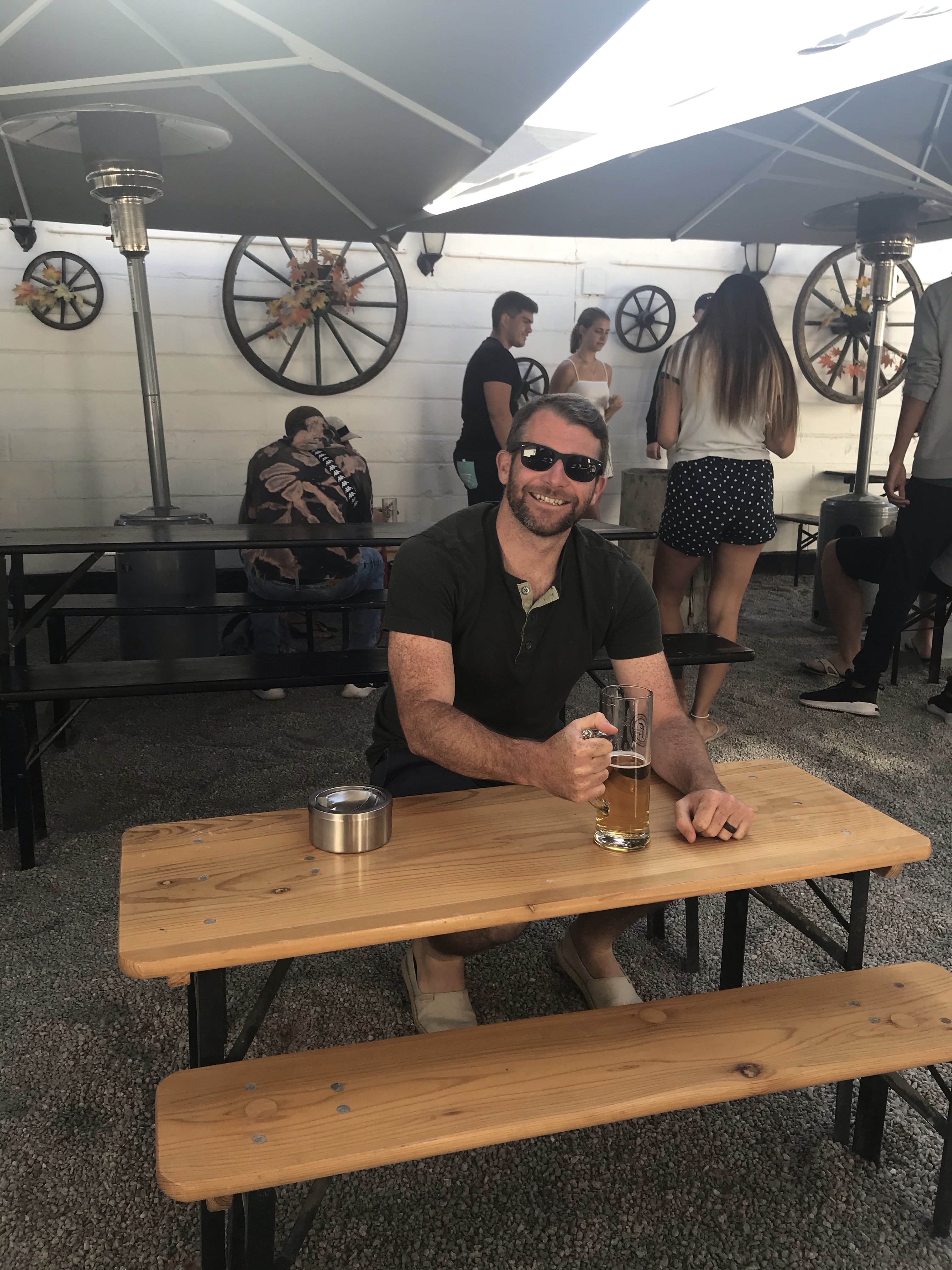
Swakopmund is a quaint little town that feels like a mix of Africa, the jersey shore, and Germany. There are beautiful red and white sandy beaches lining the cold Atlantic shores (much colder than the warm Indian Ocean we were in a week ago), Brauhauses and Biergartens in the town, and craft markets and shops selling African goods. We spent a few relaxing days walking through the town, eating deliciously fresh seafood looking out over the sea, walking along the beaches, checking out all the locally made crafts, enjoying a coffee in one of the many little coffee shops, and having local beer in the Biergartens. It was a nice few days to spend in a town along the coast that moves at a slow pace.
Next we fly to Cape Town and spend the next two and a half weeks exploring South Africa.
 Traveling Teufels