Next up was one of the other highlights we had been looking forward to on the trip – going on safari. We scheduled a five day / four night safari which included game drives in both Sabi Sands Reserve and Kruger National Park to get a taste of the main park grounds and also a private connected reserve.
Similar to the Kilimanjaro post this one is a bit lengthy and full of a daily journal and detail of what we saw on each of the 7 game drives we did (one on day 1 and two per day for days 2-4) and our trip back to Johannesburg on day 5. If it’s too much to read – scroll through for pictures of the (many!) animals we saw and the beautiful South African landscapes. Be aware…there are a ton of pictures to get through but worth it!
Day One
After another quick stay next to the airport in Johannesburg, we were picked up early in the morning for our drive to the Tydon Safari Camp which sits by Sabi Sands Reserve (a private game reseve) and the well known Kruger National Park (government owned), in the northeast part of South Africa. Together, the two parks share an open border and animals can roam all across the 5.2 million acres of land. Sabi Sands is one of several private reserves that share the border with Kruger but also one of the most renowned in terms of animal sightings. As part of our safari, the first two days we would spend driving through Sabi Sands and the second in Kruger – 7 game drives in total and 7 chances to see the big five and the many other animals in the bush.
The Big Five refers to the lion, leopard, elephant, rhinoceros, and buffalo. Although now more commonly used as a way to attract tourists (i.e. “come to Kruger Park, and see the big five!”) the Big Five was originally derived as the term for the animals which, when hunted on foot, were the most dangerous. Or as our guide put it: the most likely to attack you back and kill you if you miss in your hunt. Even though it is a predator, the cheetah is not in the big five because it is more likely to run away then to come after you if attacked.
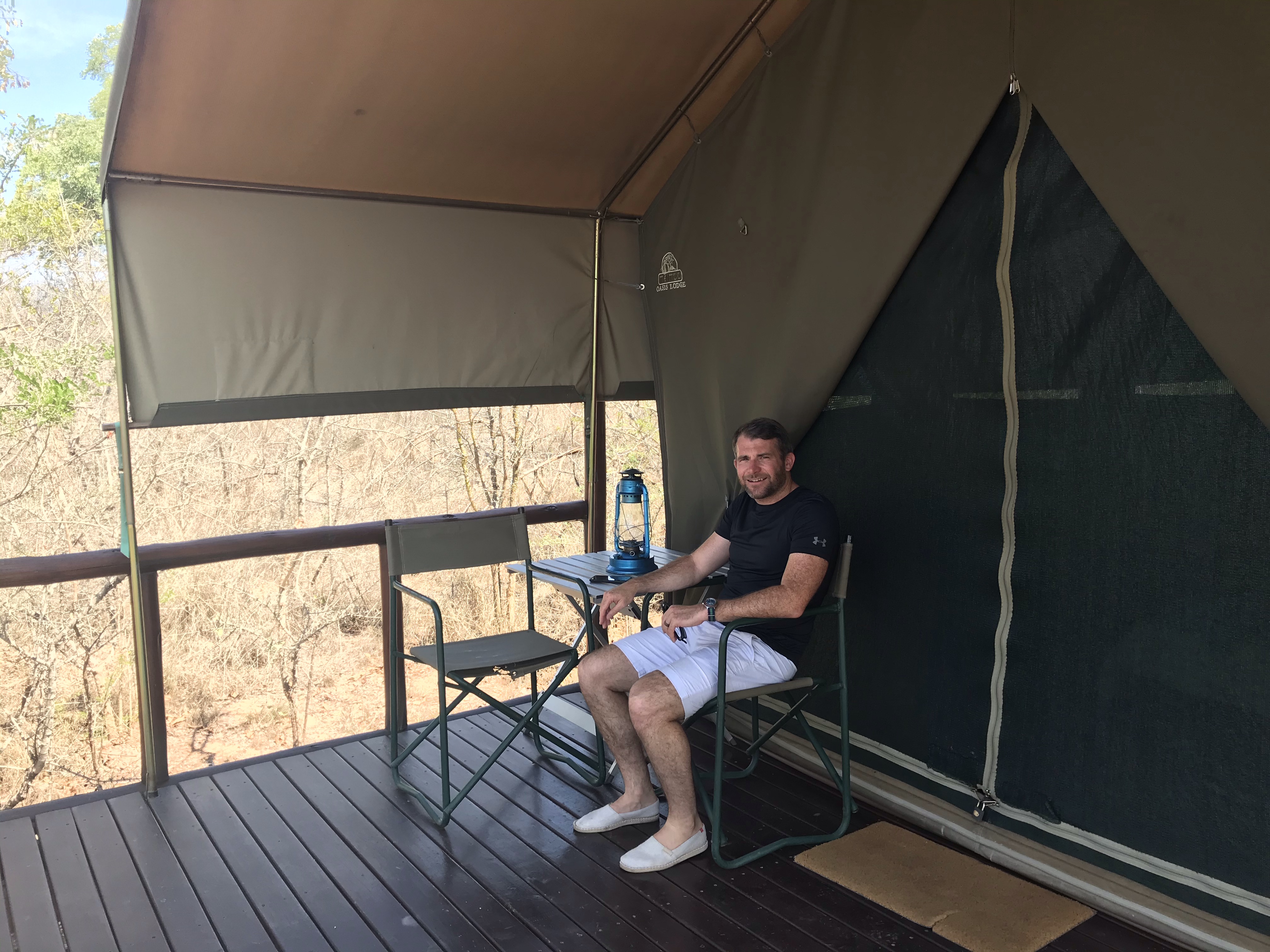
It took us approximately 6 hours to reach our safari camp – a 5 hour drive from Johannesburg plus a one hour stop for lunch along the way at a local African fast food meat joint. We arrived and met the guides who would be with us at the camp for the next few days – Drikus, Sinead, Richard, and Leonard (the head of cooking and maintenance). We had a quick tour of the common areas of the campsite – the ‘lapa’ dining area, which was a covered open area where we would have breakfasts and lunches; and the ‘boma’ area around the campfire where we would enjoy our dinners under the stars. Following the intros, we then went to drop our stuff in our tent and get ready since we would soon be heading off on our first game drive. Now when we say “tent”, that term is used a bit loosely. Yes there are canvas walls, netted windows, and zippers to get in and out, but we also have a bed, dresser, toilet, sink, shower and running water and electricity. Oh…and air conditioning. Not so bad. After our week in Kilimanjaro sleeping on the ground in a small orange tent with no shower and a plastic box as a toilet (and we thought that was a luxury) – this was a nice upgrade. However this tent does still come with the bugs, spiders, and little lizards and, this time, lots of frogs keeping us up at night. The camp contains 8 of these tents, which are built on wooden structures. We even have a nice little deck facing out into the wilderness.
After freshening up, it was time for the main event – the first of our game drives. This afternoon we would be going to the Sabi Sands Reserve and Drikus was going to be our guide. He gave us his 4 main rules and we were off (1. Don’t stand up – you will break the shape of vehicle and startle the animals, 2. No flash for elephant photography – they could attack, 3. No kissy noises at cats – they could also attack, and 4) … can’t remember the last so it must have been important). Joining us was a group of 4 guys in their 30s from Spain and a group of two women a little bit older…also from Spain. The 8 of us climbed into the open top vehicle which has three rows of three seats and the driver in the front and started off on the bouncy ride on the dirt roads through the park.
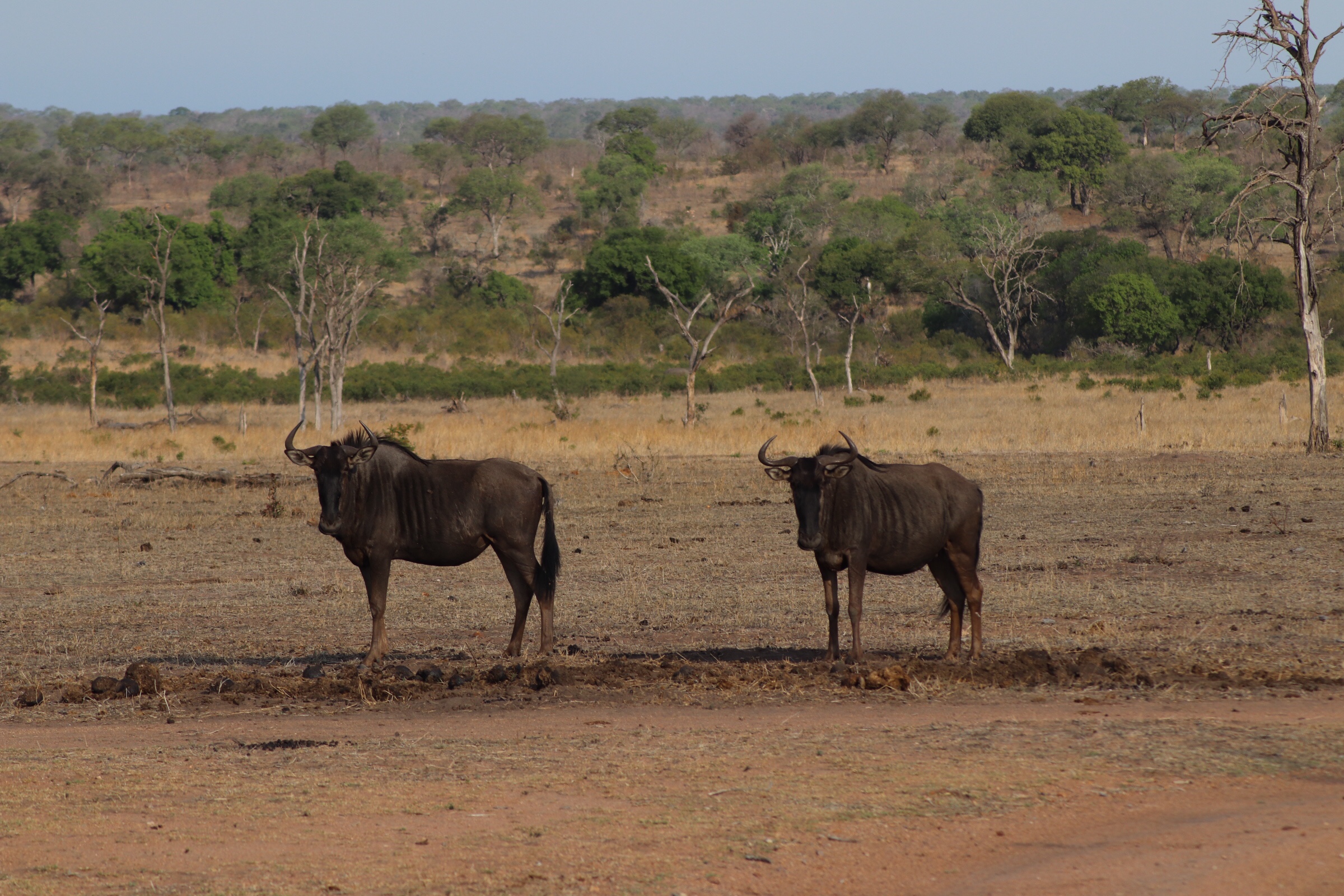
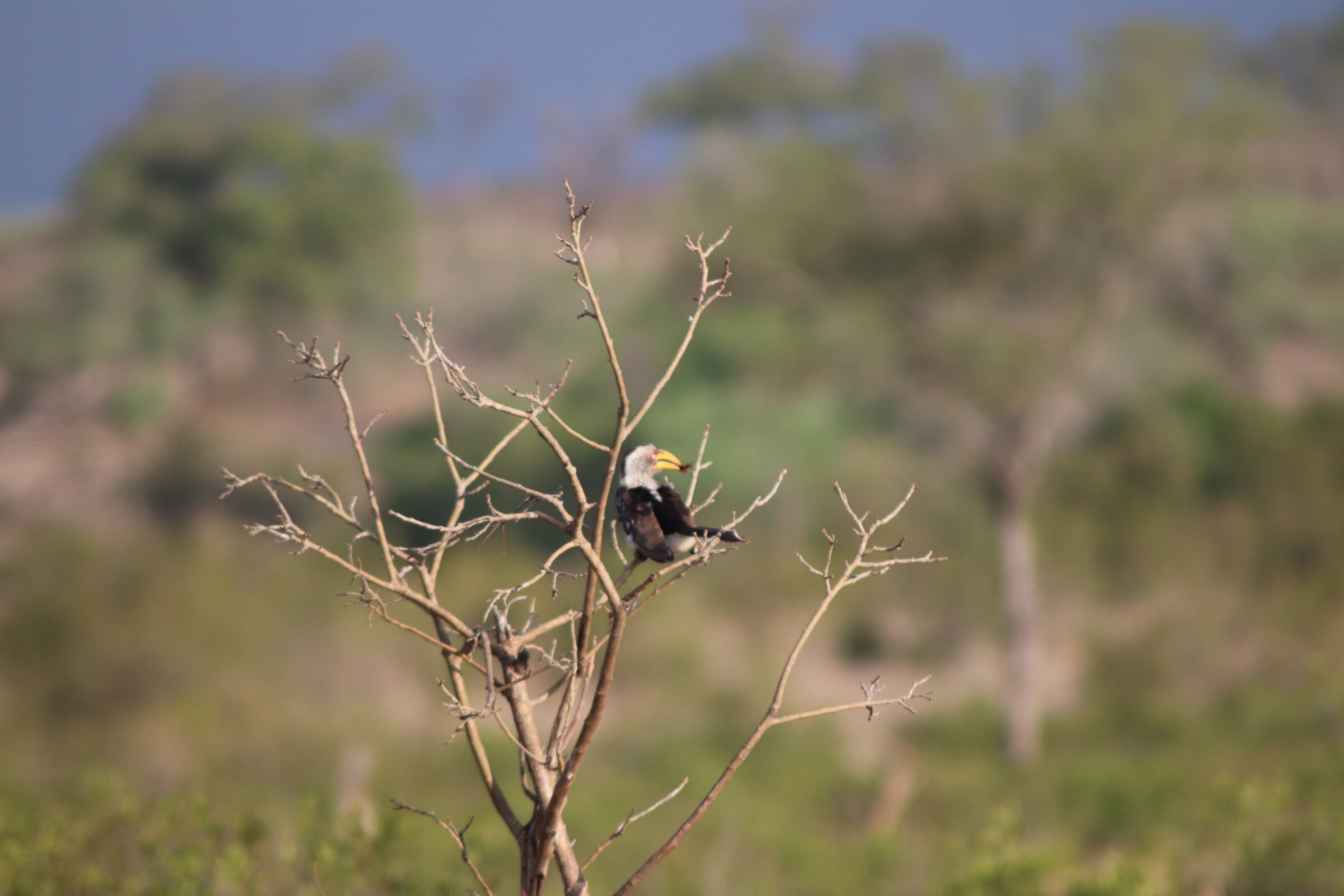
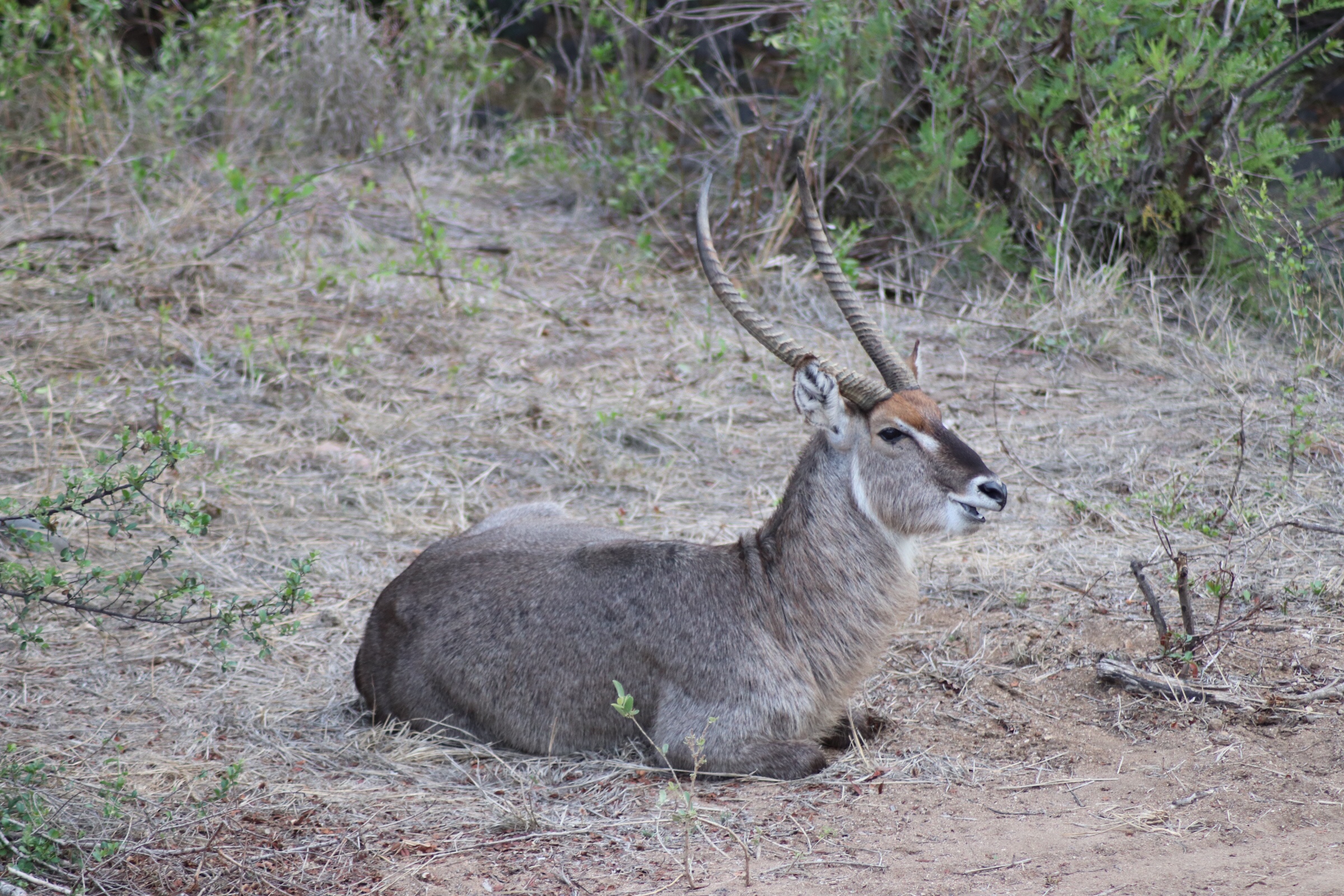
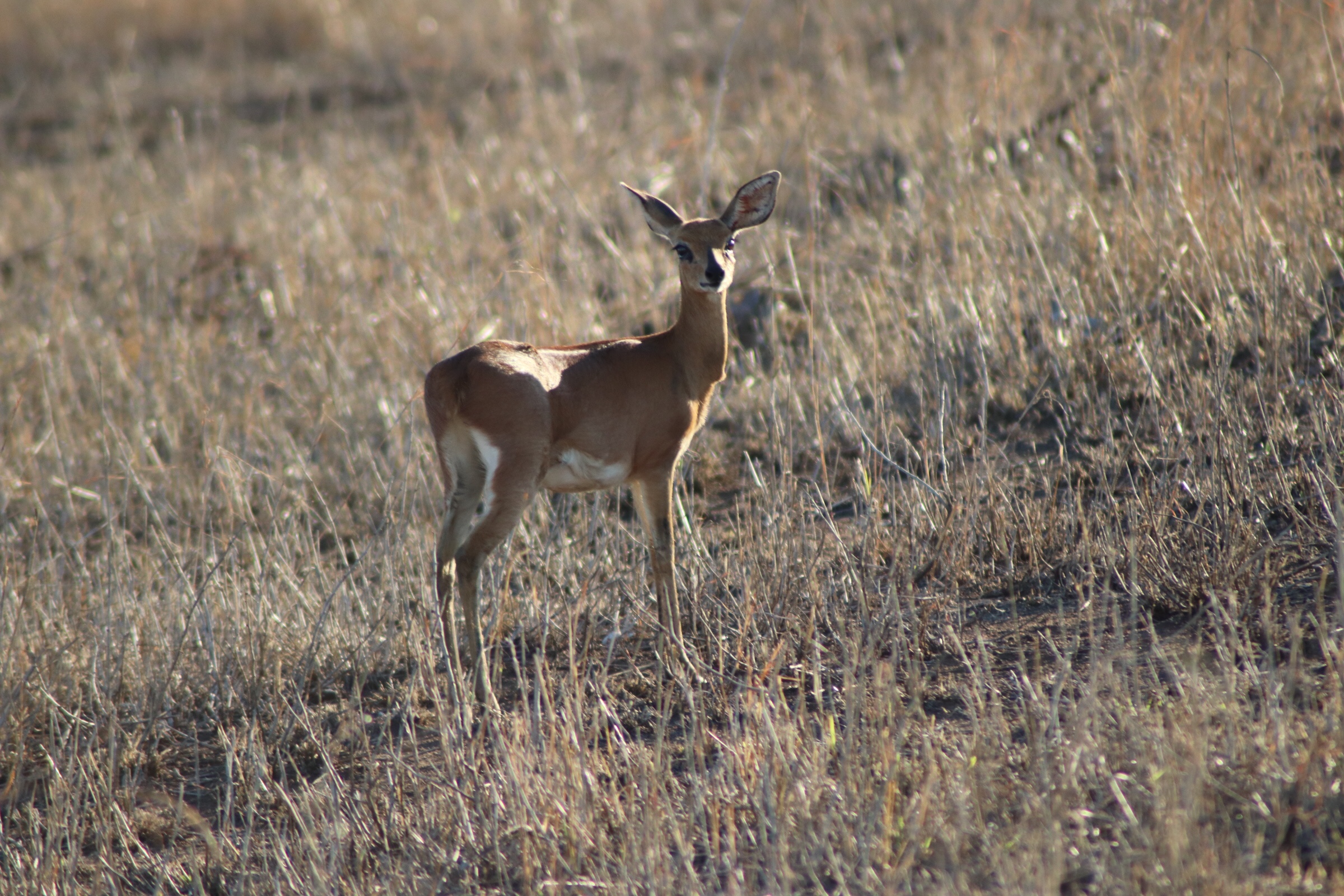
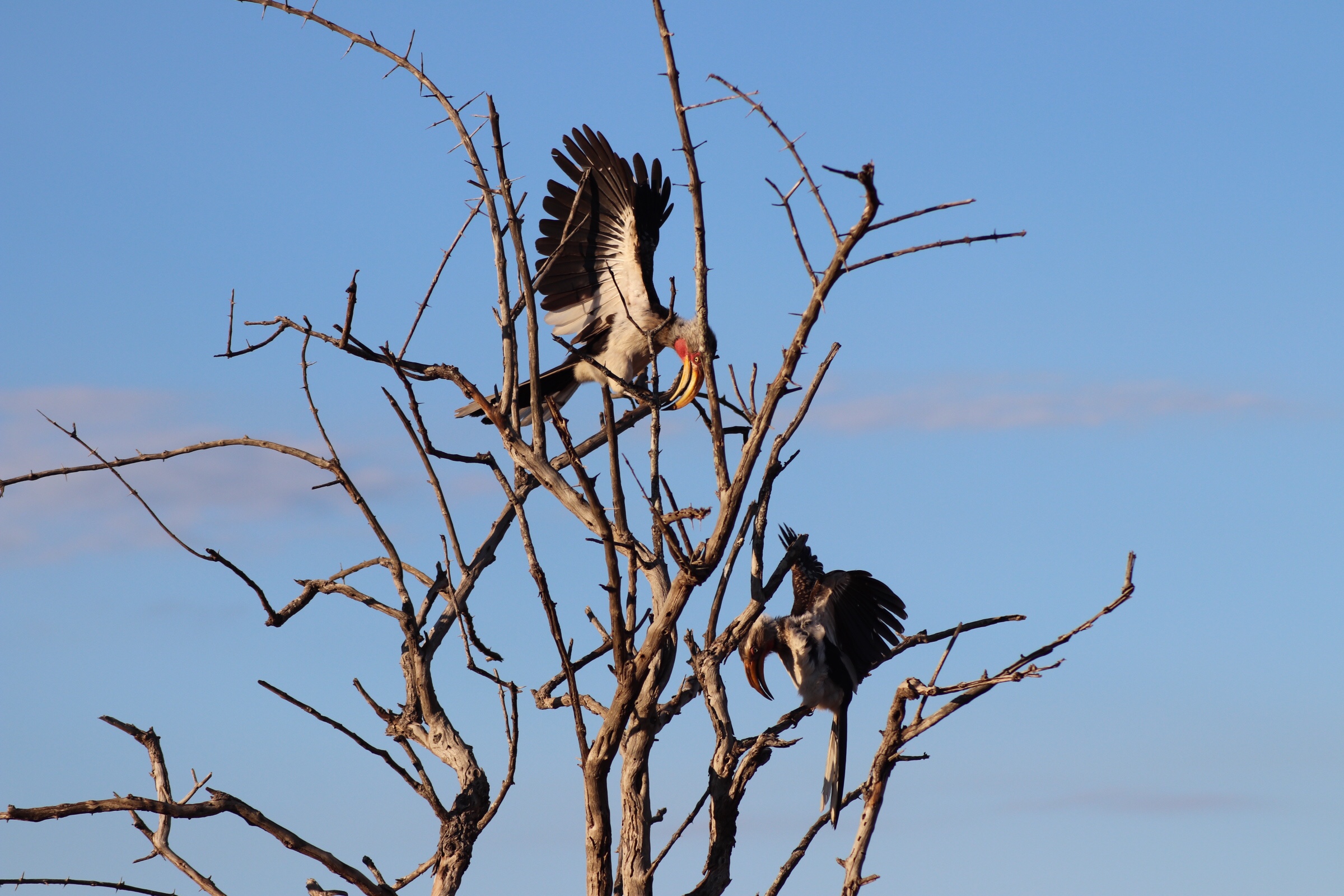
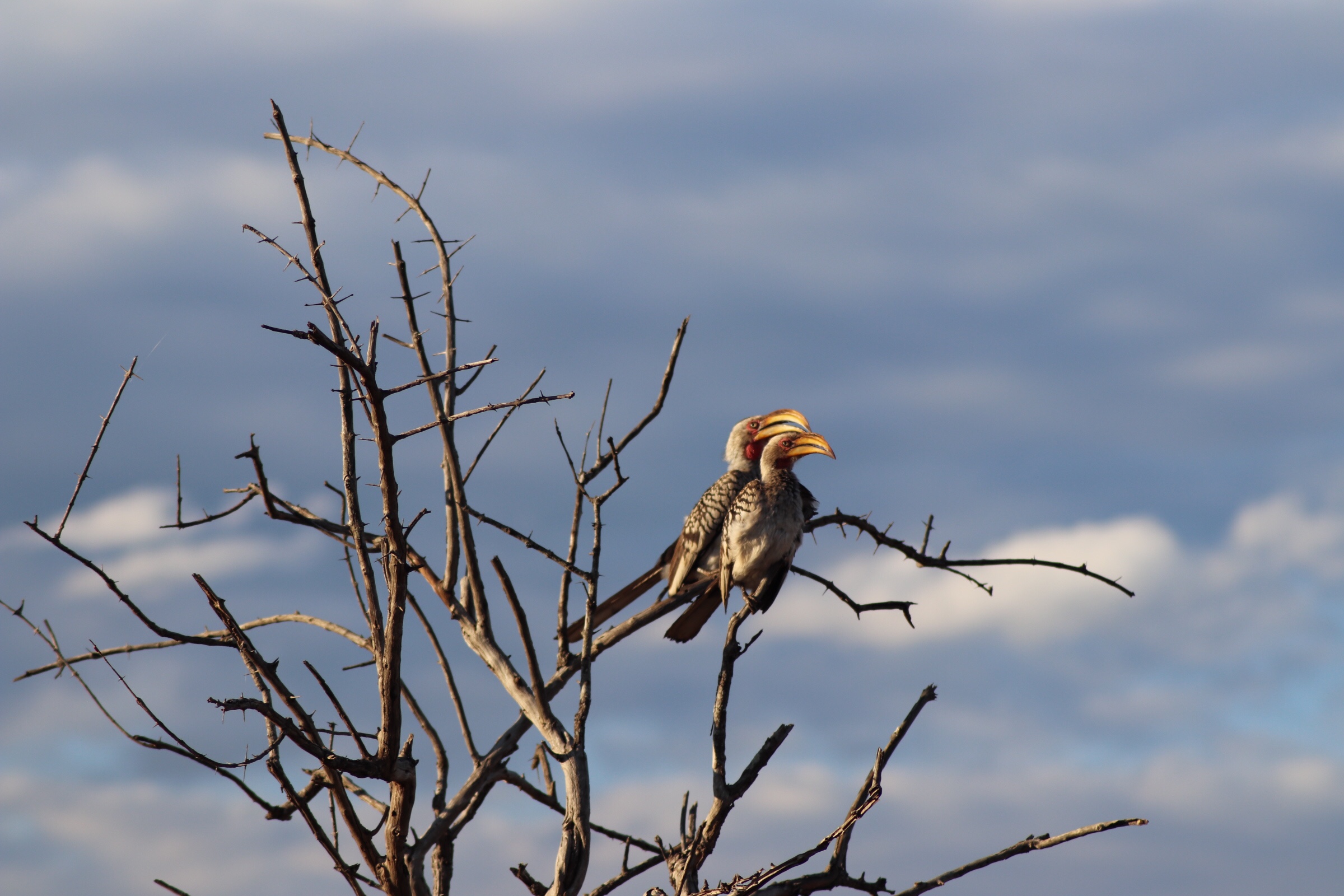
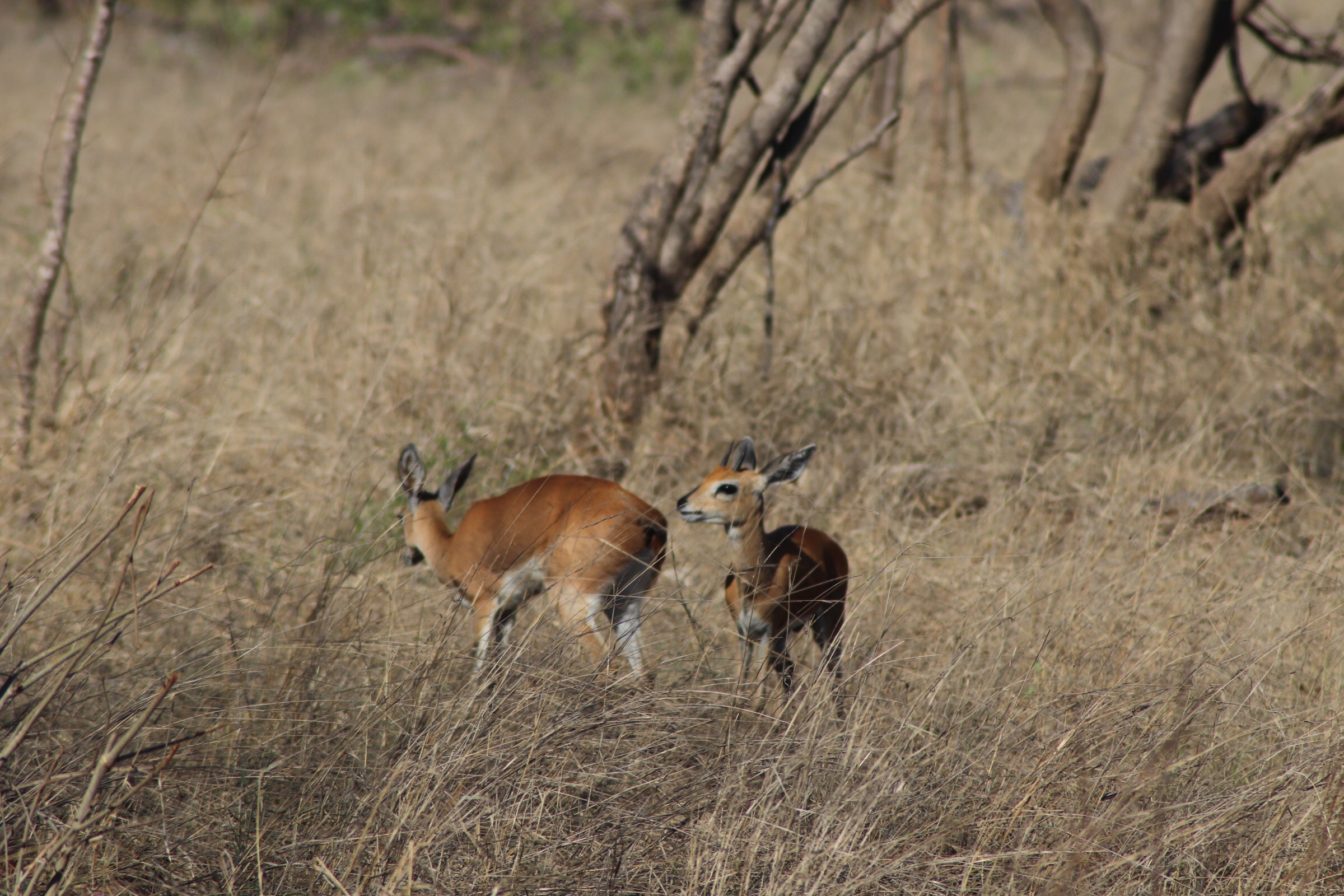
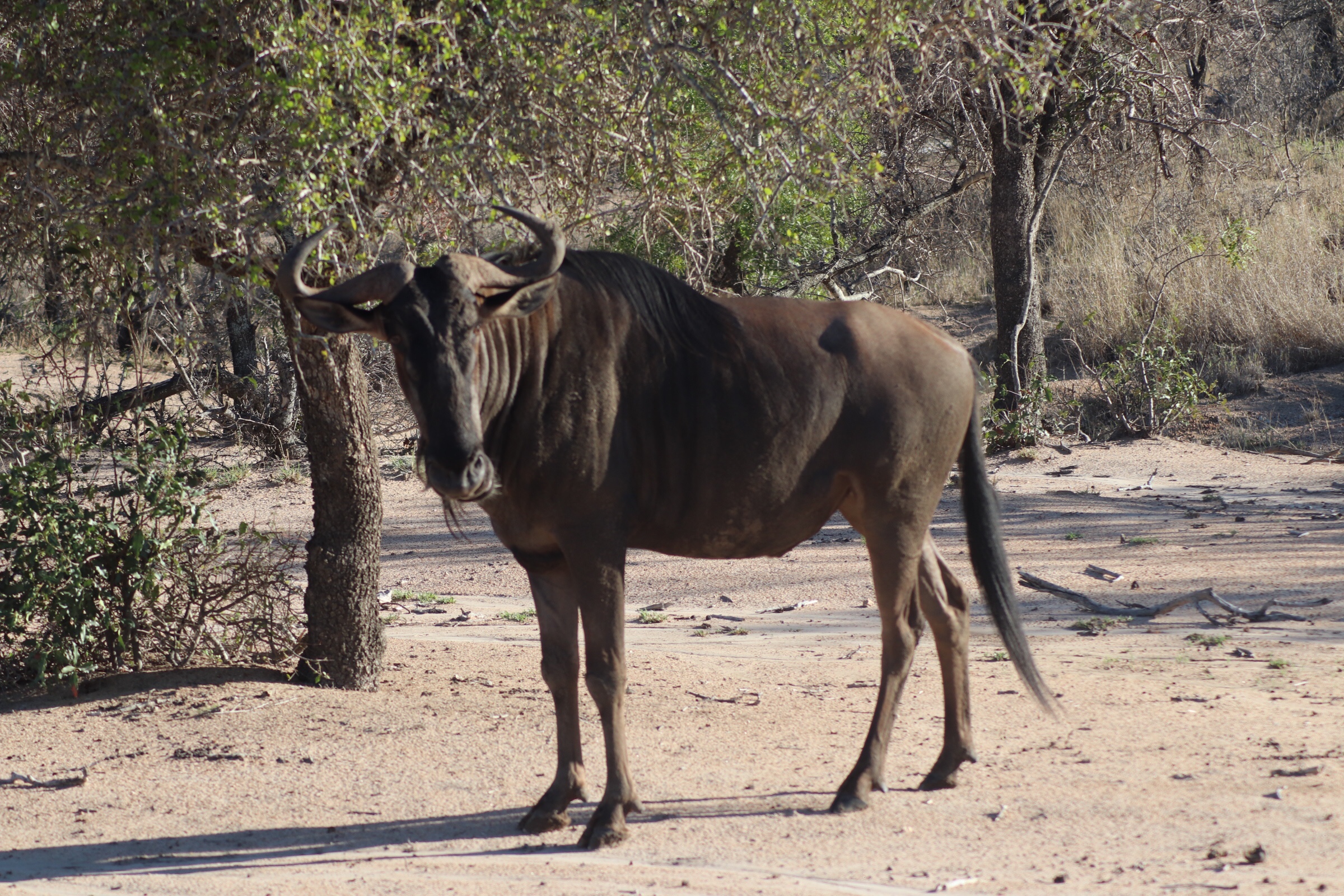
You could feel some anticipation in the car as we set off and everyone’s eyes peering across the horizon wondering when and what the first animal we would spot would be. It took some time and we were a bit nervous 35 minutes in with little seen, but our luck would soon change. We turned a corner and a group of about ten blue wildebeests was directly in front of us, only about 20 feet from the vehicle. It felt surreal seeing these massive animals so close. The group sat and grazed as we watched the group which included a very pregnant female. Our guides jokingly refer to the Wildebeest as the Frankenstein of the bush – because it has the face of a goat, body of an antelope, horns of a buffalo, stripes of a zebra, and other features similar to other animals. They are also one of the fastest antelopes in the bush, but we never experienced this as they never appeared under attack. Soon after the wildebeest rendezvous, we saw a steenbok which is on the other scale of antelope being one of the tiniest antelope and looking a bit like Bambi. We first thought it this was an infant, but these small antelope only get to be about the size of a baby deer. Next up was a water buck – which is another one of the larger antelope in the park. At the same time, looking to the trees, we spotted the hornbill (aka zazu from lion king), a fairly common bird we would become very familiar with over the next few days.
We saw our first rhino in the distance and were having a look at them, thinking we might get closer when our guide told us he had something better to show us. Better than a rhino?! What could it possibly be? Something had come in over the radio from one of the other guides in the park about a spotting that had just been made. We said goodbye to the rhinos, hoping we would see them again and made our way toward the other guide. As we got closer it was clear this was a worthwhile move. We watched as a female lion walked across our path in the direction of a group of impala (most common antelope in the park) that were in the distance. Would we get to see our first live-action kill, in just the first hour of our first drive? Sadly not today, as she just tracked them and stared at them for a while before laying down for a rest. Considering lions sleep at minimum 18 hours a day, we were lucky to see her up and walking around for a while. The guides were a bit perplexed however by the fact that she was alone – since usually the females stayed with their pride. Maybe she had been kicked out or just wandered off on her own, they wondered. Or maybe, as we all hoped, the pride would be somewhere in the area.
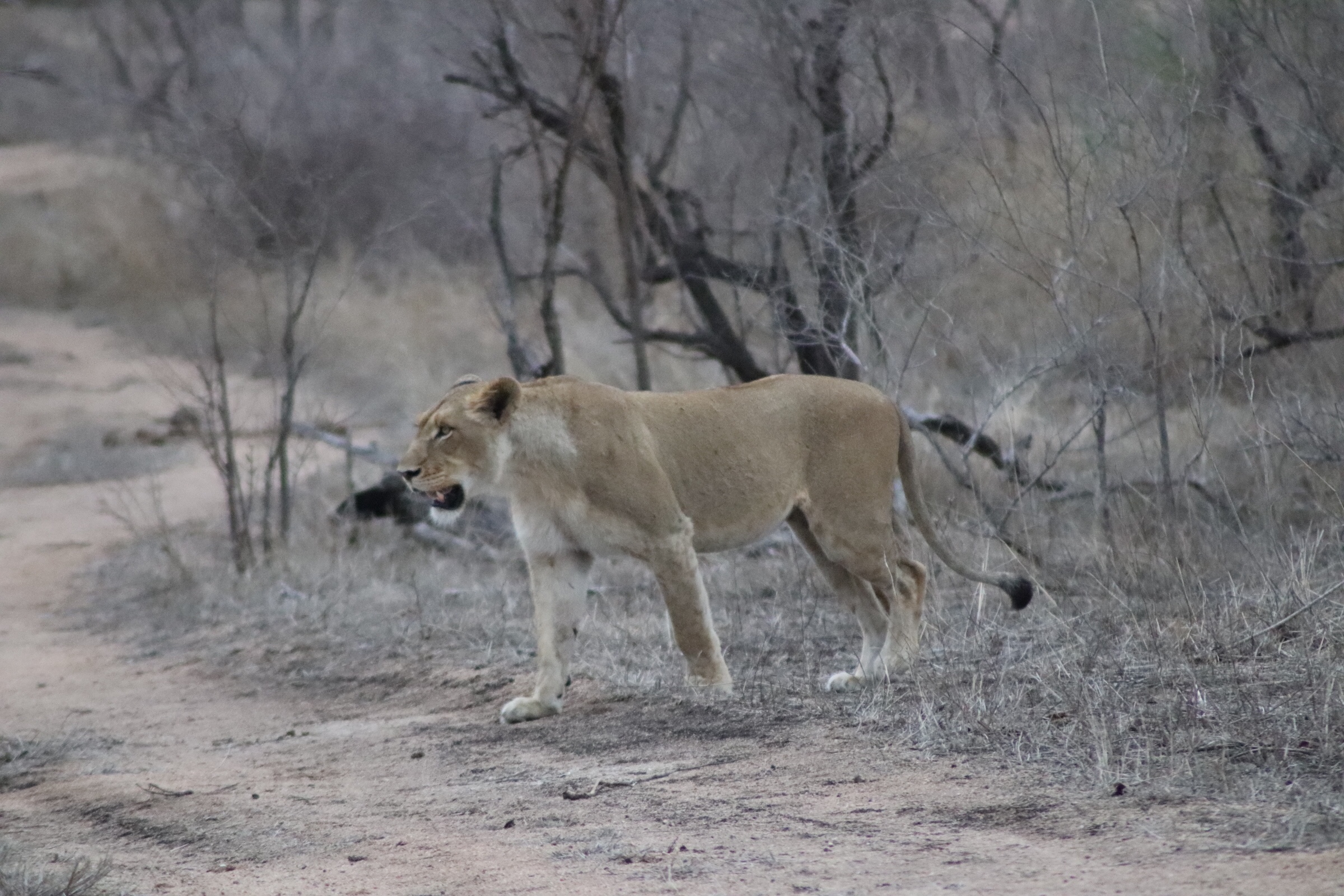
We watched her laying there for a while when the guide told us that he had something even better and even more special than a lion to show us. Even better than a lion?! Already excited that just an hour in we already had our first lion sighting, we couldn’t wait to see what was next. We drove not far from the sleeping lion and came upon an open area where…a cheetah!!…was lying. Talk about a special and exciting spotting! There are only approximately 120 cheetah in the 5.2 million acres of land between Sabi Sands and Kruger Park. What luck we had to have one sitting just feet from us.
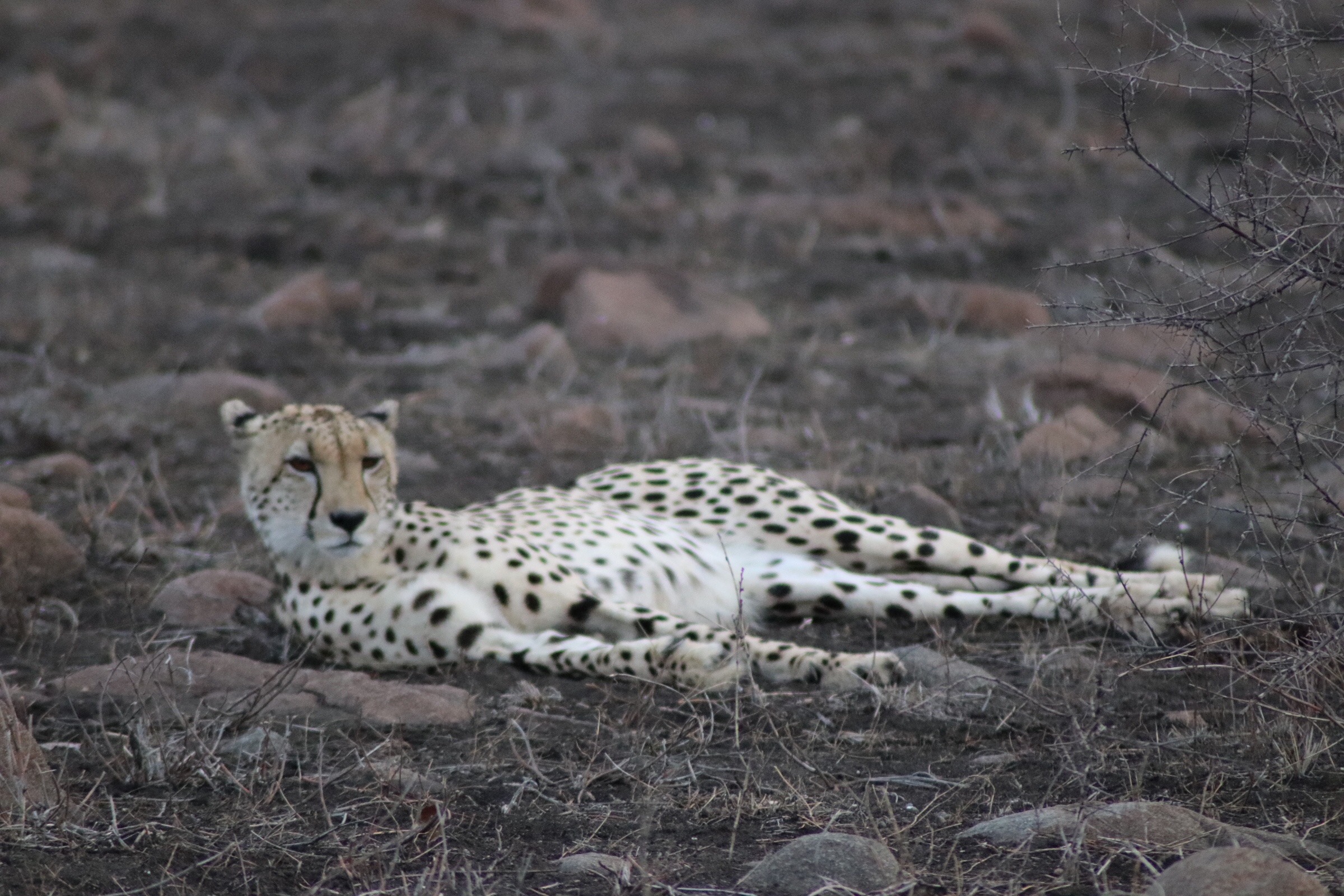
When we first arrived she was laying with legs out in front of her and her head up, looking around in all direction. They lay in a very different position than the other cats, and you could see her long, lean body and long legs and very clearly understand how they are the fastest mammal on earth. However, they can only run so fast over short distances before their body will overheat, so typically if they are chasing prey and miss, they will give up on it, sit and let their body temperatures cool, and then try again. But right now she was just lounging, looking around and enjoying the heavy breeze that was starting to pick up. We took a few more pictures over a 20 minute period of so and then we got lucky again. She finally gave us some excitement when she stood up and began walking around. We followed her in close pursuit as she gracefully moved along, scratching her back on a tree, yawning, and carefully checking out her surroundings. We couldn’t believe how close we were at times. If you look at the picture below with the other vehicle in the background it will give you an idea.
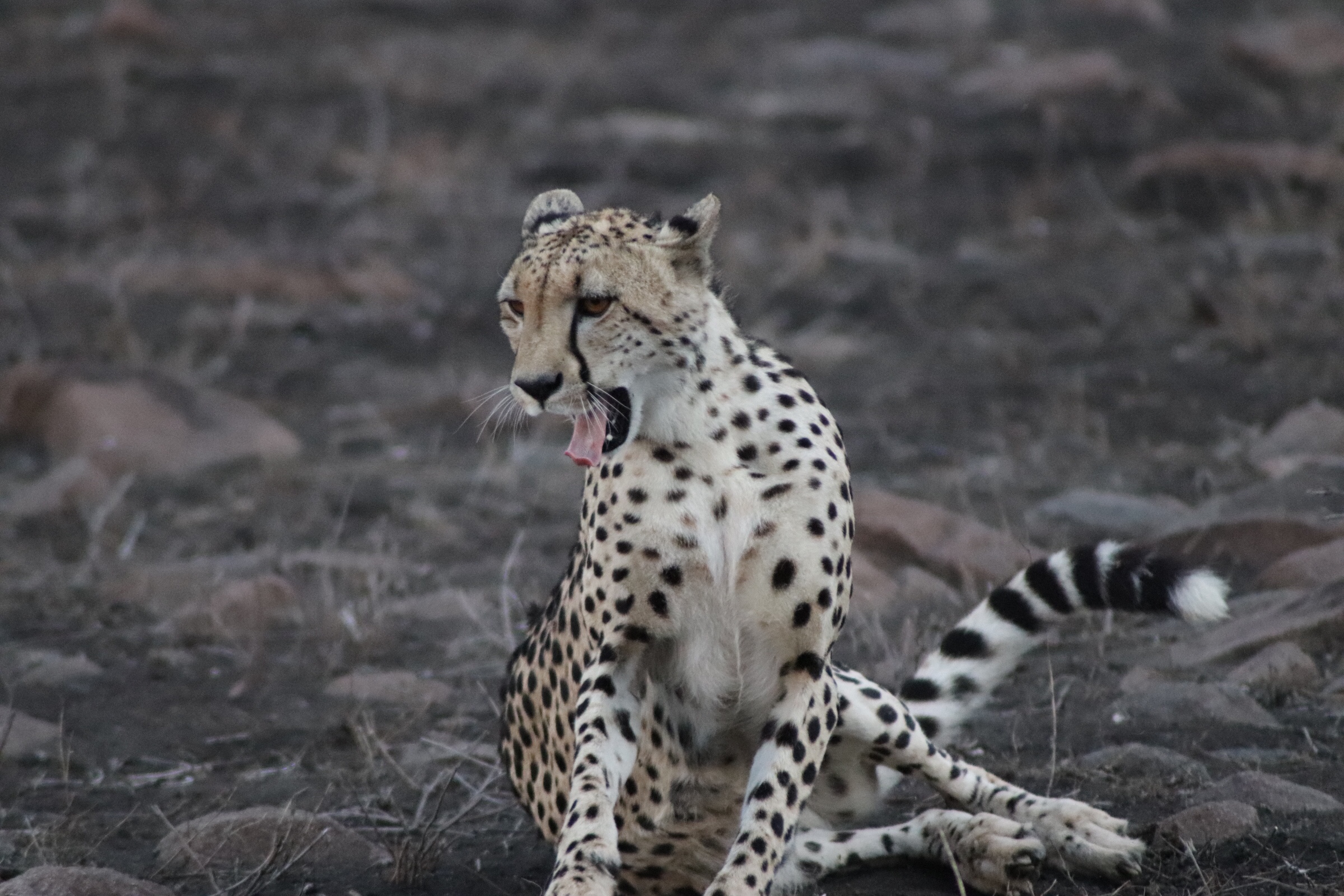
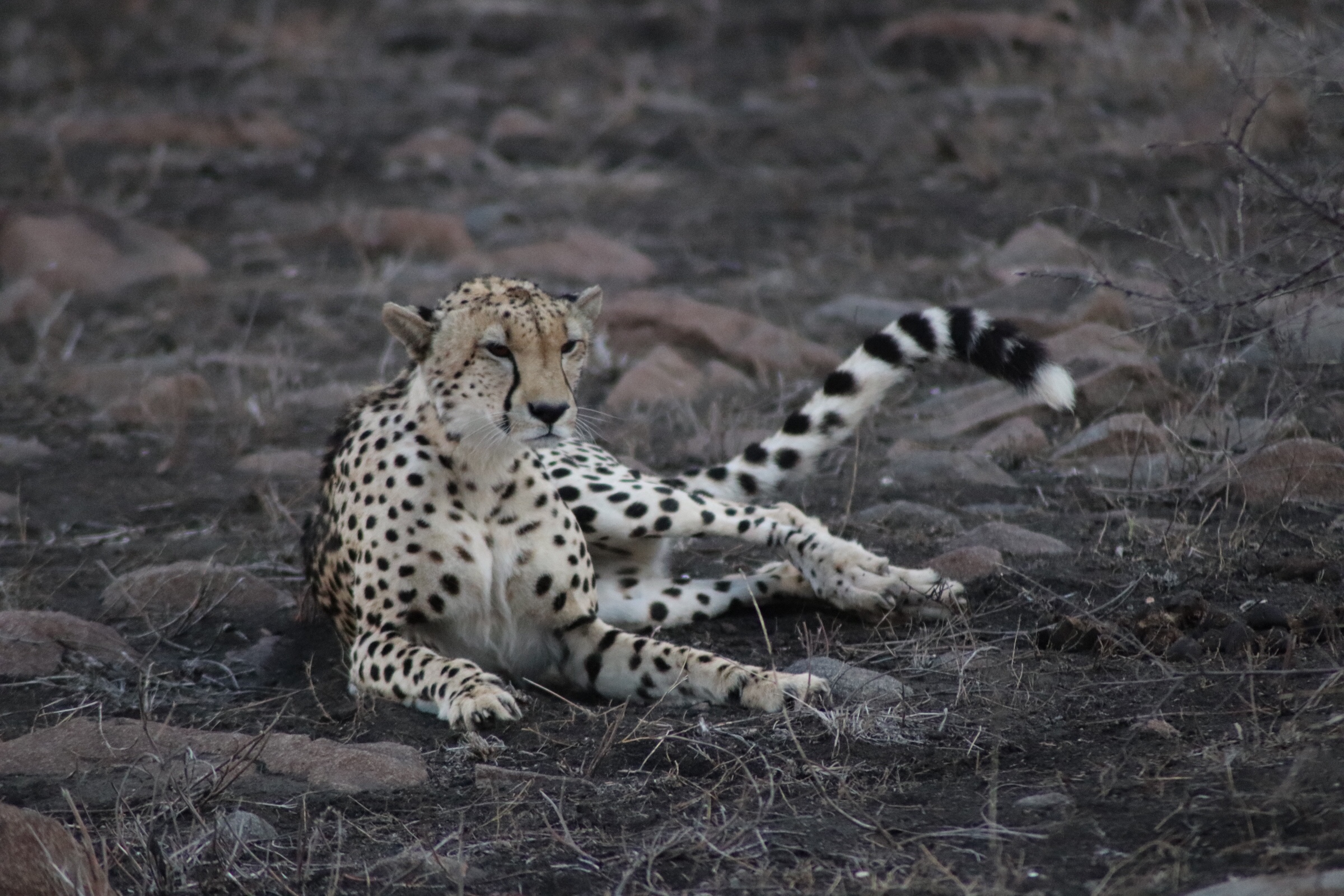
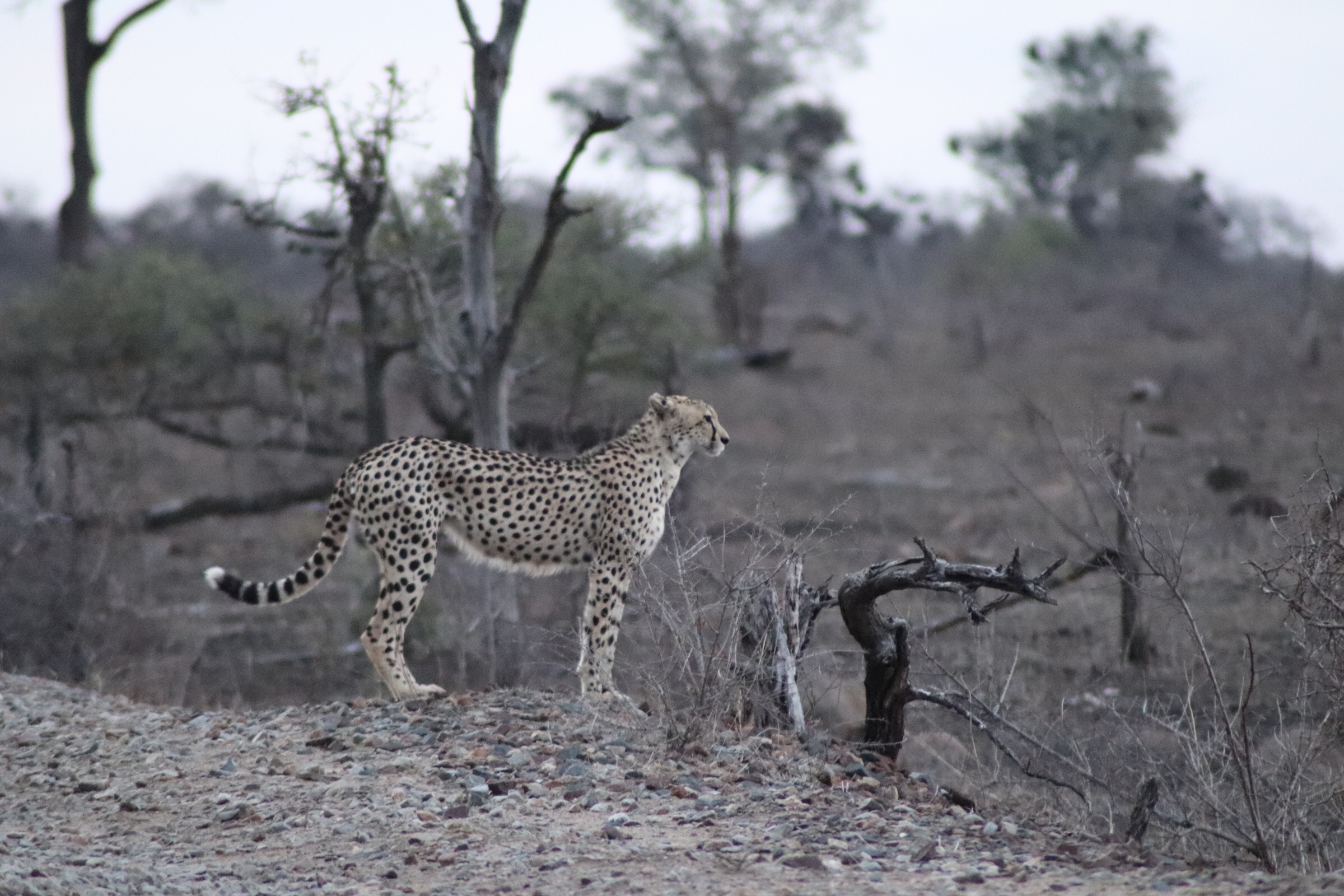
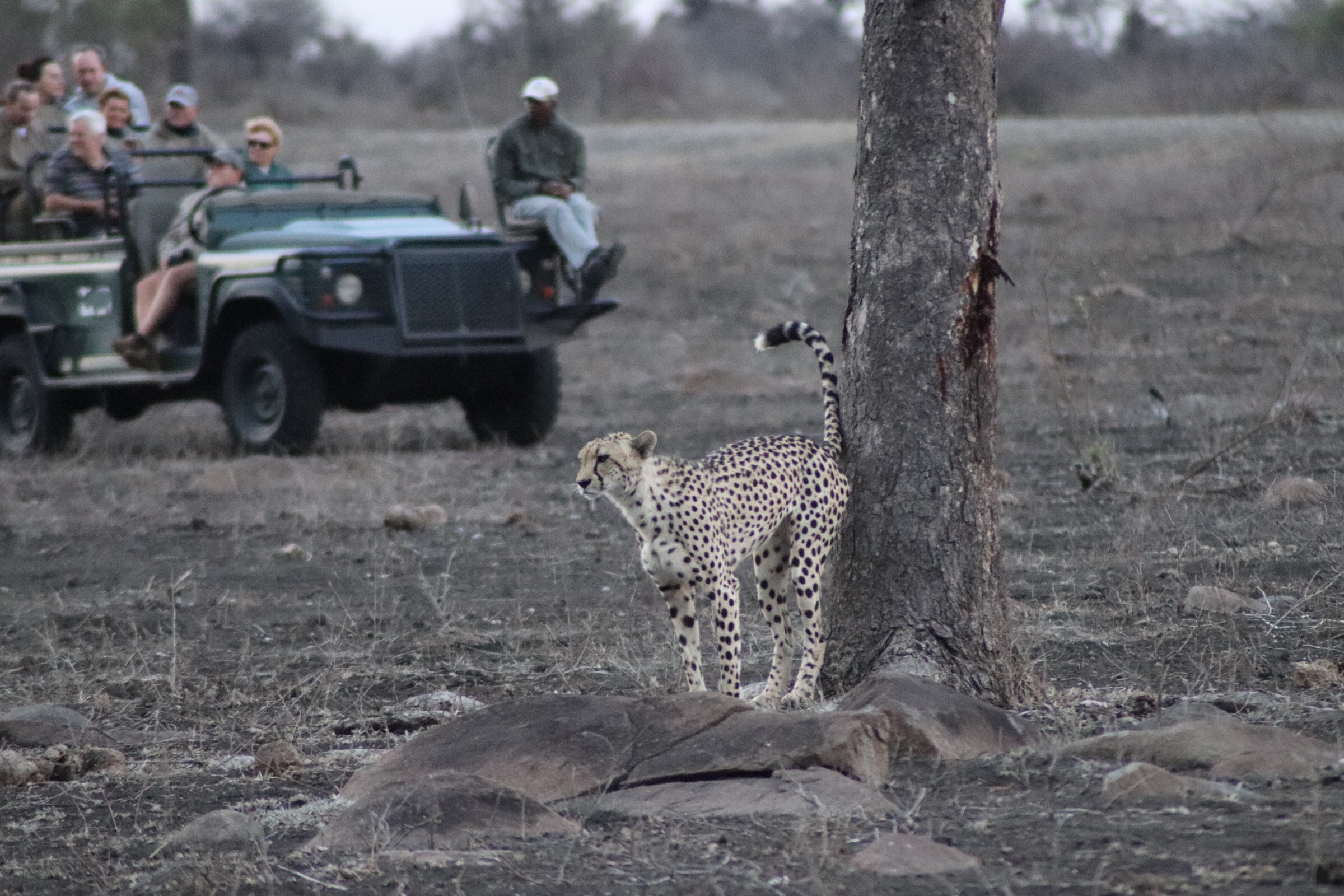
We must have watched the cheetah for nearly 30 minutes, following her and she walked a bit, and then laid back down, and then walked a bit more, and then laid back down again, But each movement was mesmerizing and we were constantly wondering what she was thinking and what she was looking around for. We decided to peel away and try and find the lion again that we had seen before. One of the other guides called in that she had stood up again. We got there just in time, to catch another glimpse of her as she wandered off the property and into the distance.
Now while all of this exciting animal viewing was happening, we couldn’t help but notice that there was some sky viewing we should also be doing as the wind was picking up, dark clouds were moving in quickly and we were seeing a lot of lightning bolts in the distance. Our guide said ‘hmmm those seem to be over our campsite right now and look to be headed this way – that can’t be good’ and we knew that we would probably have to call it quits early on our game drive today. But not before one last amazing sighting – three rhino, up close this time, looking picturesque against the green bush and dark blue sky. We watched them for a few minutes as the lightning in the distance picked up and the clouds got darker, when our guide finally said, ok I think it’s time to go before we get stuck in that.
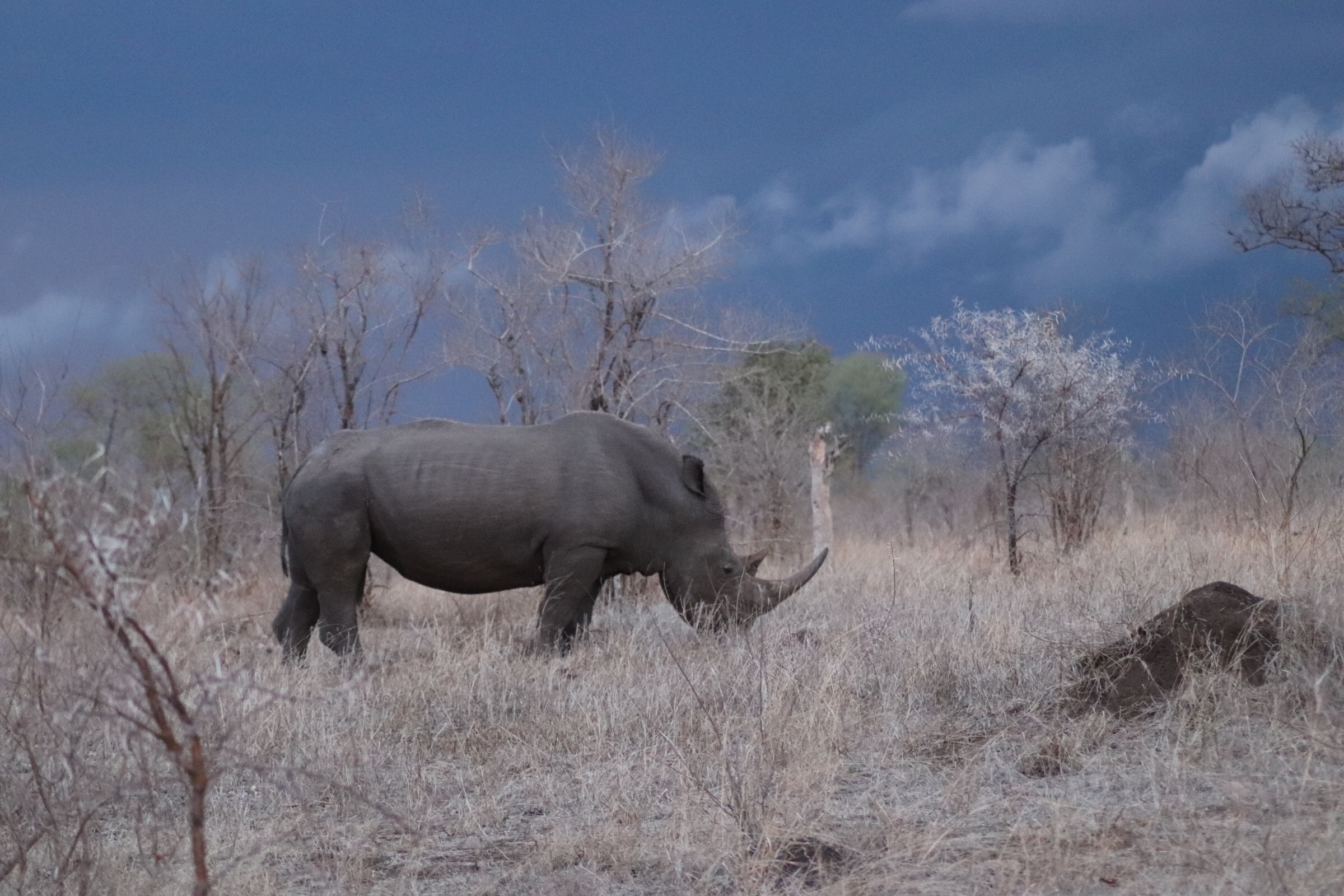
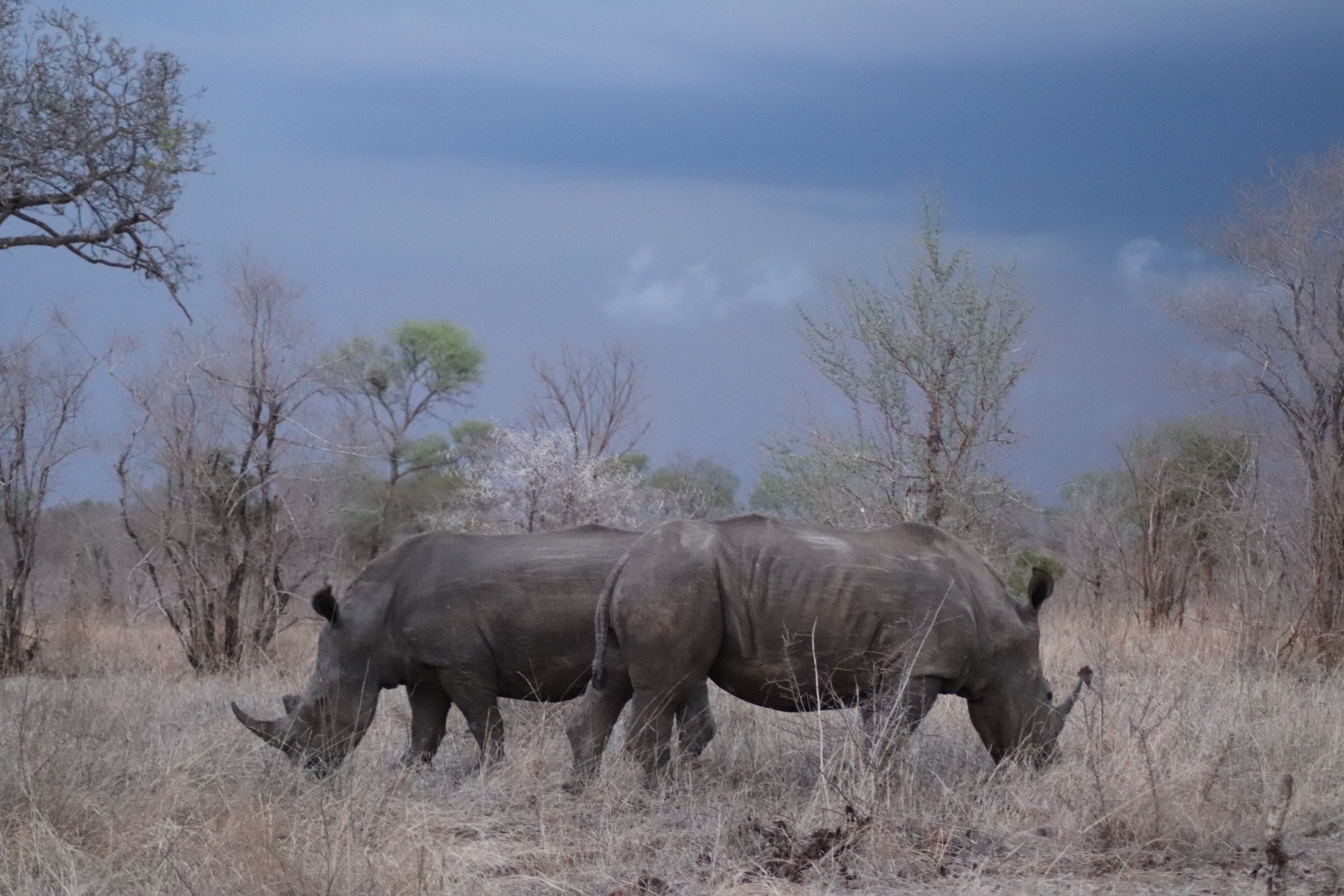
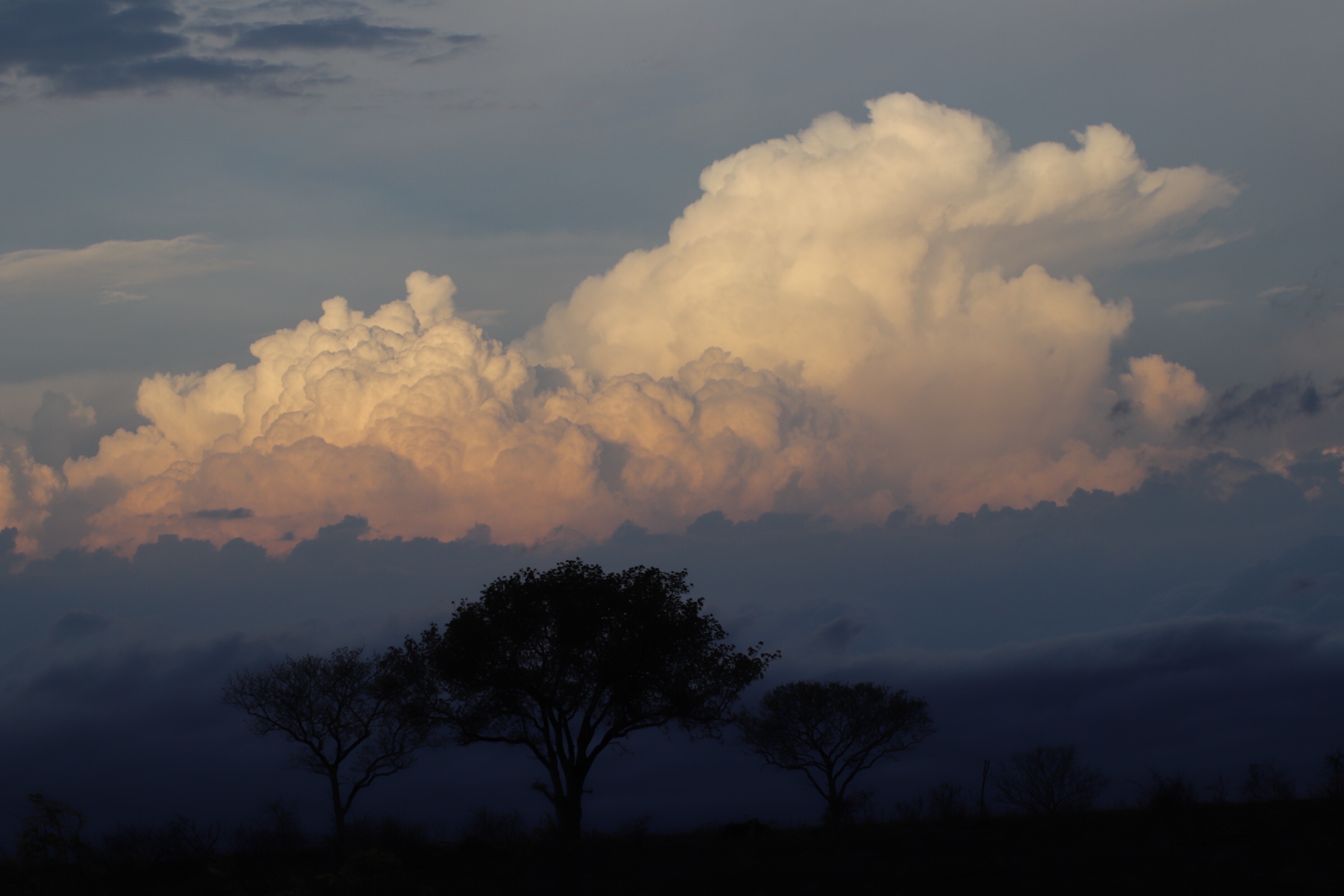
He warned us it was going to be a bit of a bumpier ride than the way out and to put on the heavy duty ponchos in the seat pocket in front of us in case we didn’t make it the whole way back before the rain started. He said there were reports of hail in Kruger earlier in the day and it could be coming for us so we should get ready. Lighting was filling the sky at this point in almost all directions and it was a thrilling journey back to say the least. Somehow he maneuvered us through the turns of the rough terrain until we reached the main dirt road that would lead us back to our camp. As we got to the main road the rain began to come harder at us in all directions. Now remember we are in a completely open top vehicle at this point, and every time we looked up we would get hit in the face by large raindrops and what felt like hail at times. We made it ti the main gate and a few minutes later pulled up to the camp as the rain intensified. The other guides handed us big golf umbrellas and said quickly hurry to your tents because the heavy rains are about to start. We made it just in time and boy did it rain! Just as we made it to the tent we jumped inside to flashes of lightening and crashing thunder and a massive downpour outside.
We made a run for it to the lapa dining area – dinner was clearly not going to take place under the stars tonight. Once there we enjoyed our sundowners (which had become more of stormdowners) since we had to quickly leave and retreat to the camp. Dinner was delicious – we had a traditional South African dish cooked in a small, cauldron-looking pot over a flame, the contents of which are in layers. On the bottom is the meat which is first browned, and then on top of it 9 layers of vegetables are added – with the ones that take longer to cook at the bottom. The pot is left on the open flame to cook for 3-4 hours, but is never stirred until the very end until it is served. We are it over a grain made of ground up mais. The flavors were really delicious and the meat was very tender.
After dinner we had our briefing for the next morning, where we found out we would have a 4:45 wake up call and set off on the game drive 30 minutes later. It was early, but the best time for viewing animals and after today we were especially eager to see more. What a great start to our safari!
Day Two
After our nice early 4:45 wake up, we headed out into the bush in search of more animals around 5:15. We hoped that we would be as lucky as we were yesterday. We both slept pretty well in the cool night air, only kept awake by animals a few times during the night – only this time instead of monkeys like there were when we were camping on Kili, this was mainly frogs and birds, and with the storms last night the occasional rumble of thunder. The animals and birds here sure can make some noise!
We were heading back into Sabi Sands this morning. The skies were certainly much clearer than last night and we set off as the sun was rising. The bush was very still for the first hour or so of our drive and it didn’t seem there were many animals around. Maybe the storms of the previous night kept them away but whatever it was we drove for a while without seeing much of anything on the ground other than two jackal (similar to a fox) running around, and one of the smallest antelope in the bush – the steenbok. We did see something high in the trees though as we watched an eagle resting, and would later in the morning see three more together.
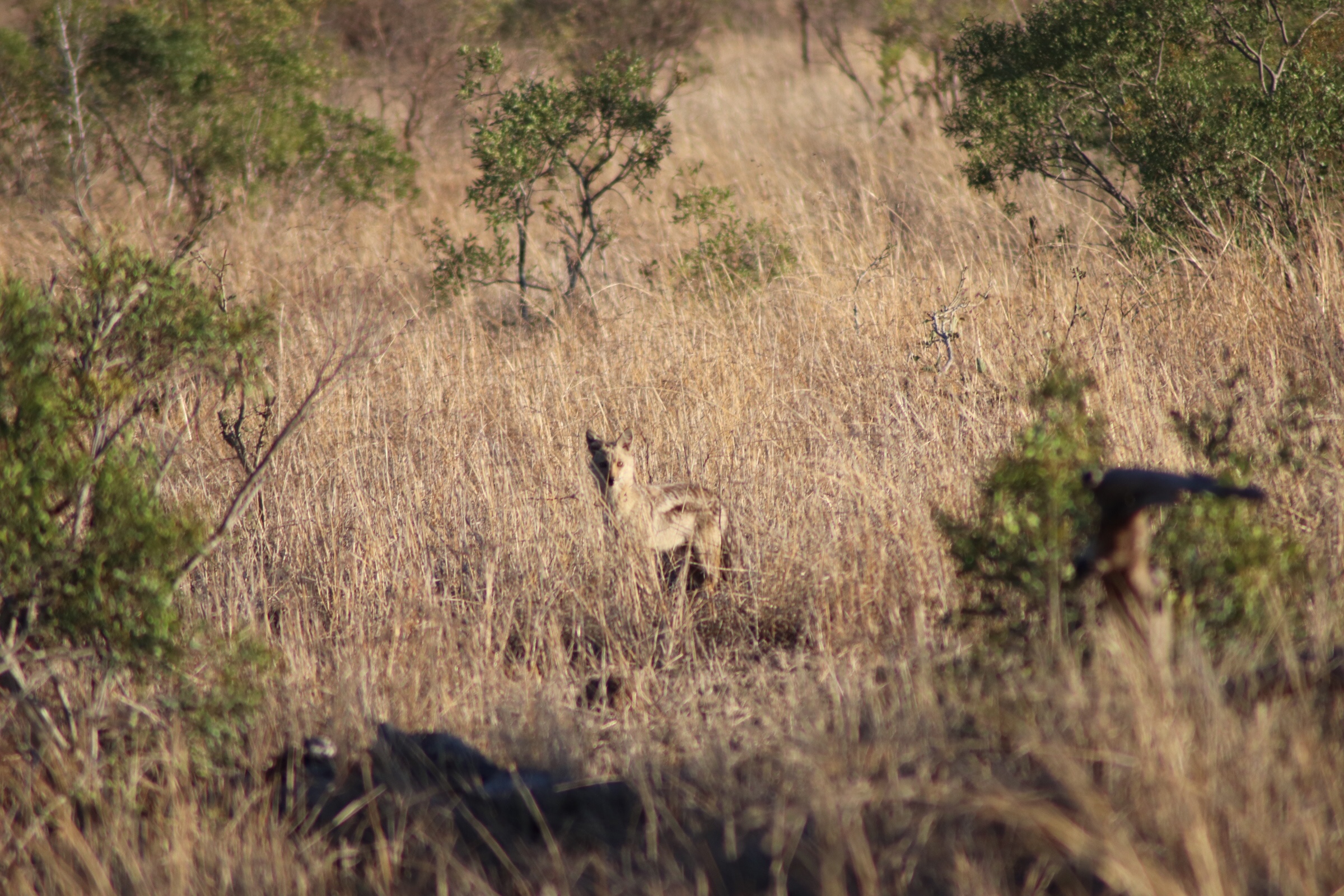
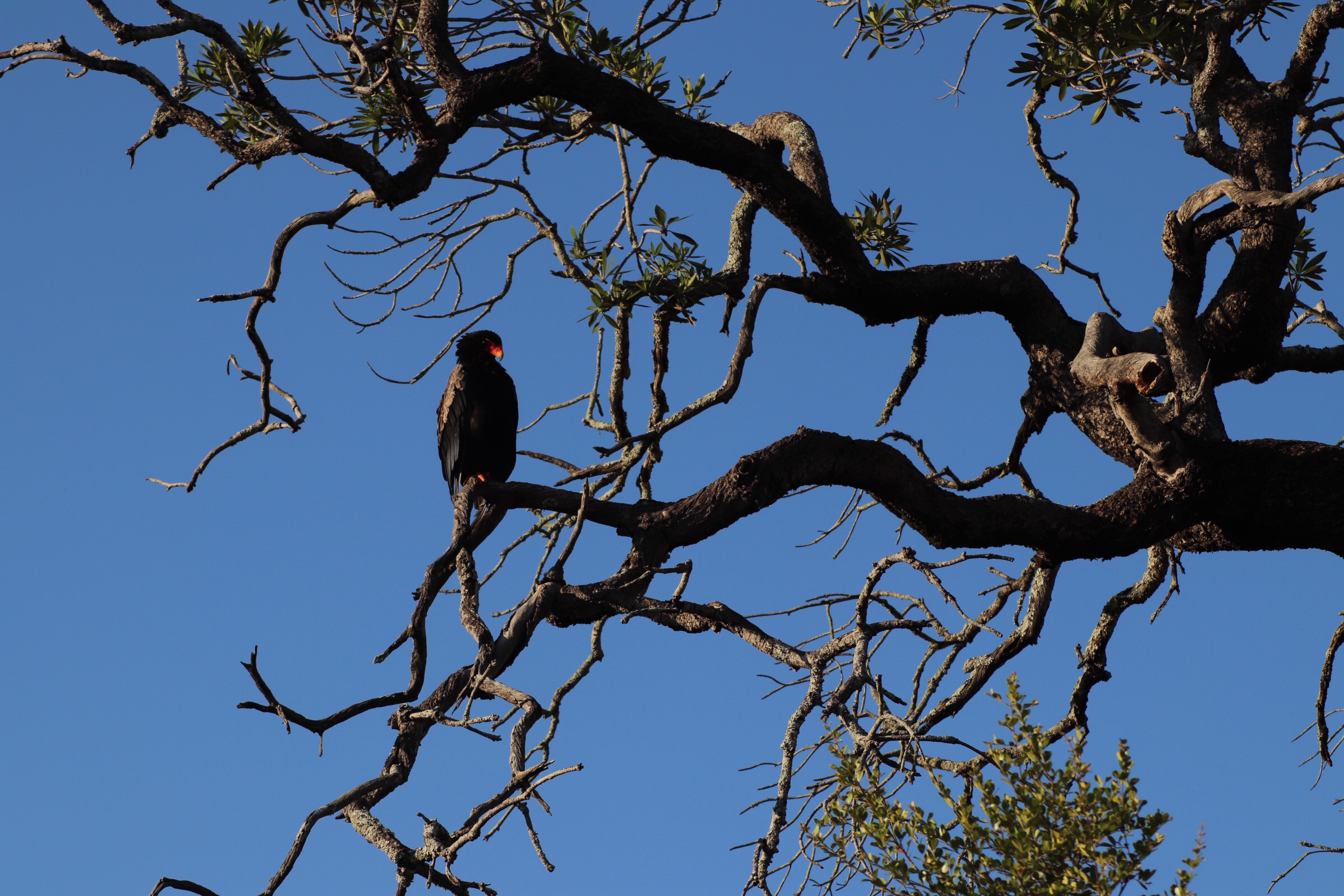
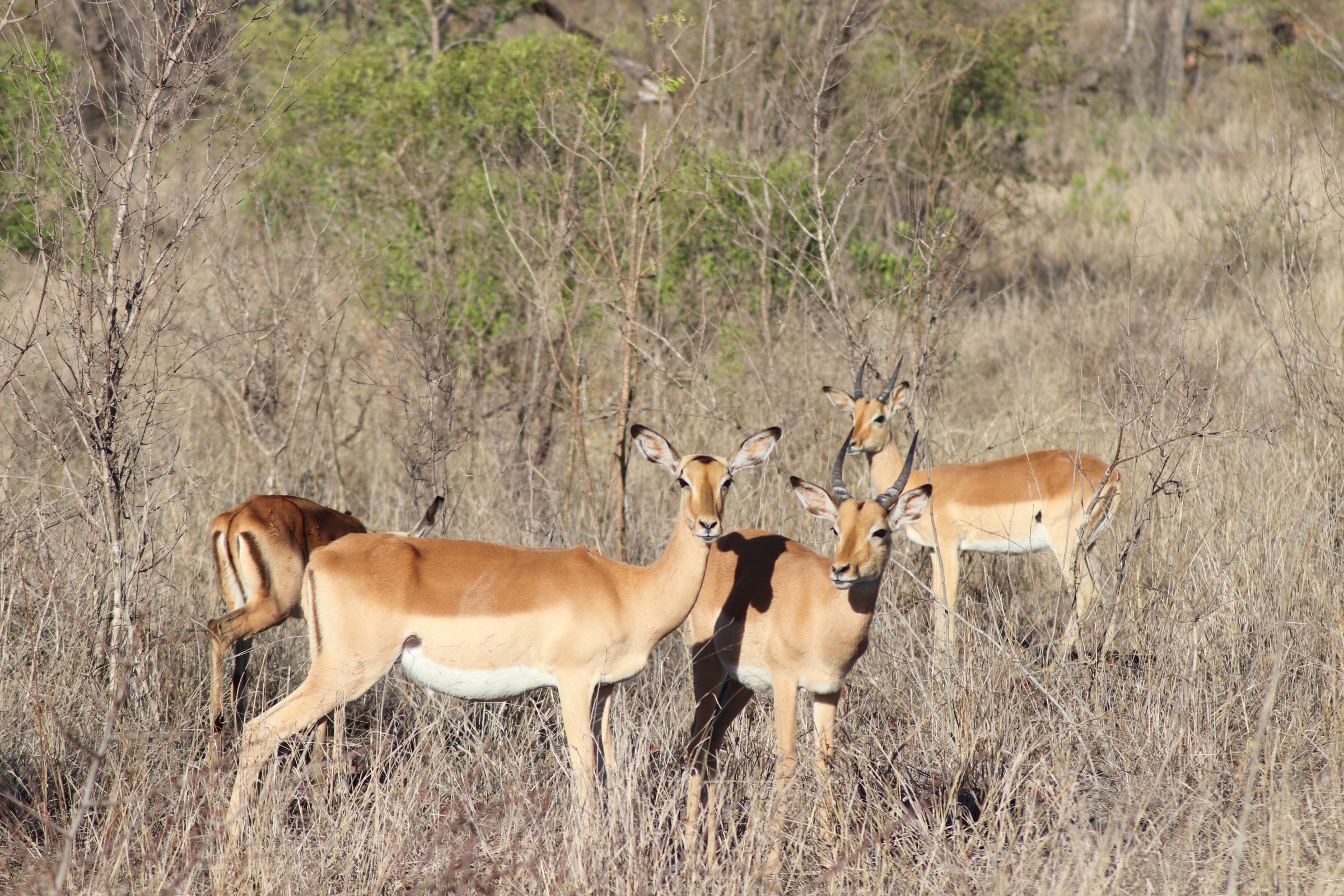
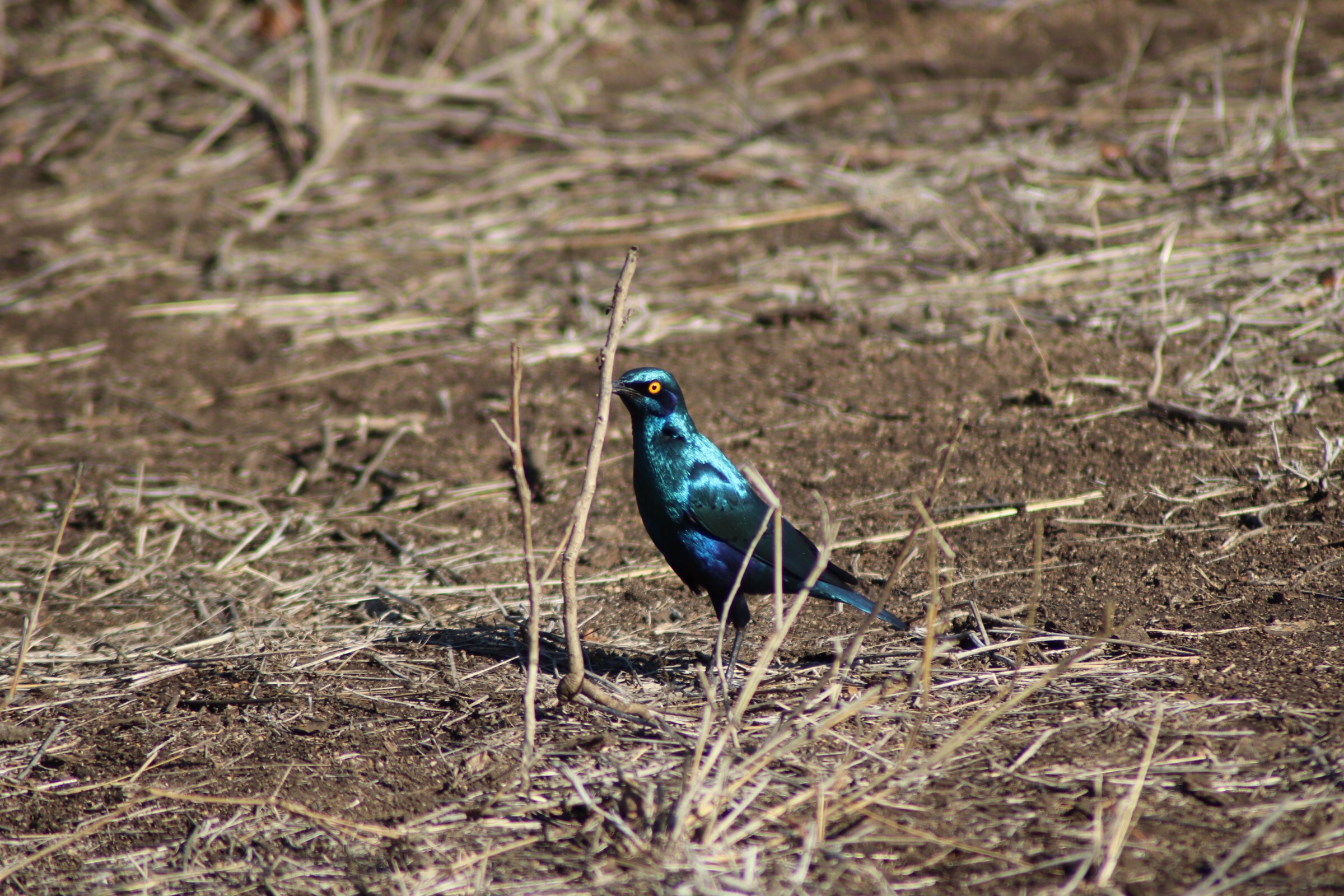
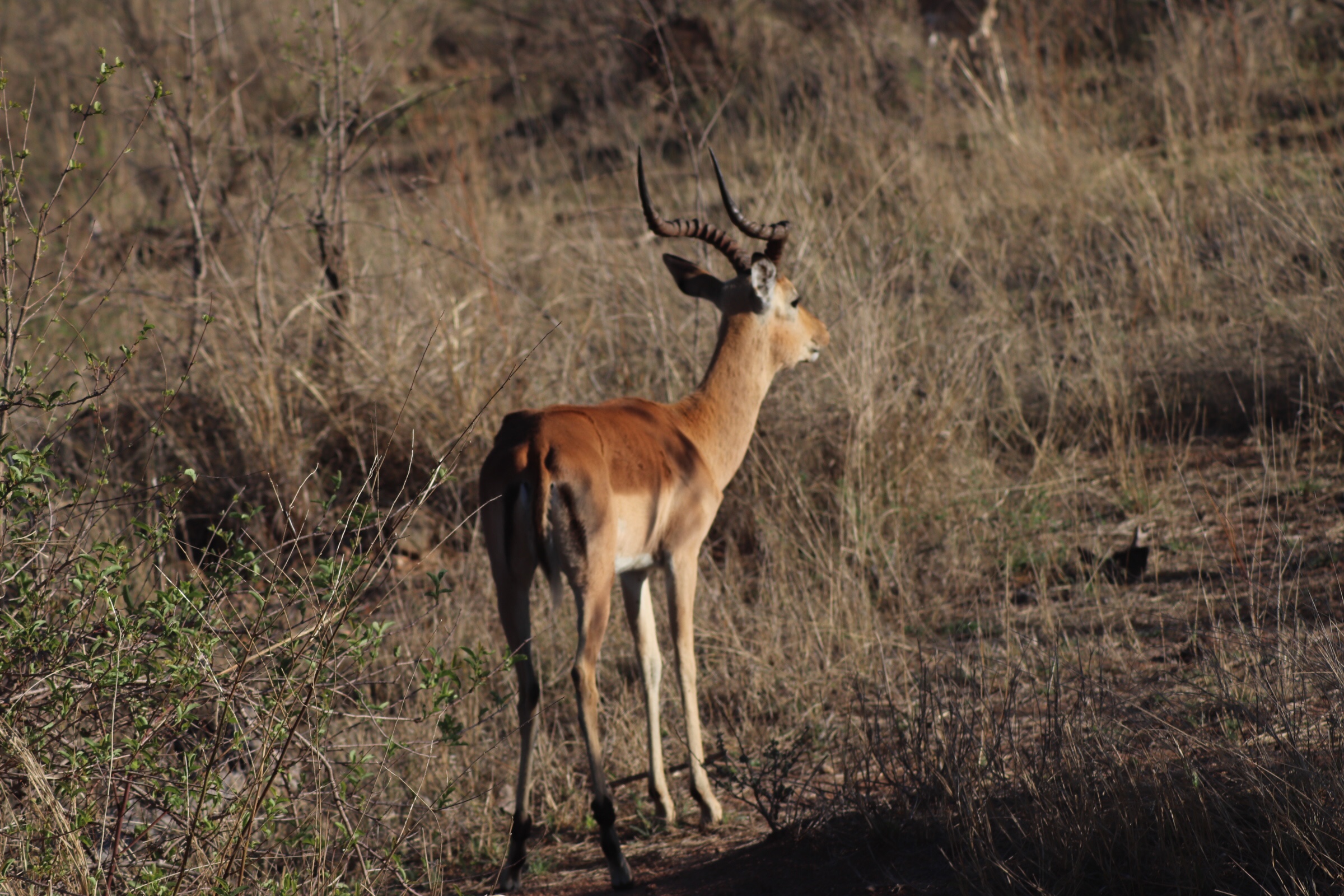
Our drive continued and we saw mainly two kinds of antelope (1) the most populous animal and main food source for the predators – the impala – and (2) the kudu, including some of the males with their twisted antlers, which get more twisted as they as they age. We also saw a type of bird with glistening blue feathers in the sun – but learned this was merely the suns reflection and in the shade or if you were to take one inside the feathers are actually black.
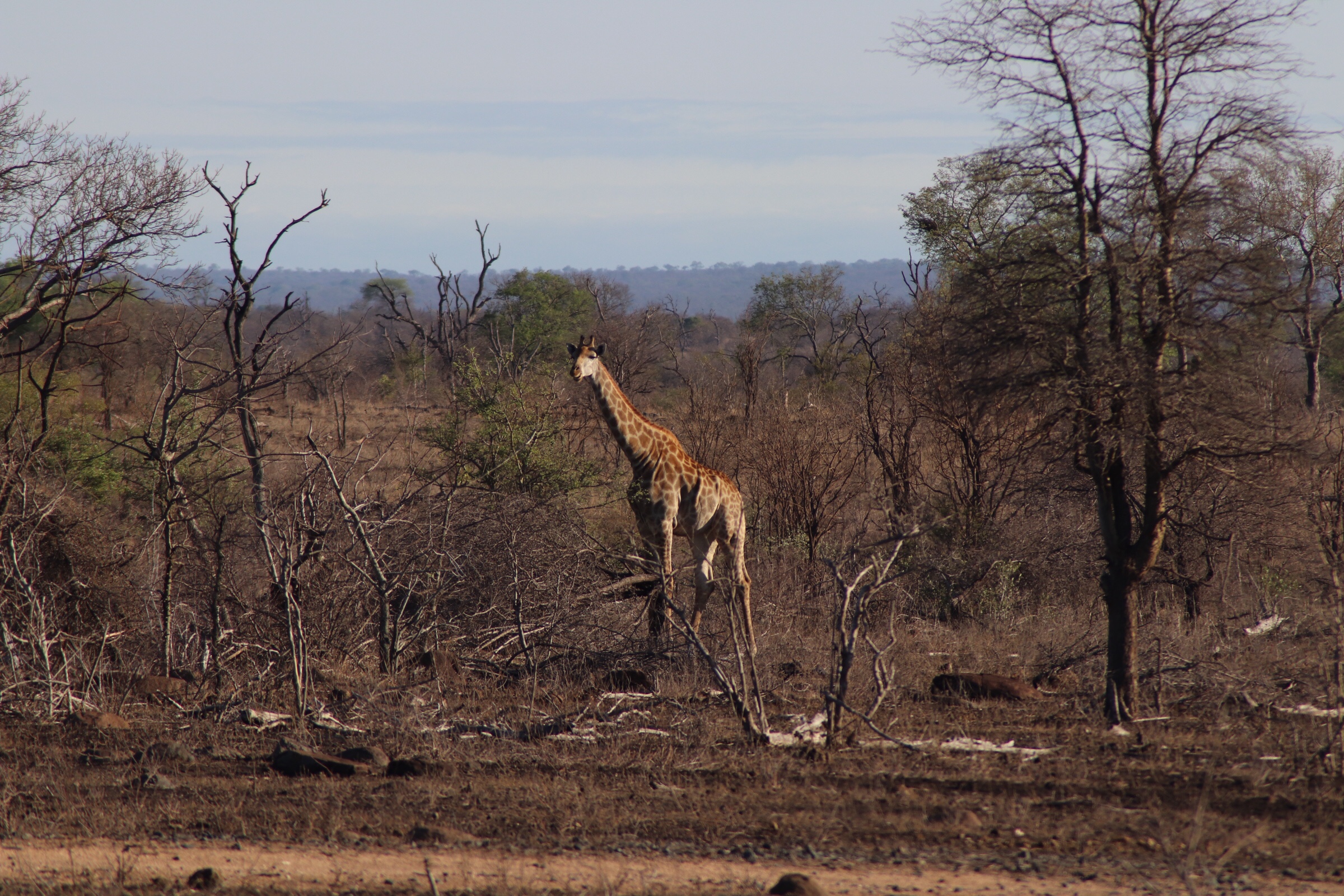
Finally, off in the distance we had our first major animal spotting – three giraffe including one baby. They were a bit far from us but thanks to their enormous height we could see them towering high above the trees. They really are a spectacular creature to see and to see how they move their bodies. We learned that like all land mammals (humans included) they only have 7 vertebrae in their back and long necks – however each one is of course much larger than a human’s. They also have the largest heart of any mammal, which can weigh up to 16kg!
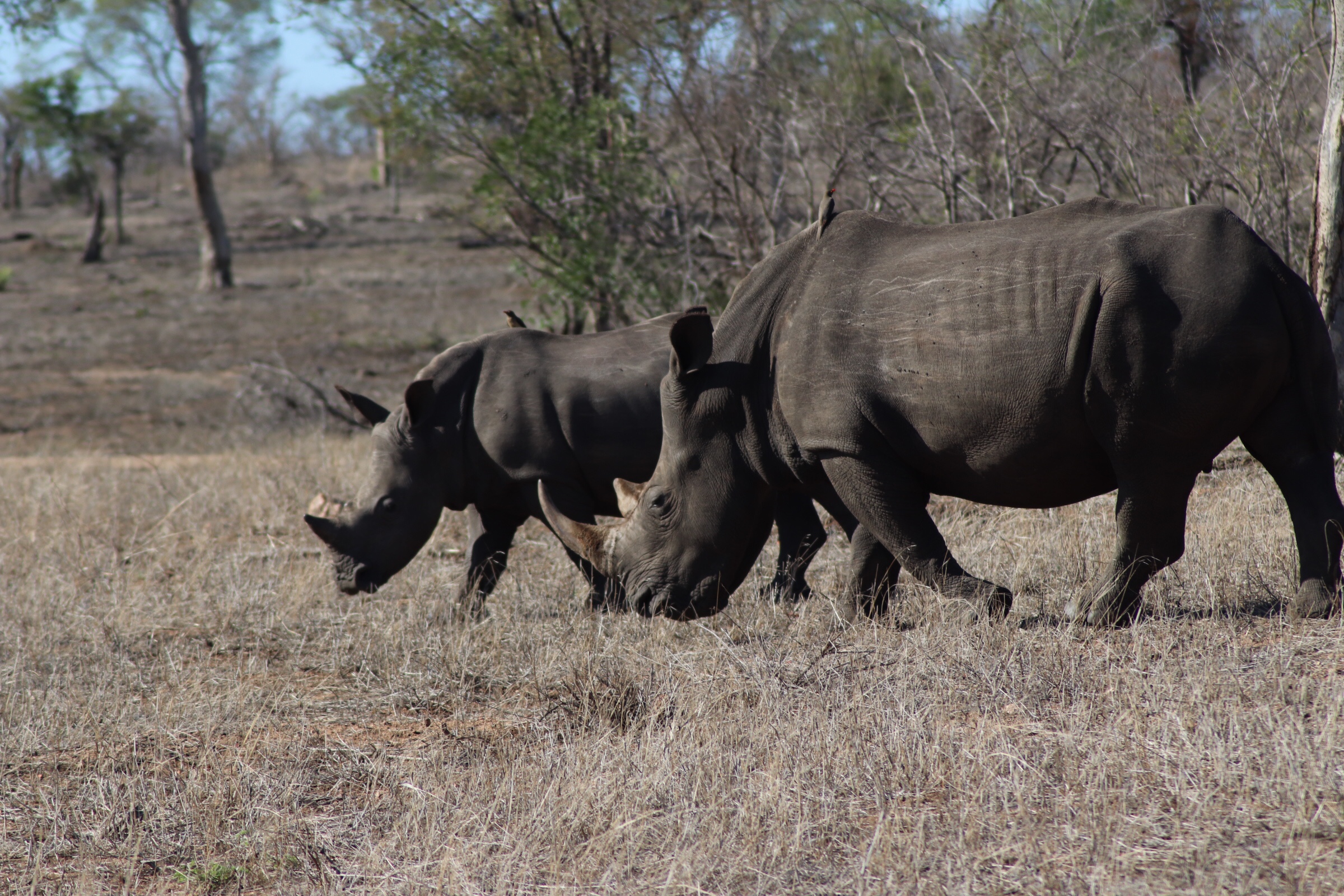
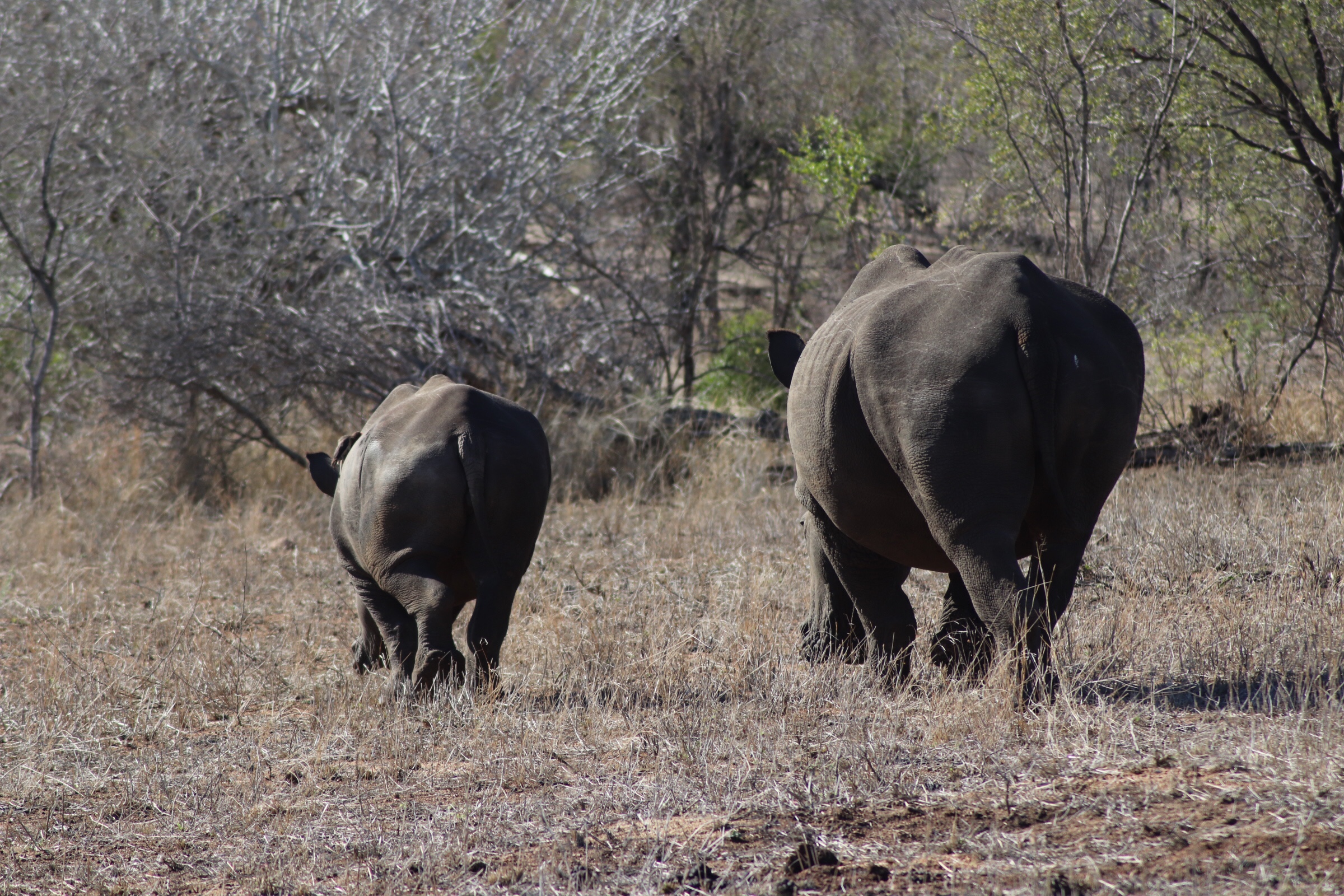
After a bit more driving we ran straight into three rhinoceros- a male, a female, and her baby. Our guide said it was likely the male was trying to mate with the female, and she was refusing and drawing him away with some puffing and snorting sounds she was making. The reason for this was that her cub was still too young to be left alone and she would continue to watch over him until he was grown enough before mating again. We watched them for a while from a very close distance until the female and her cub started to head off into the distance.
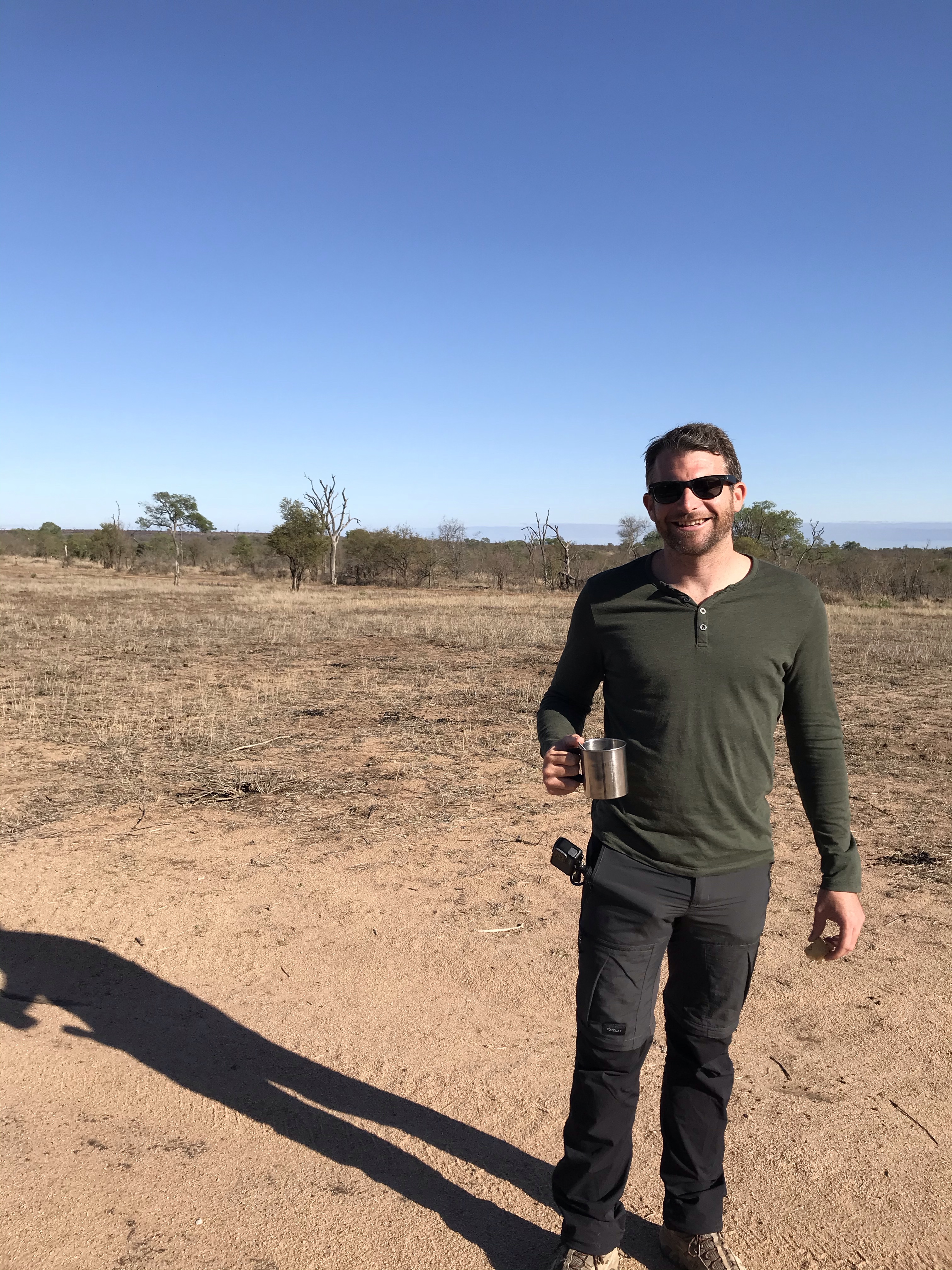
It was about halfway through our drive at that point and time for our morning coffee/tea break in the bush. We hopped out of the vehicle and enjoyed a cup of coffee and the scenery all around us. Our guide said ‘if you see something that looks like it’s going to eat you, just jump back into the car’, but we had no such luck while on foot. After the break we continued for a while seeing mostly more impala and kudu, but coming across other smaller animals as well such as the mongoose, a tortoise, and rather large lizards.
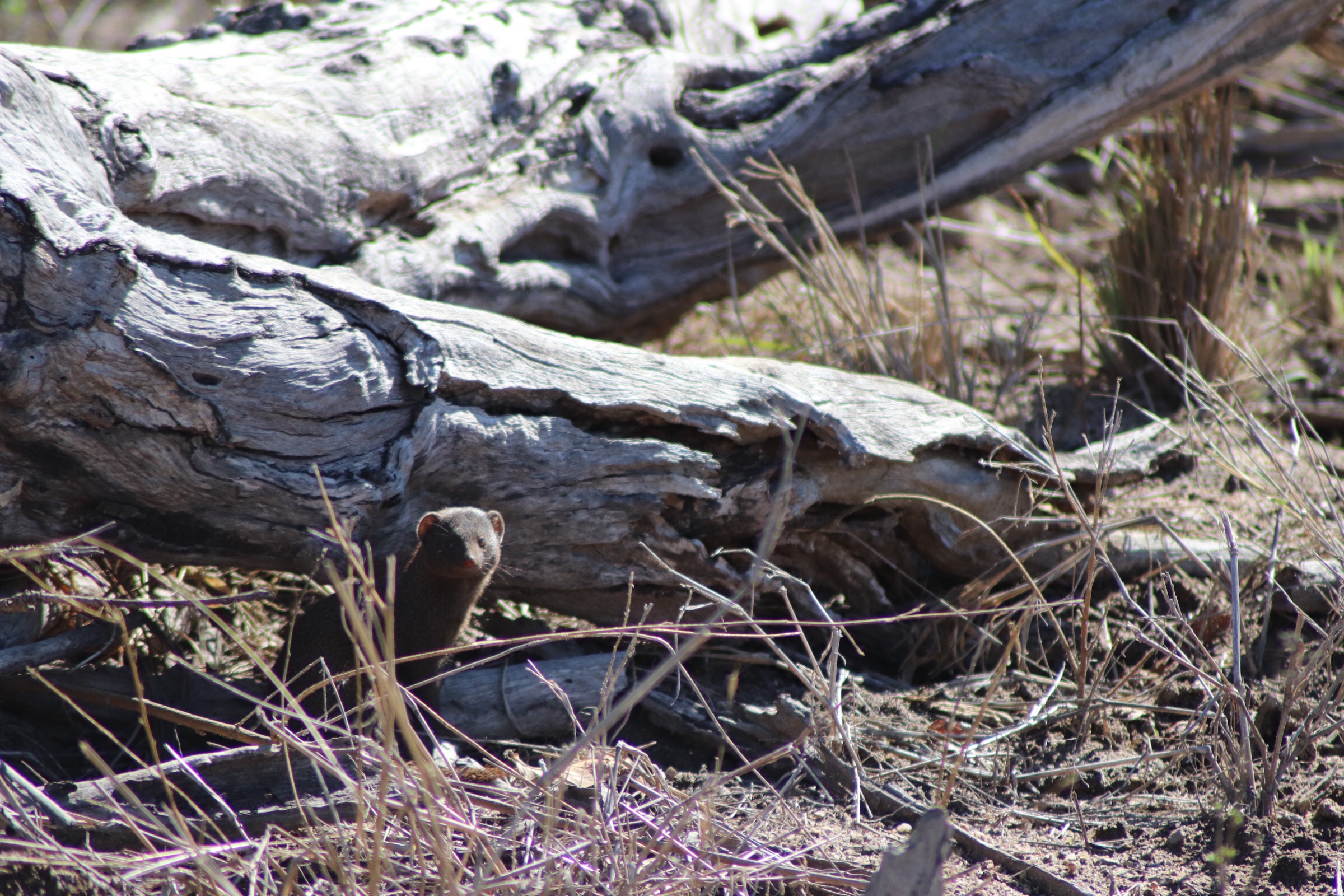
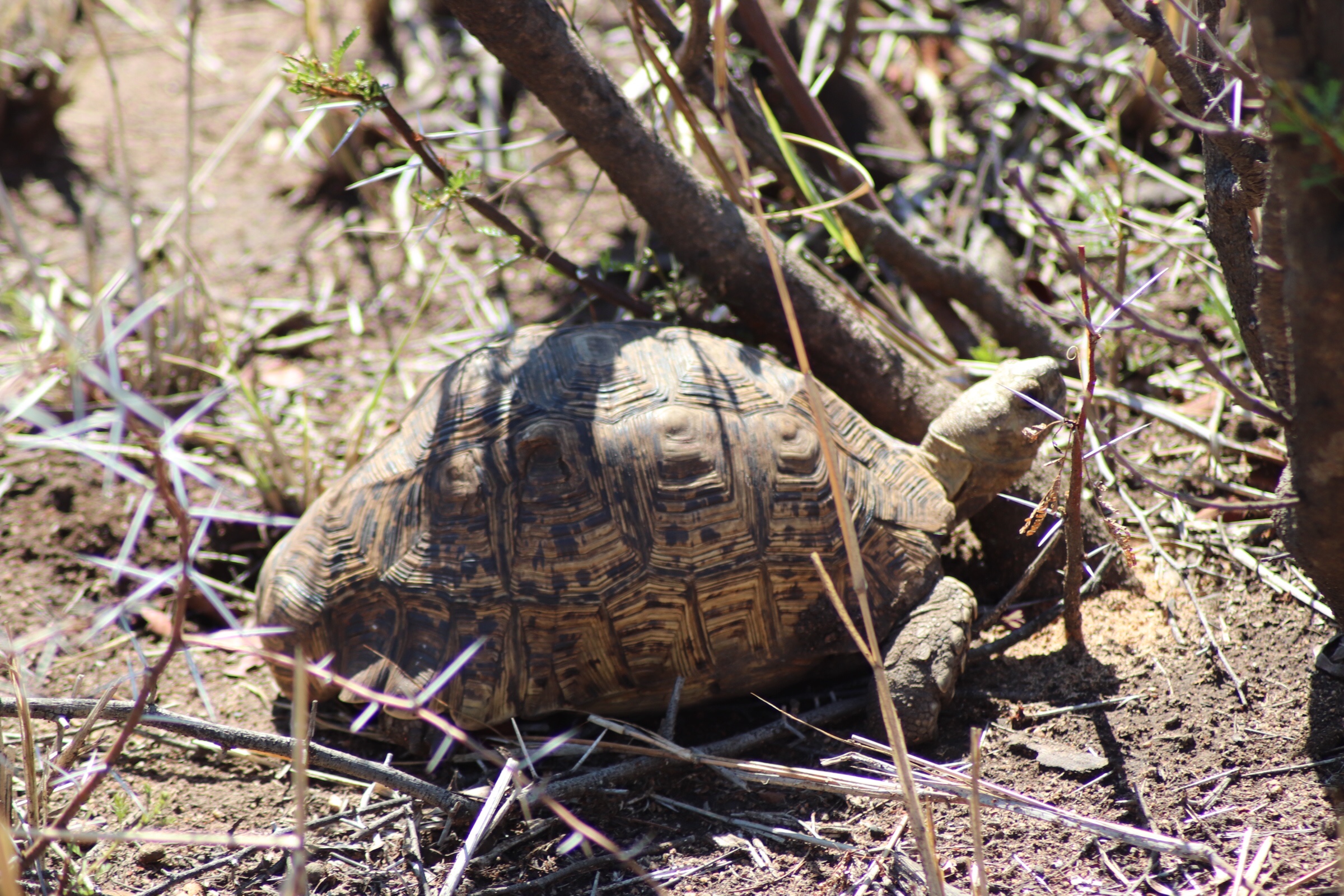
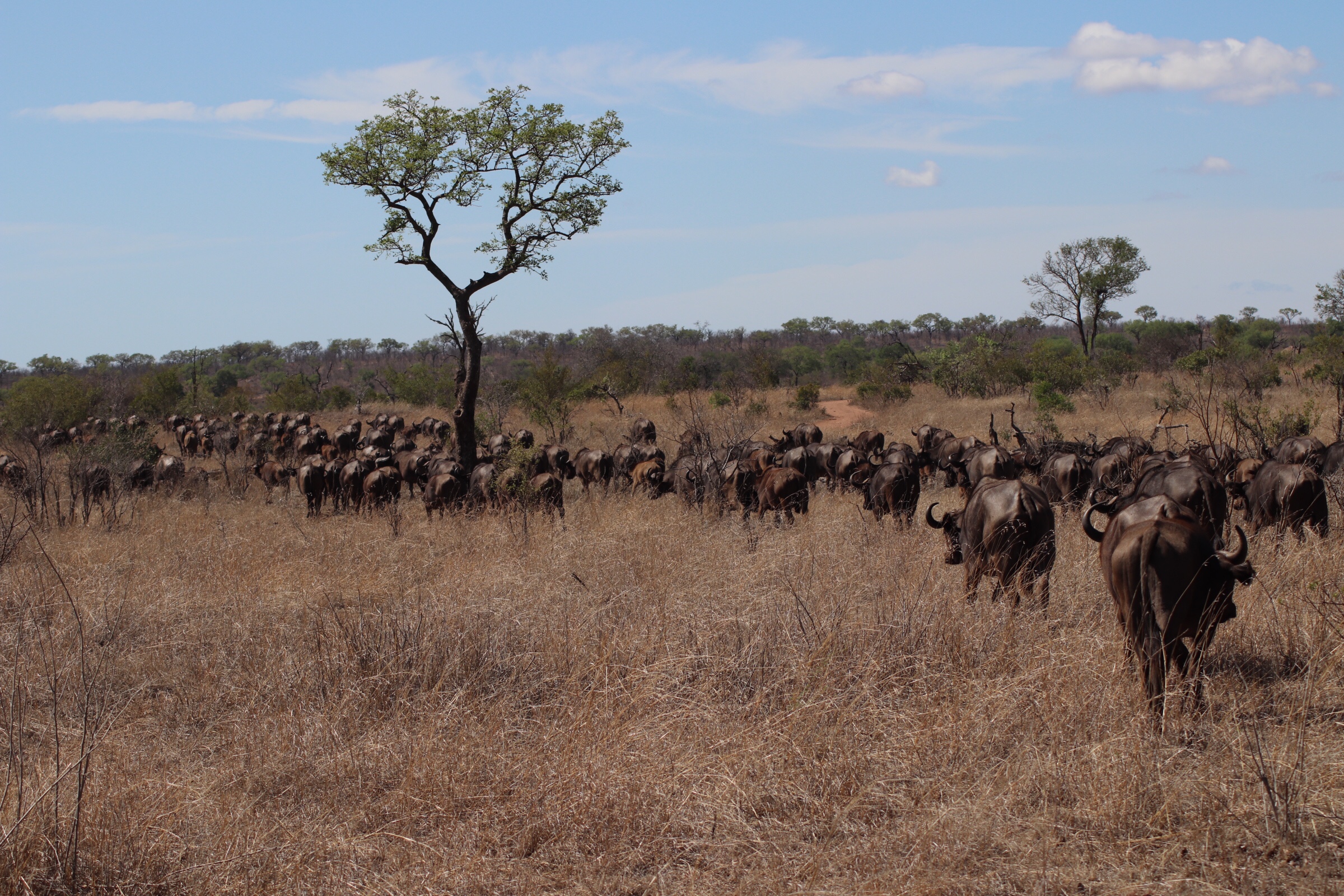
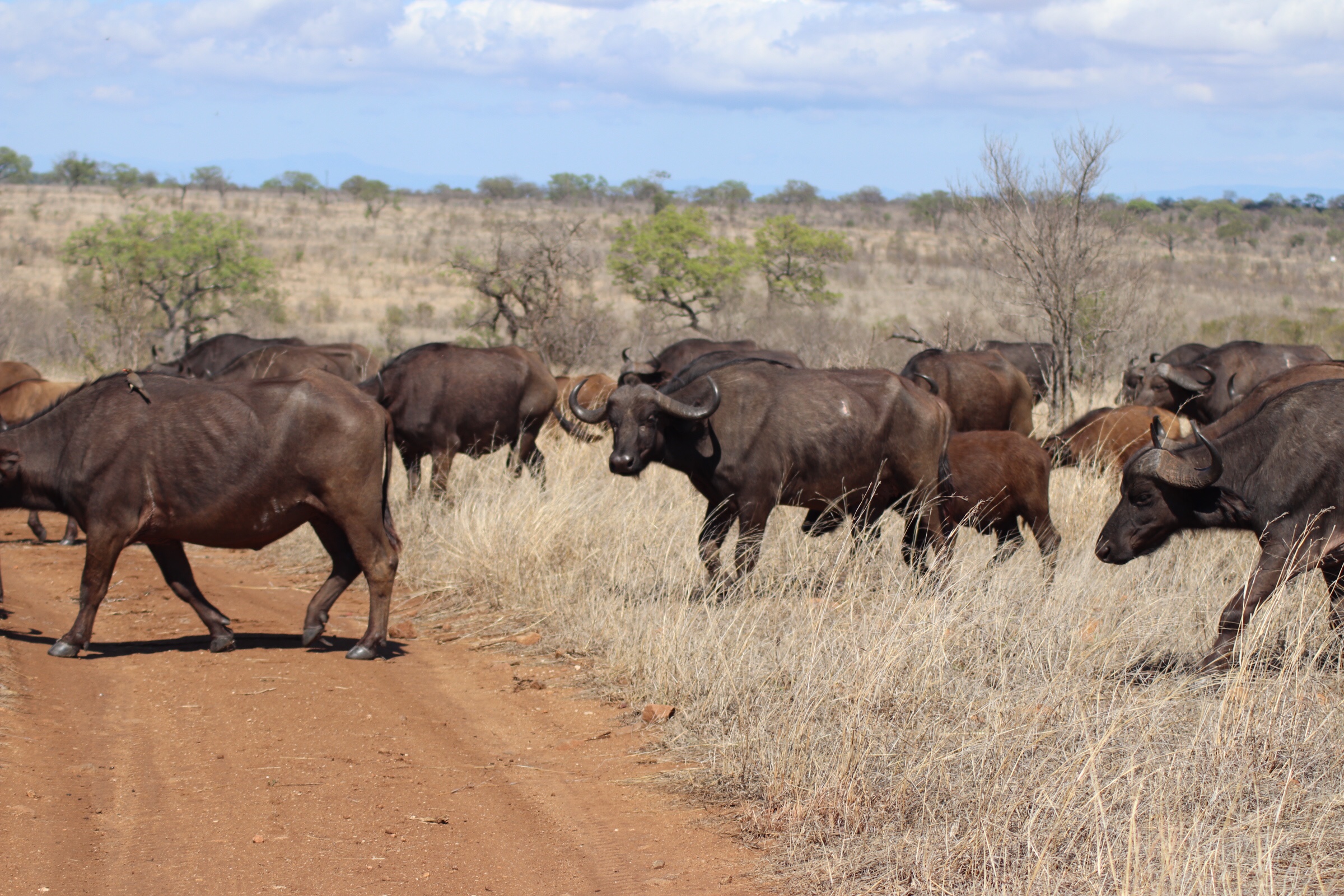
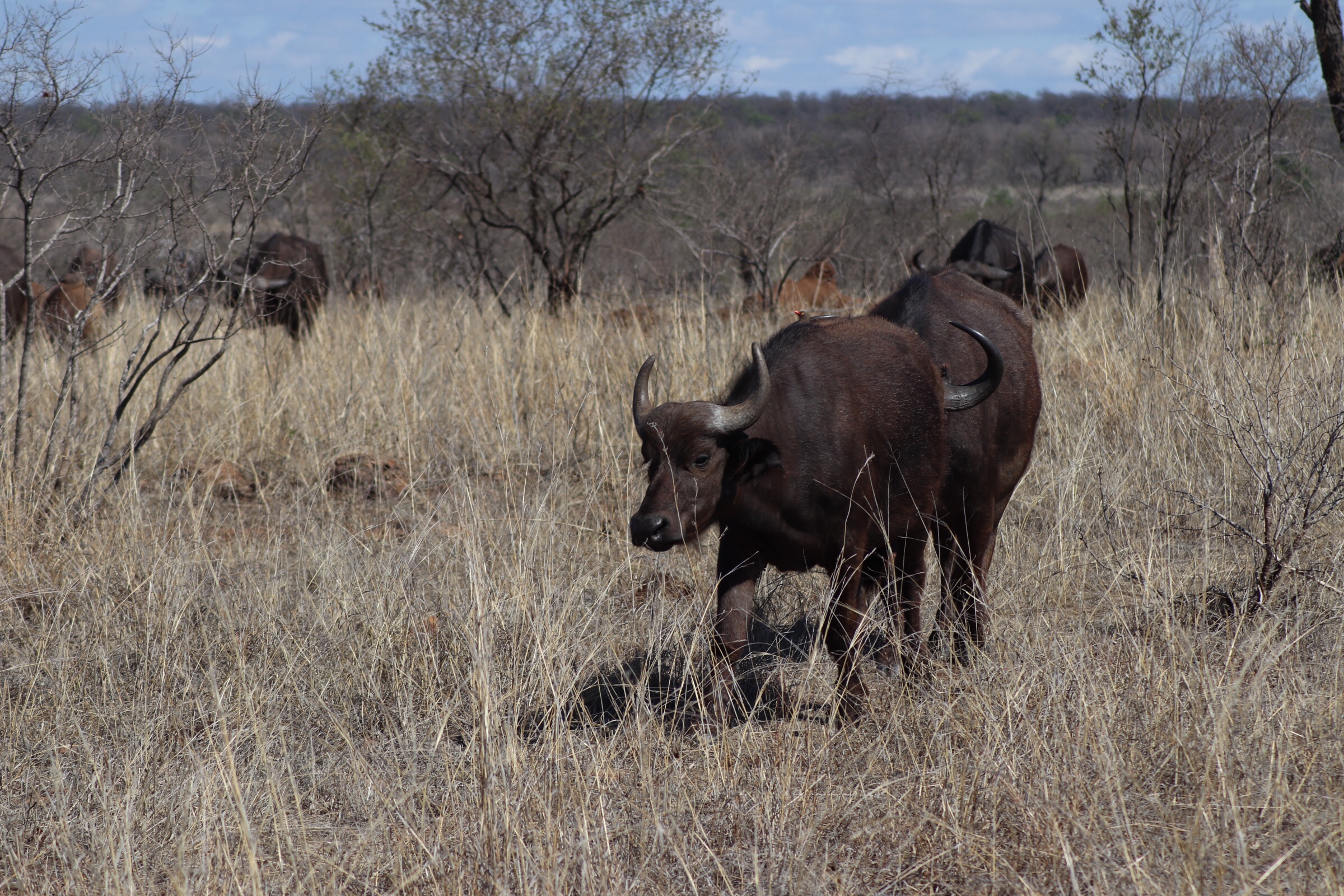
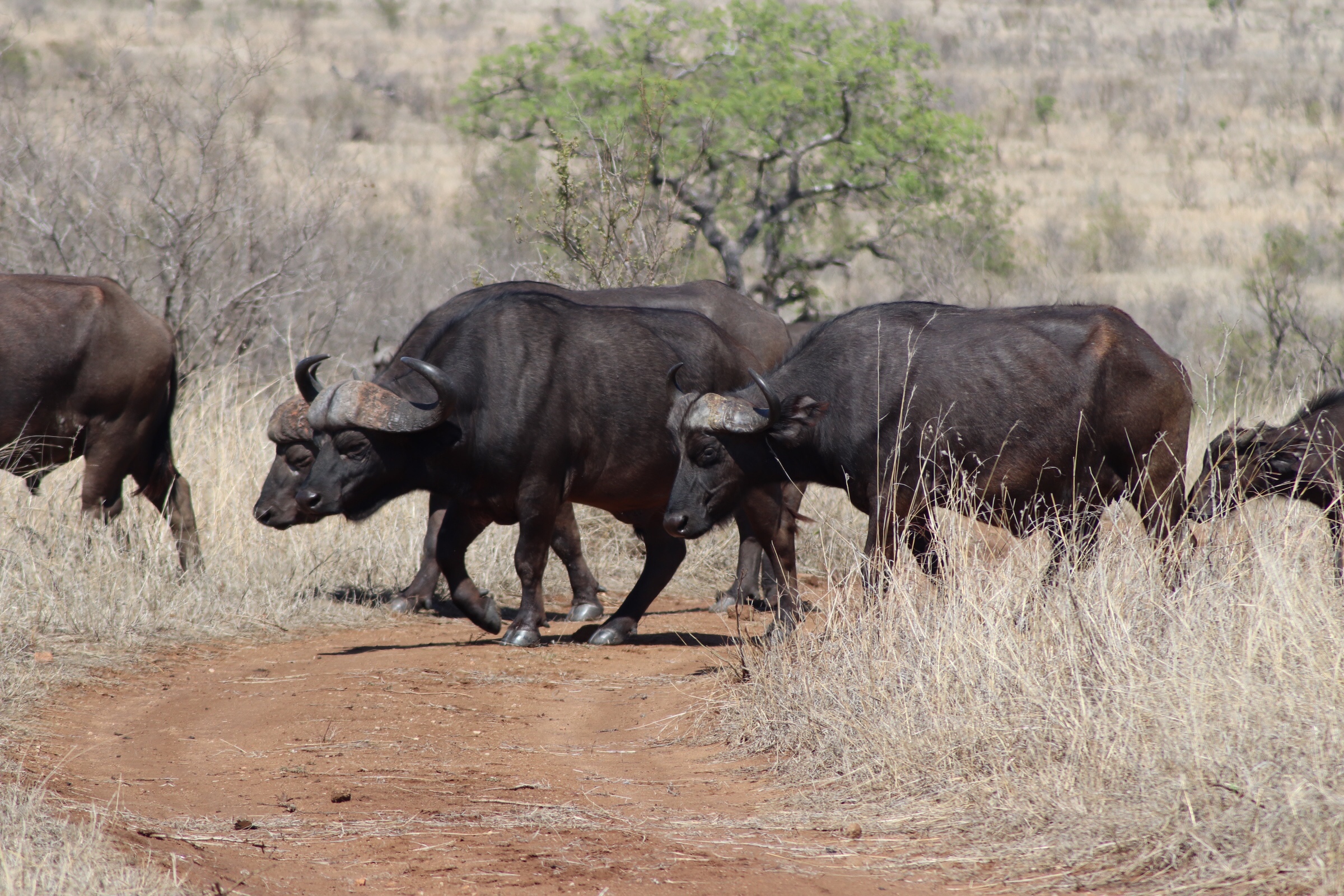
On our way back, a little disappointed that we hadn’t had as much luck today with the larger animals (at least compared to yesterday it seemed like we hadn’t), it suddenly changed as we were greeted with the most incredible sight and another big five treat – a gigantic herd of cape buffalo crossing in front of us. When we say gigantic – we mean it in terms of both the size of animal and the number of them. There had to be at least several hundred (our guide estimated 500-700) that were part of the herd passing across the path in front of us. They just kept coming up over the hill to the right of us and continuing off into the distance to the left of us. Every time we thought it was the last one coming up over the hill another would appear just a few seconds later. It had to be almost fifteen minutes that we sat there watching and letting them pass just a few feet from us and observing these incredible animals. There were males, females, and plenty of young ones (and really old ones). While males and females both have horns, the males have a much broader and tougher plate across the head than the females. They really were a sight to see. Some would stop and stare for a while at us before they passed (as we sat knowing these animals are very aggressive by nature and staring at you several feet away…). Others would wander past paying no attention. Either way, it was really incredible to see just how many there were and observe them as they moved along.
Very satisfied again with our game drive, we headed back to camp around 9 am where we enjoyed a delicious breakfast and time for some relaxation and a nap before lunch and the afternoon drive. It was pretty hot in the tents at this point with the strong sun beating down… but that is what our porch and the pool area is for.
We set off around 4:00 for the afternoon drive with Drikus as the driver and Seonaid sitting in the chair at the front as the spotter, and started off immediately with a spotting. Just on the road into the reserve we saw another buffalo (as if the hundreds in the morning were not enough) along with impala and a few zebra. It was more rare to see the buffalo on its own. We learned that they kill 250 people each year, but they are not the most deadly killers in South Africa which are (in order): mosquitos, crocodile, people, lions, elephants, and then buffalo. We continued into the reserve and ran into a warthog on the way. We also saw two Duiker, which is another smaller antelope. Duiker is Afrikaans for ‘diving’ and these animals are named for the way that they run from predators and dive into a bush and hide there until the predator goes away. We also once again saw the ‘Zazu’ birds but this time there were two, who were apparently very much in love. We even got to hear the male’s mating call.
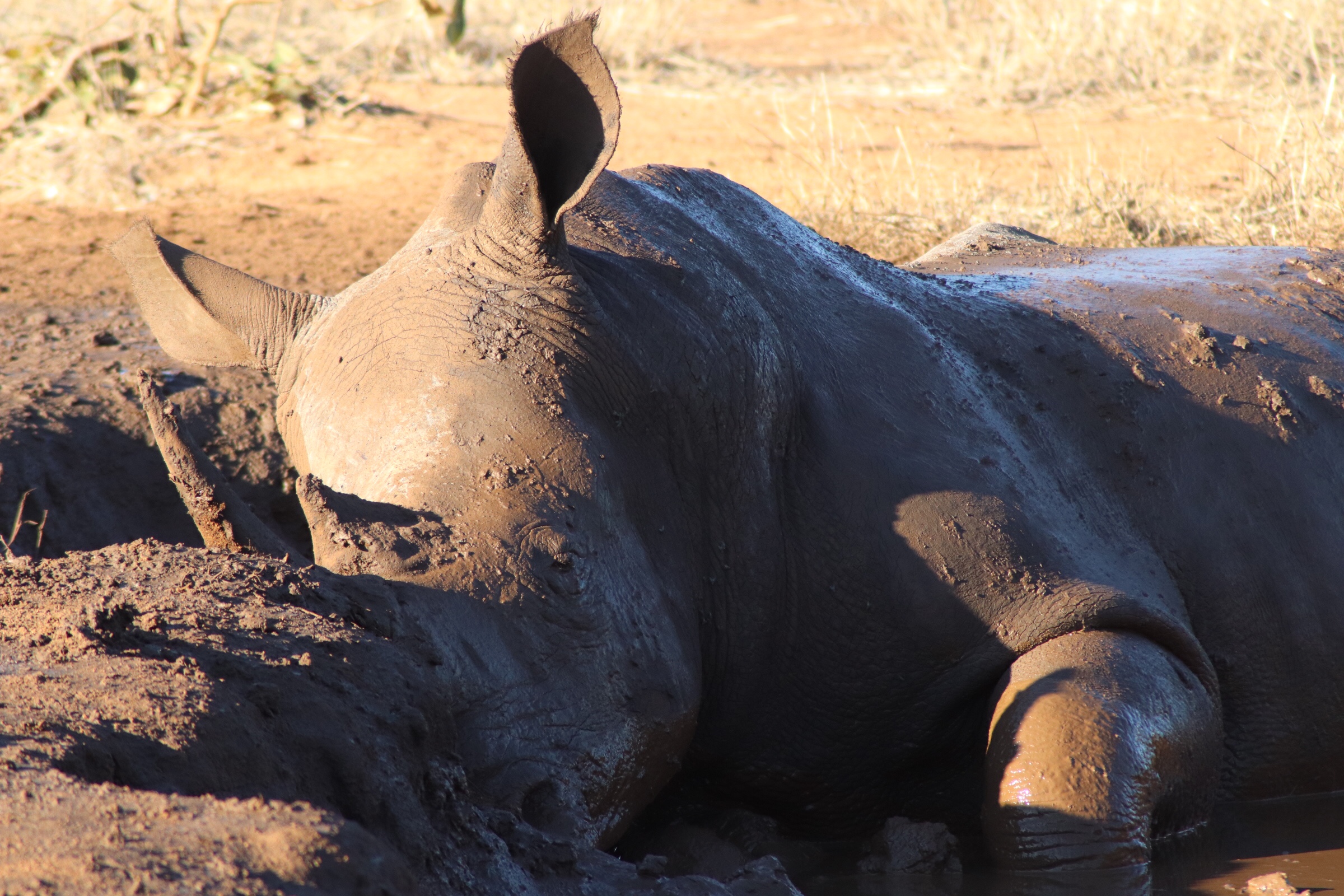
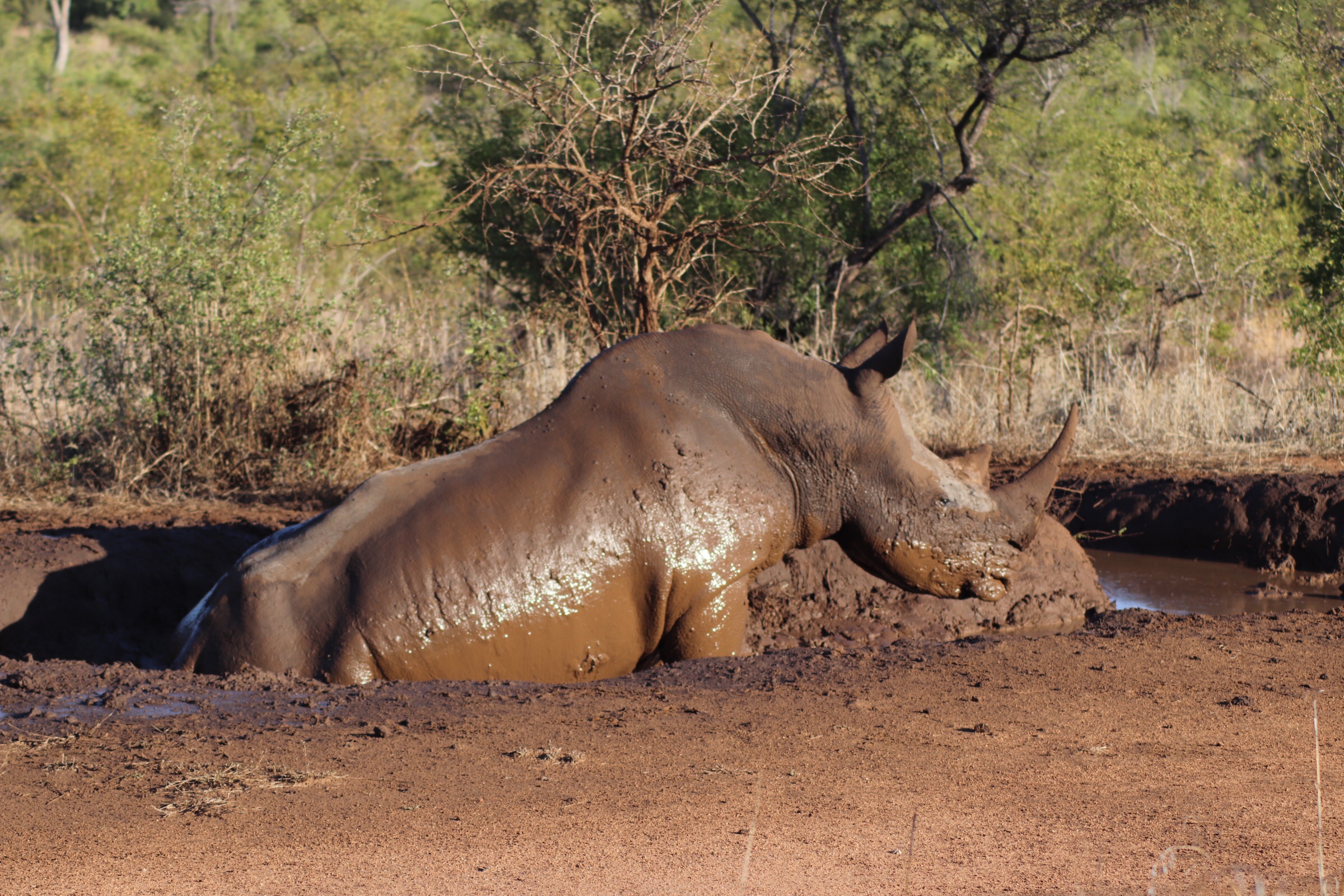
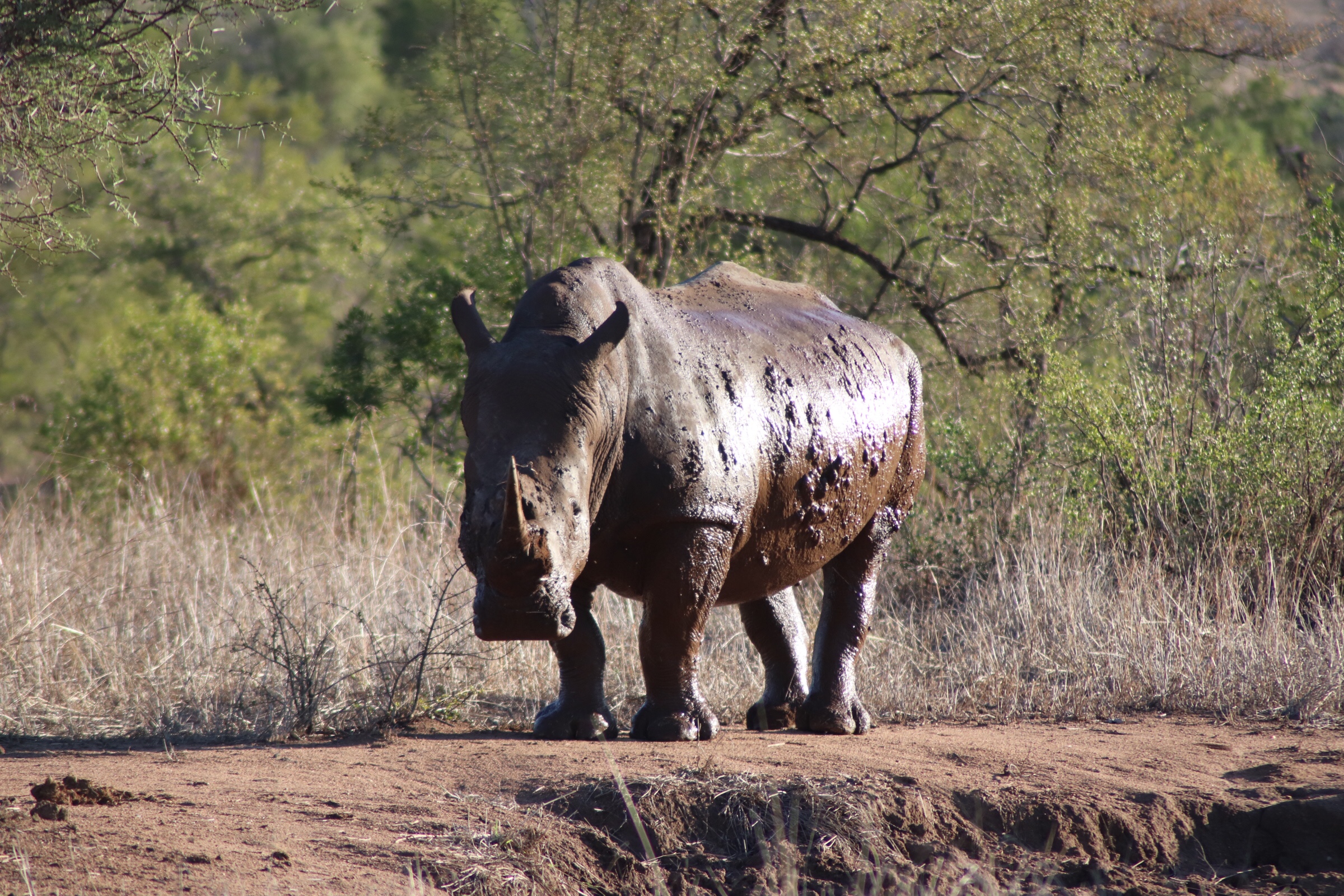
Driving along we came upon a really cool sight. Since we heavy rains the other night (and it had rained a few of the days prior as well) many of the holes along the ground were filled with water and mud. All of a sudden we came upon a large male rhino, lounging and sleeping in the mud. He was laying there both to cool down but also to coat himself, because it would cement in all of the ticks and parasites on his back which he could then rub off of him when the mud dried. We watched for a while from just a few feet away as he lay there, barely moving more than his ears and opening and closing his eyes. Totally relaxed and having the snooze of his life. Soon however he decided it was time to move and he stood up so we could see how big he really was. Sitting in a hole of mud it was deceiving – but this was a big, big rhino! We watched as he took slow movements up first on two legs, then the other two, then slowly coming out of the hole and walking just feet in front of our car. It was really special to watch especially because, tragically, the rhino population is slowly declining and is estimated to become extinct in the next 15-20 years. It’s sad to think that these creatures which are so peaceful to watch (mostly – one did charge a bit at a safari car the other day…) are being eradicated by poaching. They estimate there are around 5000 left in Kruger Park – which is home to 2/3 of the rhino in Africa. We sat and watched a while longer thinking about how it might be our last chance to see one in the wild.
We were soon called by one of the other guides to another spotting – an antelope hanging in a tree with the leopard that had just made the kill and put it there and now lounging below. While we could see the impala hanging, unfortunately we could only get so close and it was very difficult to see the leopard through the thick grass and bush where it was laying. Without being able to drive much closer we decided to wait and see if the leopard would make a move. After a bit we decided to go and have our sundowner stop. Since his kill was hanging in the tree we knew he was not going anywhere and hoped if we gave him some time maybe he would come down when we were back.
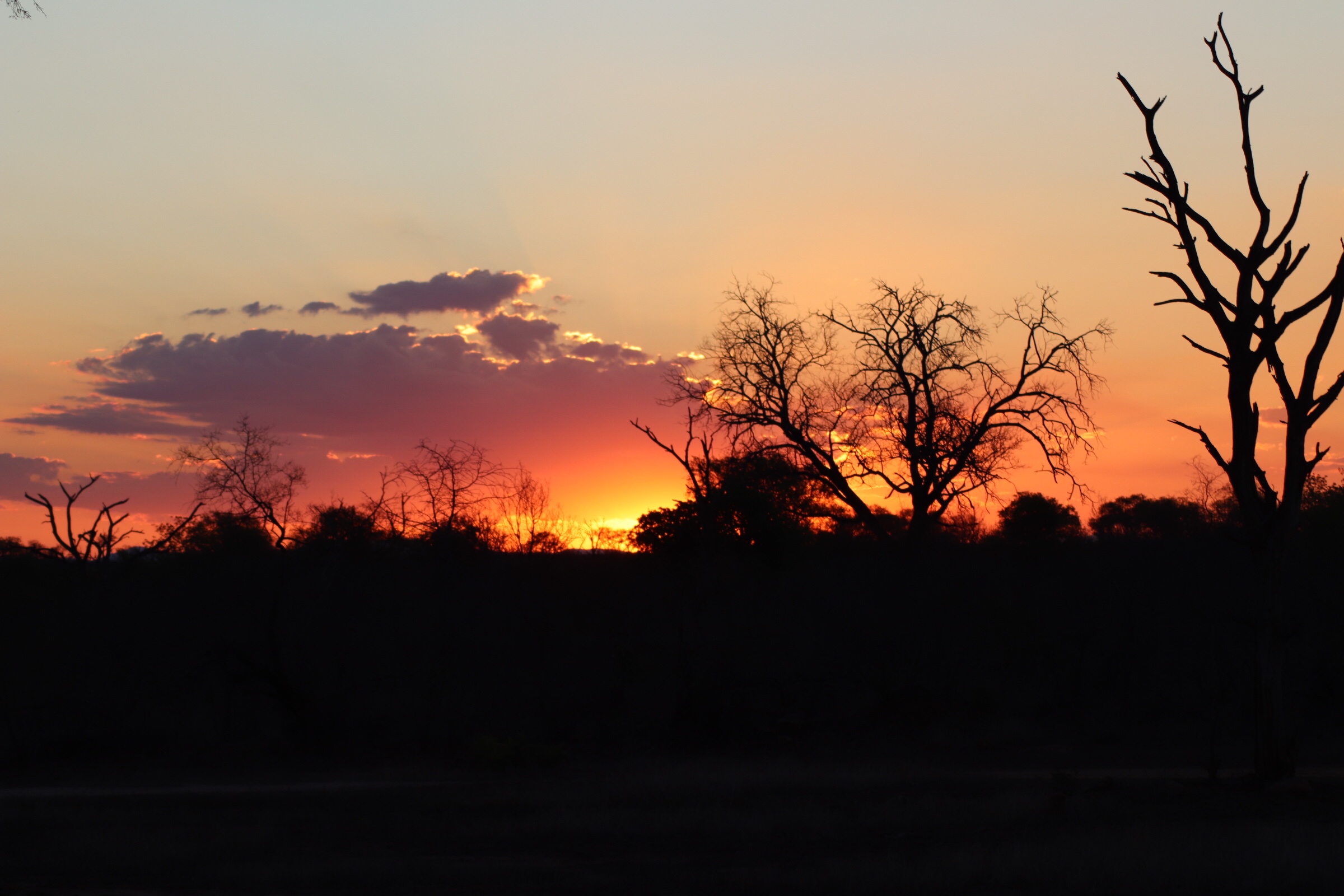
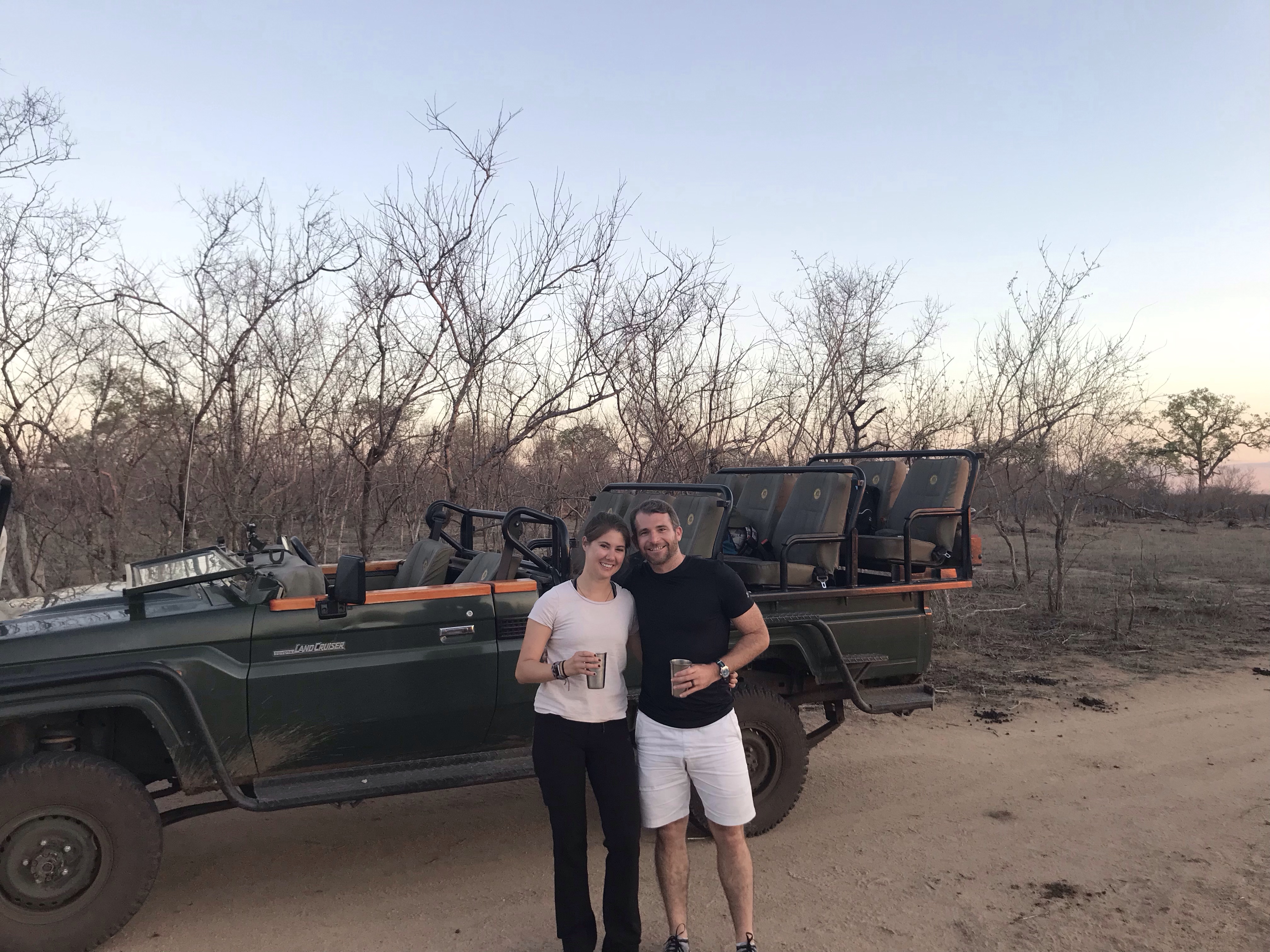
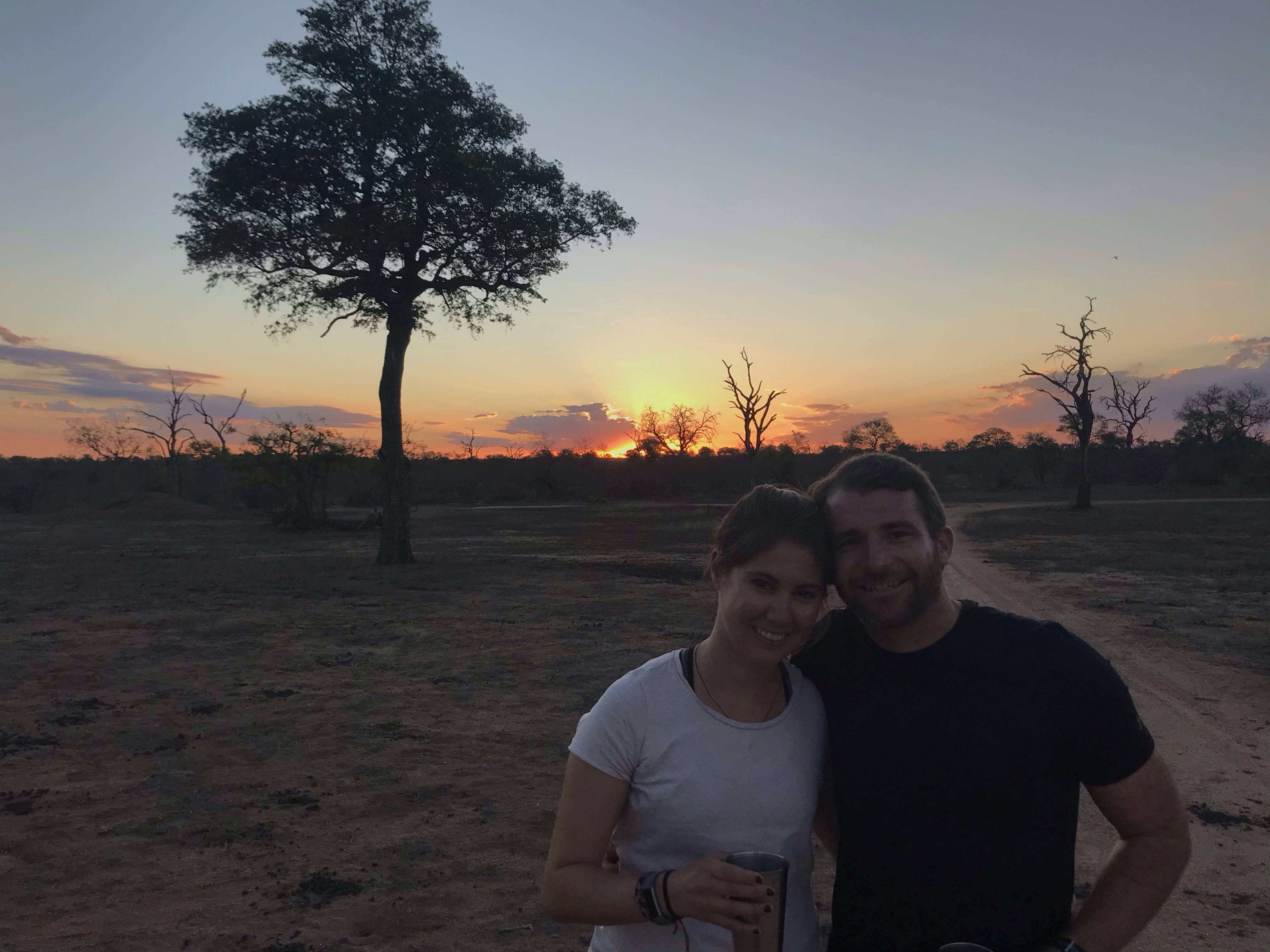
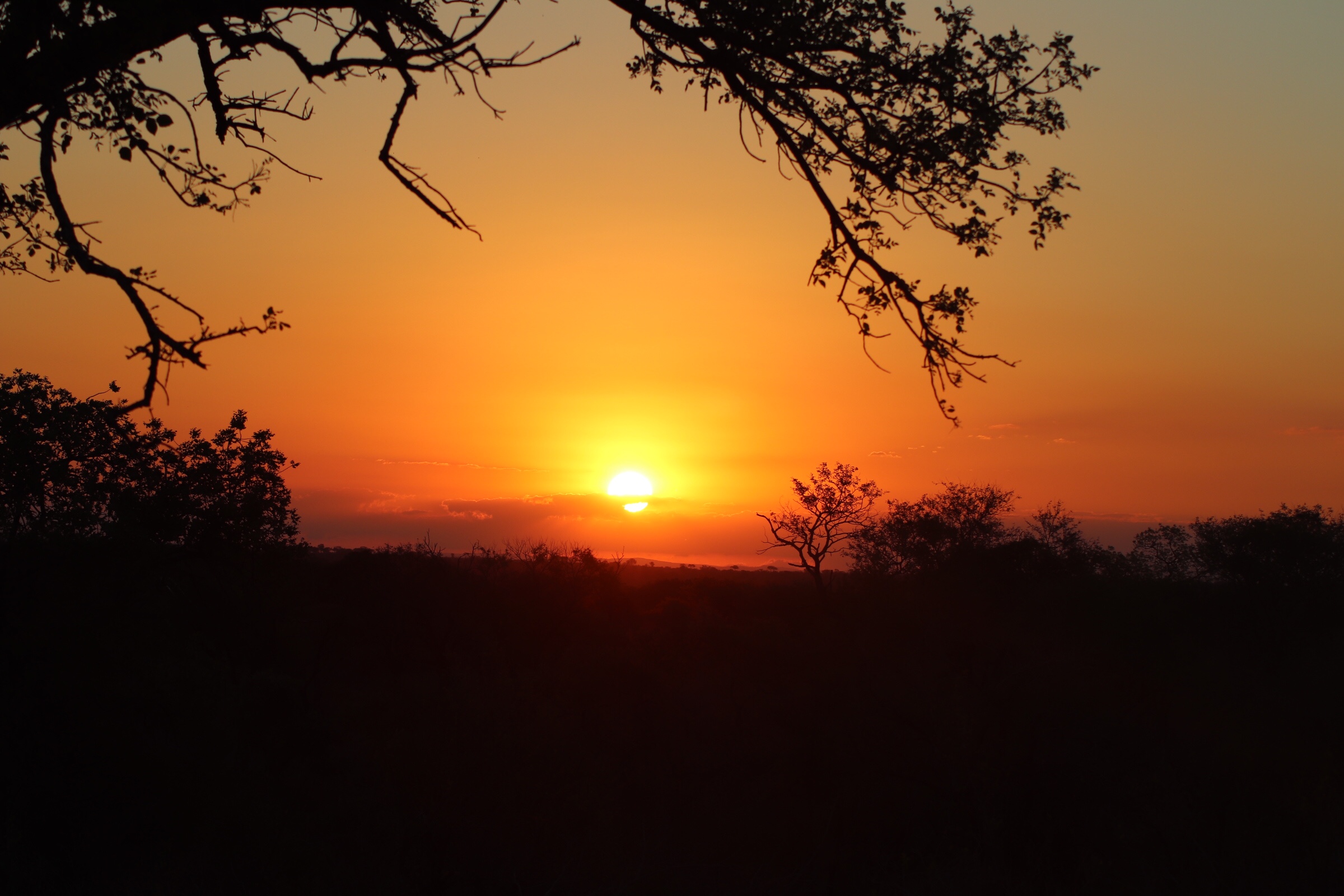
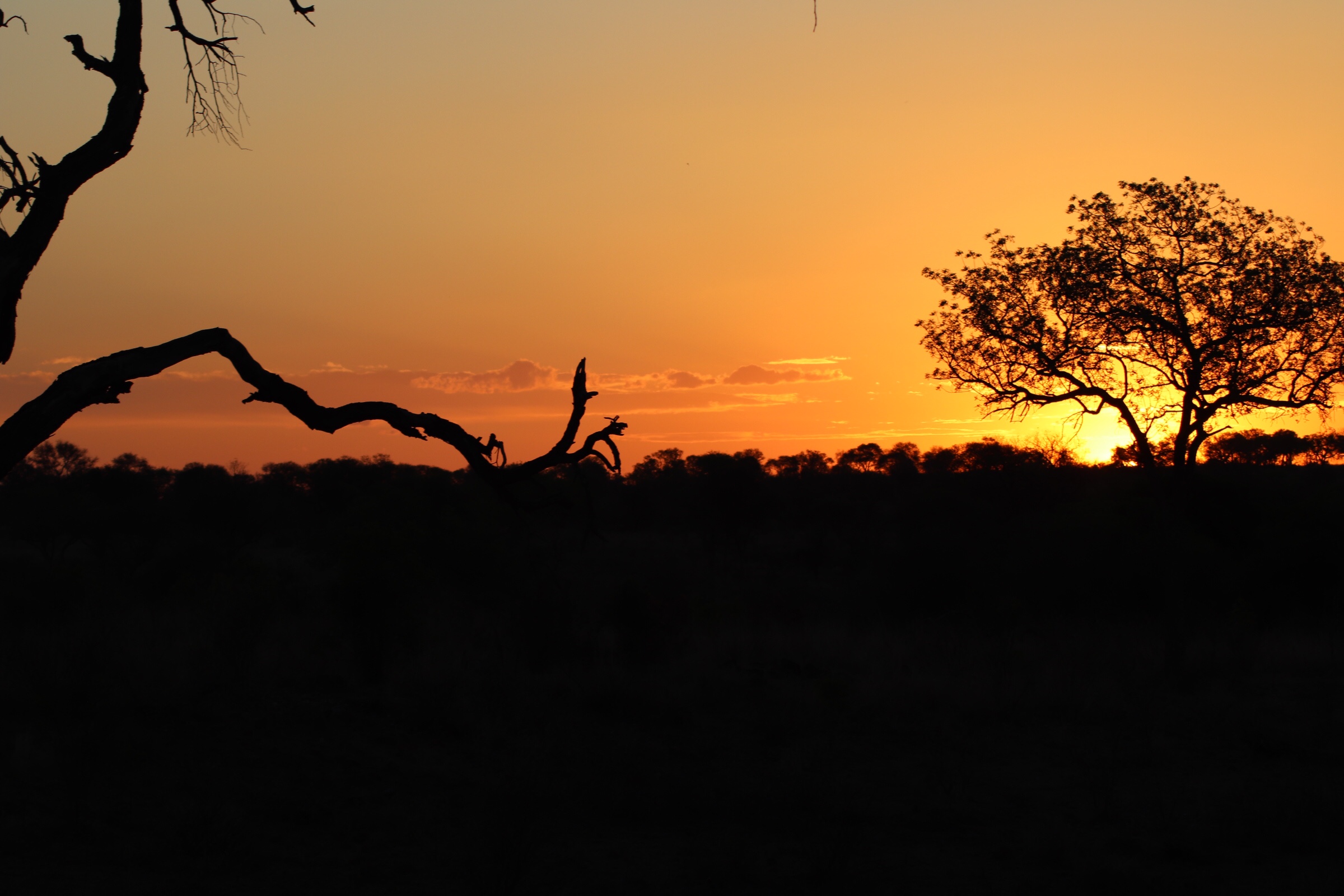
We drove a little from the leopard spotting (wouldn’t want to get out of the car too close) and found a nice open area to have our sundown drinks while watching the sunset over the bush. It was one of the many very special beautiful bush sunsets we would be lucky to see over the next few days.
We made a quick check on the leopard after our sundowner stop but he was still lounging in the tall grass below his kill and barely in sight. Since the skies were dark we decided to move on and start the night portion of our drive, with our guides shining the spot light around hoping to catch a glimpse of some night animals. We saw hyena and jackal in our spot light (the hyena was very close to the leopard kill – hoping to catch a falling bite) and saw the eyes of many creatures in the bushes surrounding.
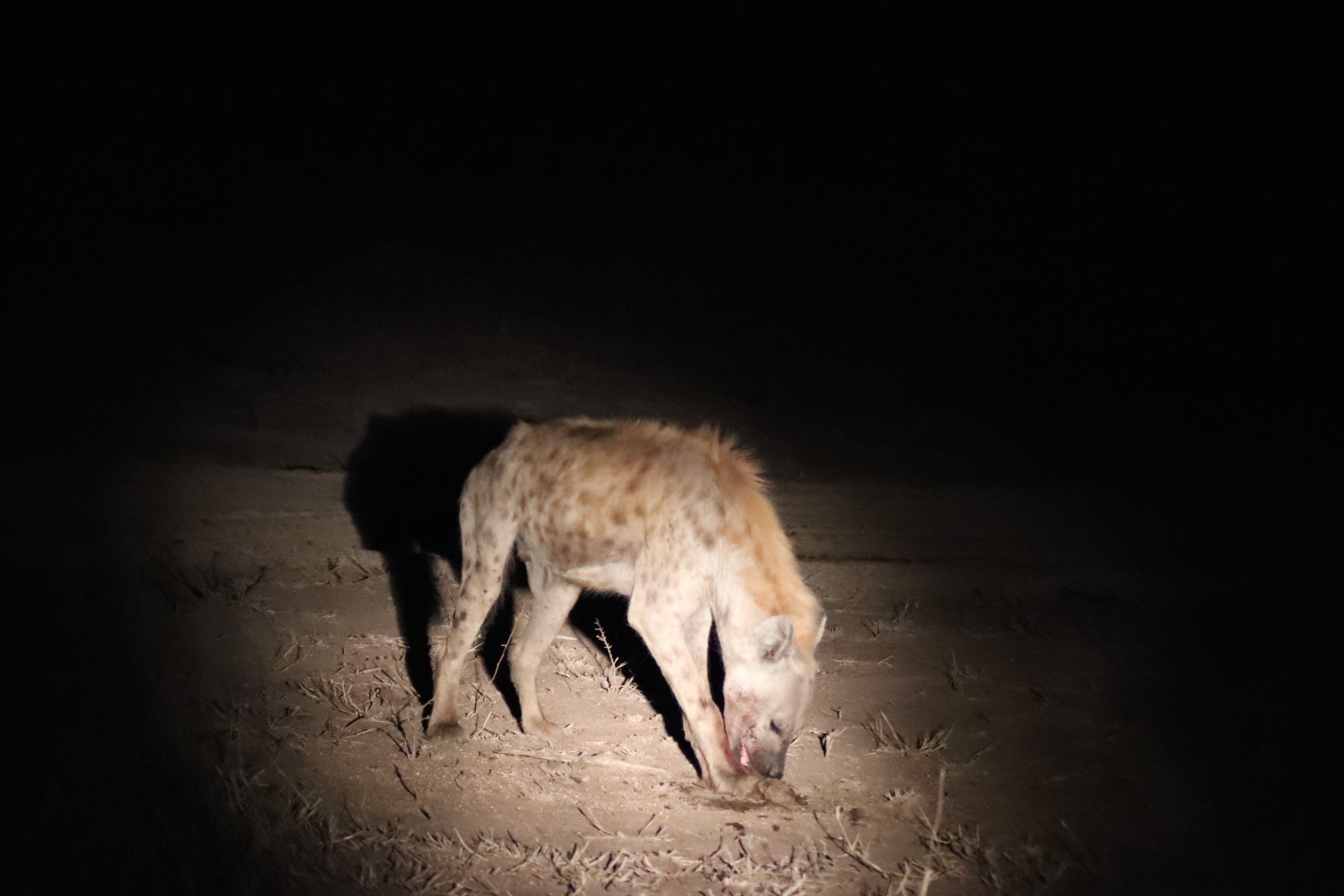
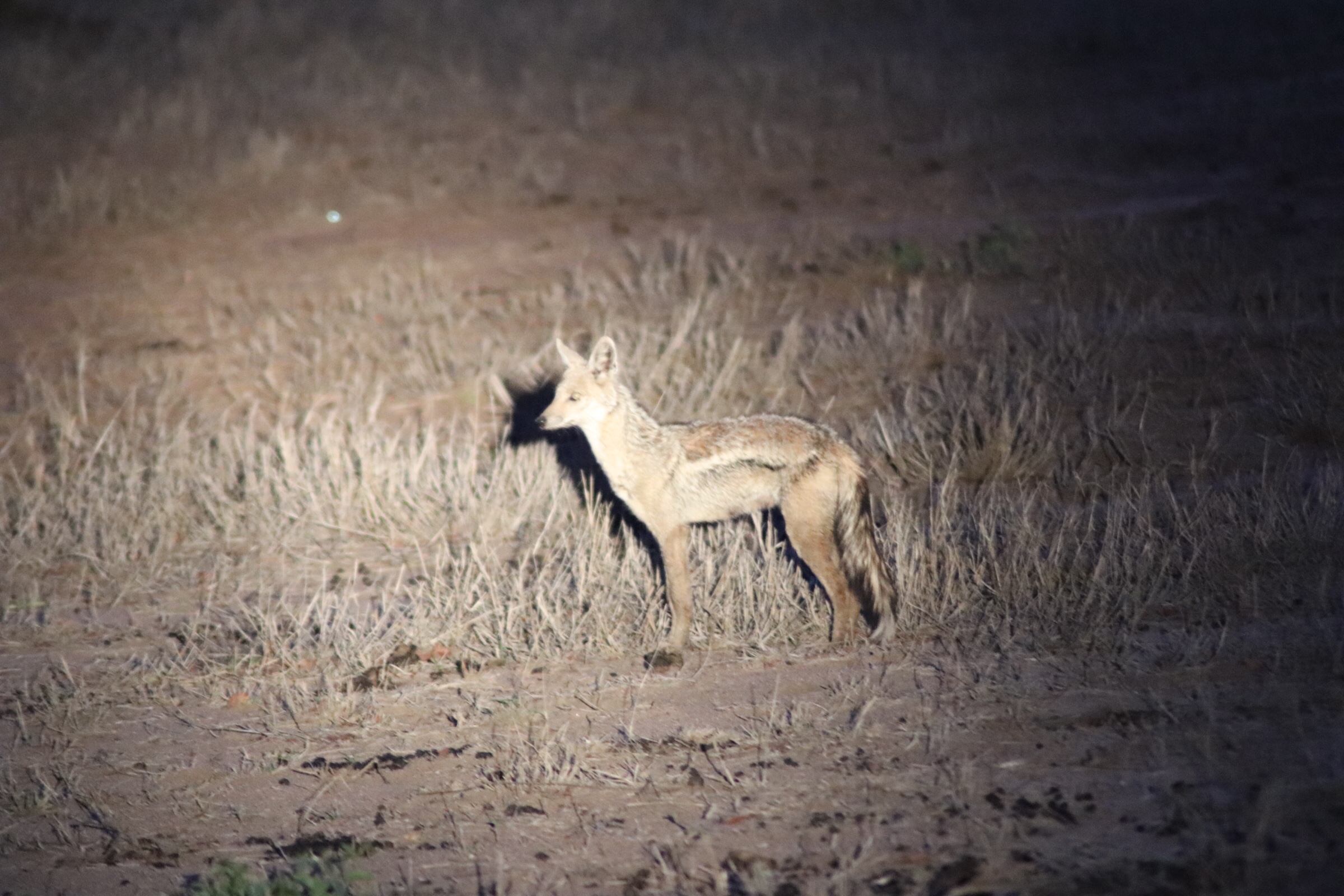
With that we drove back to camp and had delicious steaks grilled on the open fire for dinner, while actually eating under the stars this time. We had early night to bed to get ready for the early wake up the next day.
Day 3
Another early morning wake up and we were off at 5:15 – this time to Kruger National Park. Kruger is an absolutely massive park. We heard lots of different comparisons – it’s the size of Israel, Denmark, Scotland, New Jersey, you name it – either way it is a big area full of wildlife. Since it’s a national park, Kruger also comes with more rules – cars must have a roof on them (we still had open sides to the vehicle and a little hatch we could open in the front but this time had a canvas roof over our head), we also must stick to the roads (we wouldn’t have the chance to do off-roading to get closer to certain animals like we were allowed to in Sabi Sands), and we had to stay in the vehicle at all times other than certain specified areas (aka good bye bush morning coffee, sundowners, and bush toilets). There were also noticeably a lot more people and more cars – but more on that later.
We checked in and passed through the security check and gated entrance to the park and started to make our way along the road which unlike in Sabi Sands was more of an actual road. Kruger has a mixture of tarred and dirt roads. Eyes peeled, we scanned left and right across the roads to see what we could find. Sinead was taking us out today, and we were about to make a turn when she spotted a group of cars up ahead and said, let’s just check out quickly what they are looking at. What a good thing it was that we did – a bit off the road, a leopard was walking parallel through the thick bush. We could see it with the naked eye but when you zoomed in on it you could see how beautiful of an animal it was, covered in spots and moving swiftly along. It was a male and he was marking his territory, she explained to us. With the leopard sighting last night being in very thick grass and quite far from us and only able to grab little glances of it at a time, we were especially excited to see this one this morning. We watched him in the distance for a while and tried to follow him along the road as he walked somewhat further into the bush, losing him behind rocks at times and then finding him again in the grass, until he seemed to disappear from sight. It was a great way to start the morning.
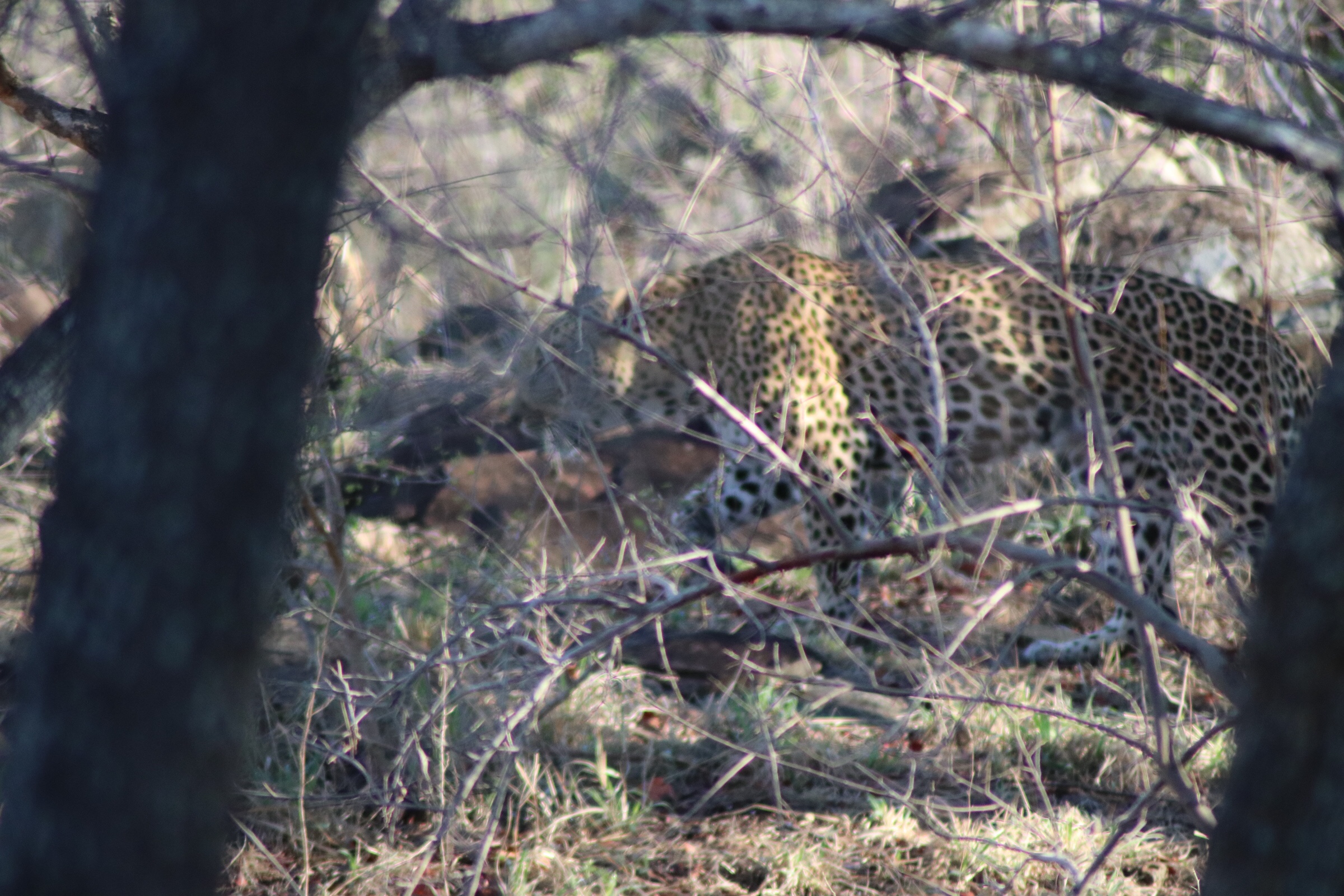
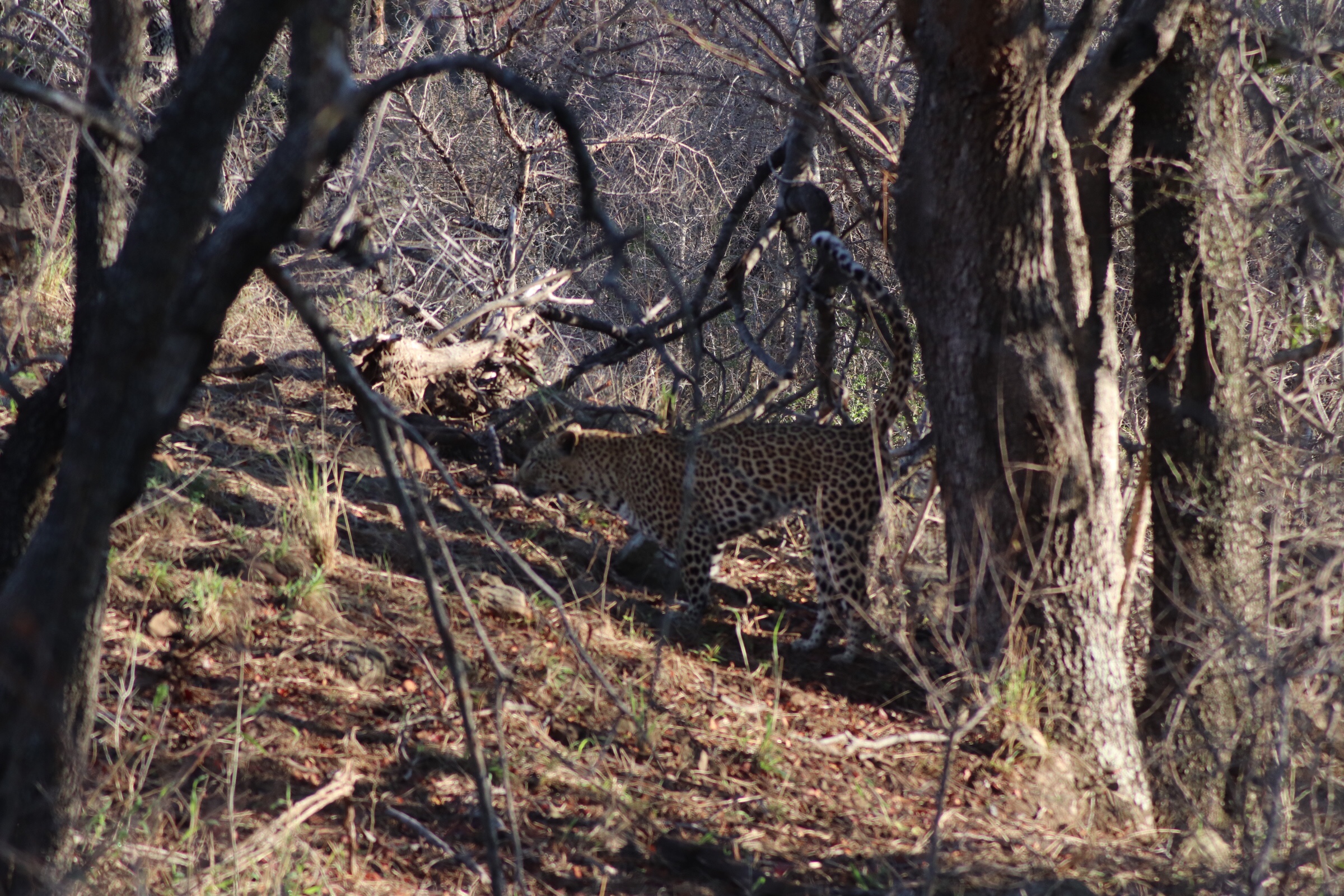
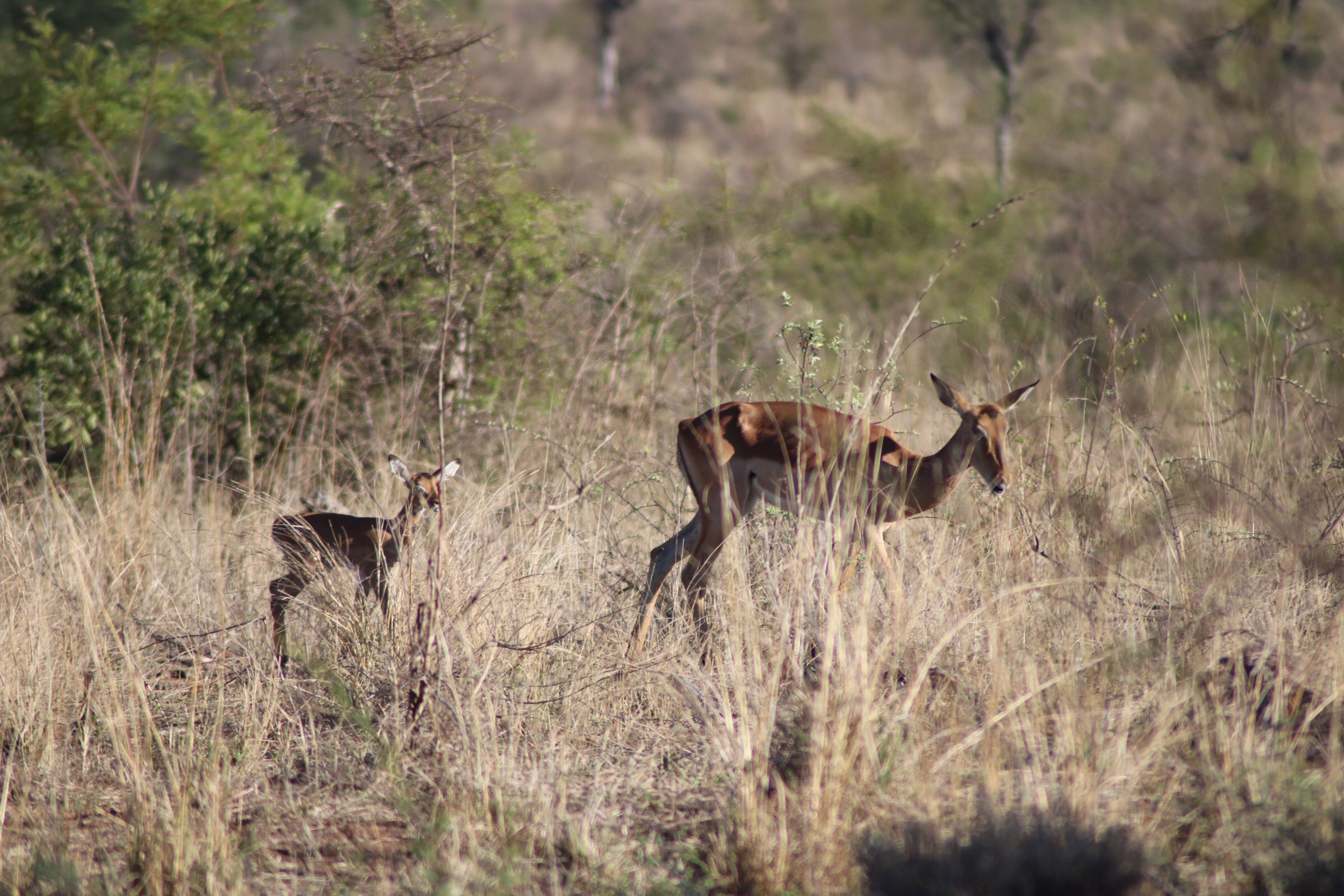
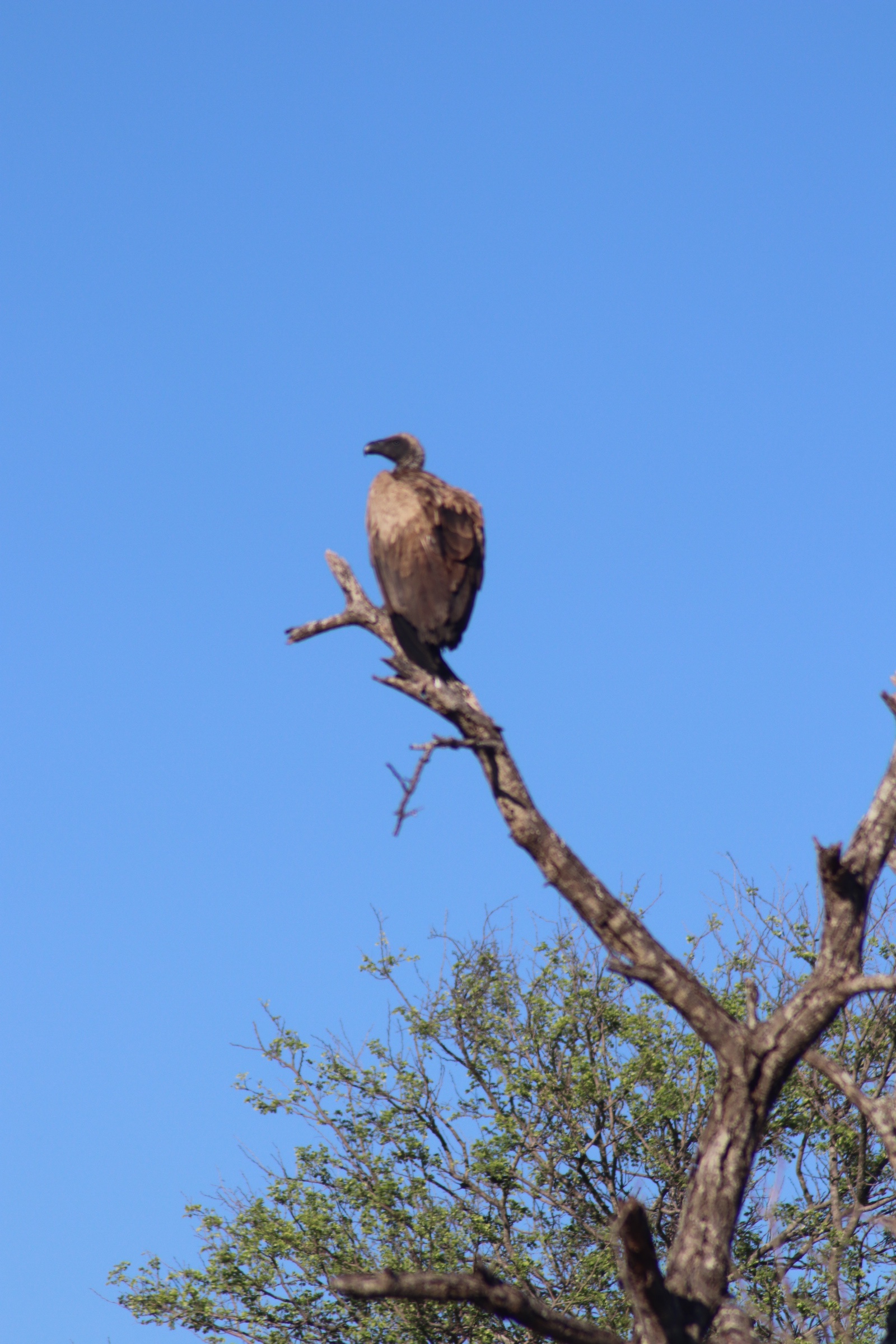
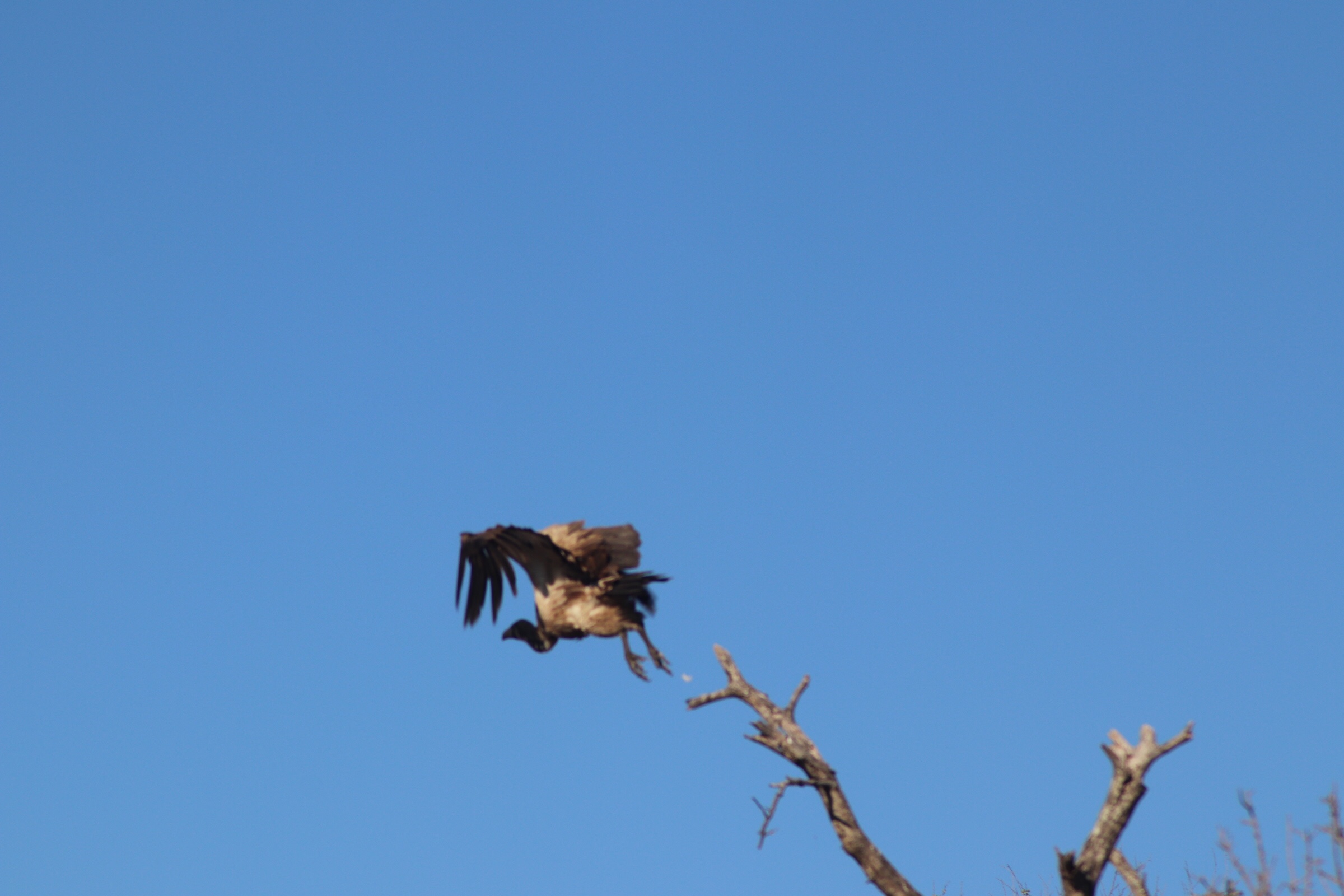
Back on the intended route we continued along, passing newborn impala and watching them try to learn how to walk on their infant legs. We once again saw the smallest antelope in the bush – the steenbok – this time both a male and a female. In this species the male is smaller than the female. We watched for a bit as these mini antelope courted one another. We watched beautiful birds in the trees and saw tall giraffe moving slowly along our route. We also passed two of the ‘ugly five’ – wildebeest and the vulture (the others being hyena, warthog, and one other type of bird).
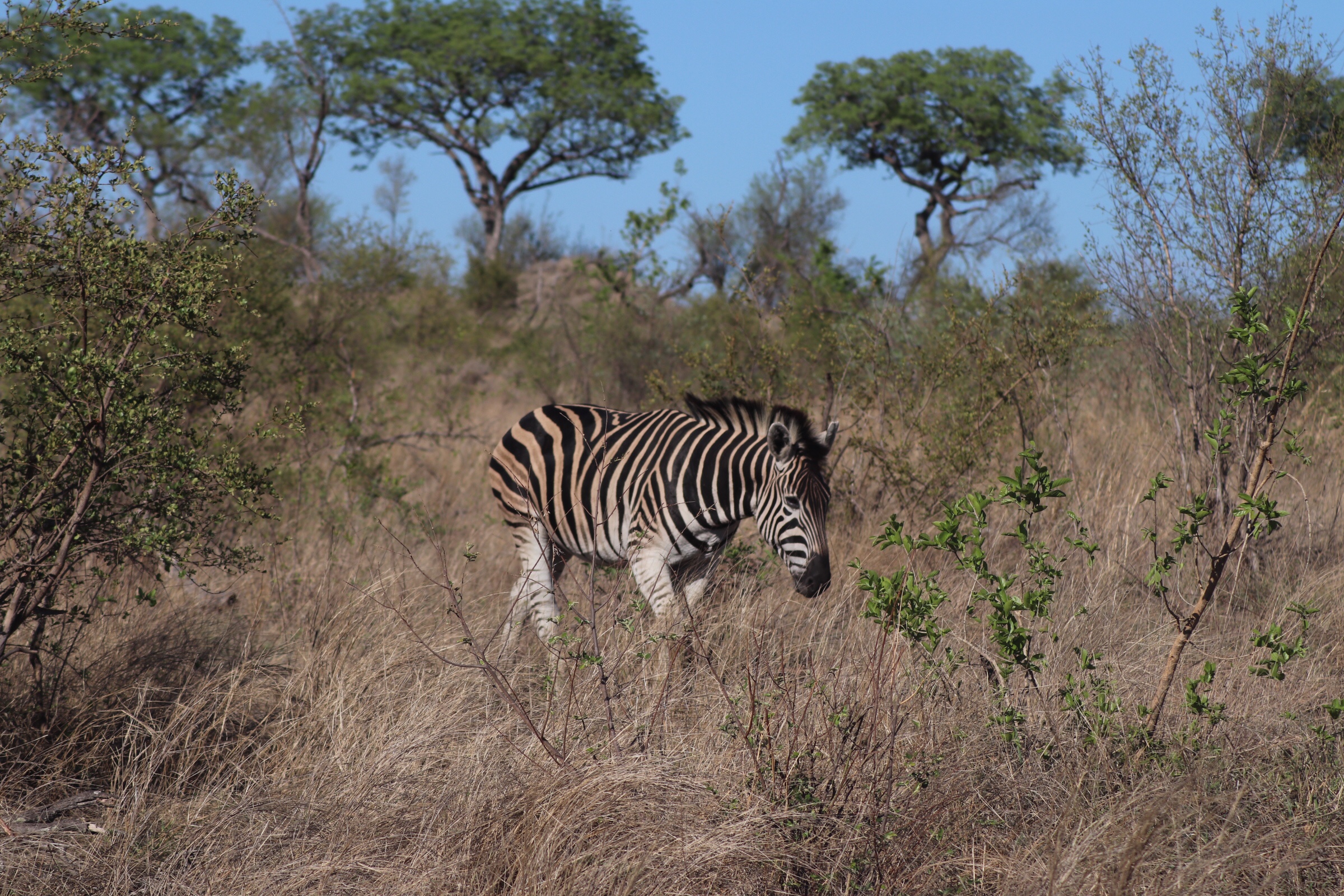
We spent some time watching several herd of zebra and our guide shared some interesting facts with us. For one – if you shaved a zebra they would be completely black, because the stripes come from the fur. This is unlike the tiger or any sort of dog or cat with stripes or spots, or even a giraffe, where these came from the body if the hair was removed. We also learned that the stripes are how the Zebra warms and cools itself naturally depending on the weather. The capillaries underneath the skin restrict or open depending on the outside temperature. When it’s hot, the capillaries under the black stripes will close, so that the sun heats only the white part of the body and therefore is less heating being transferred to the animal. The opposite happens in the cold, the white stripe in capillaries contract so the black stripes attract the sun and warm the animal.
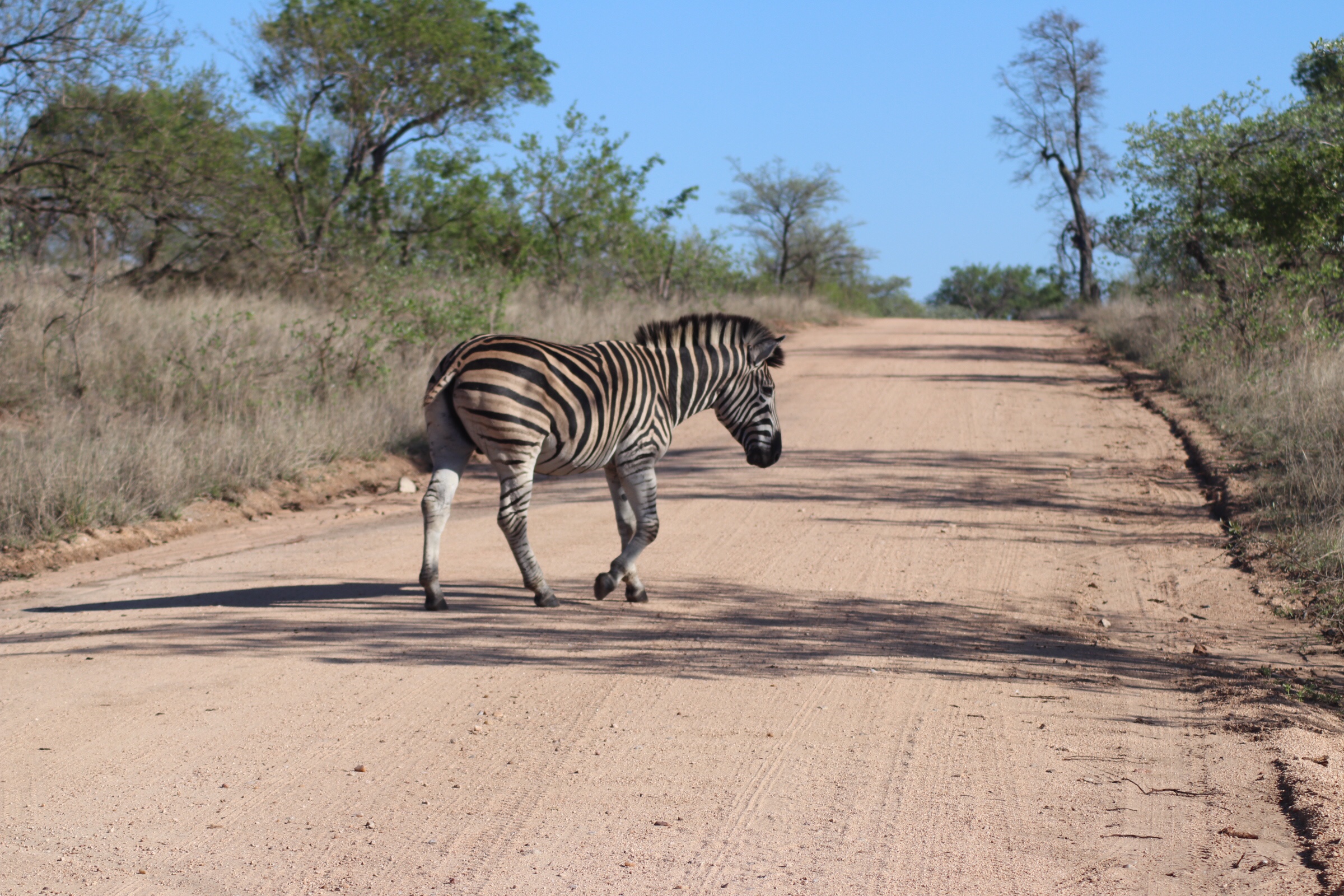
(Notice that the above zebra is a “survivor” and is missing part of its tail, meaning that it was likely attacked by a lion and able to escape. Congrats Mr. Zebra).
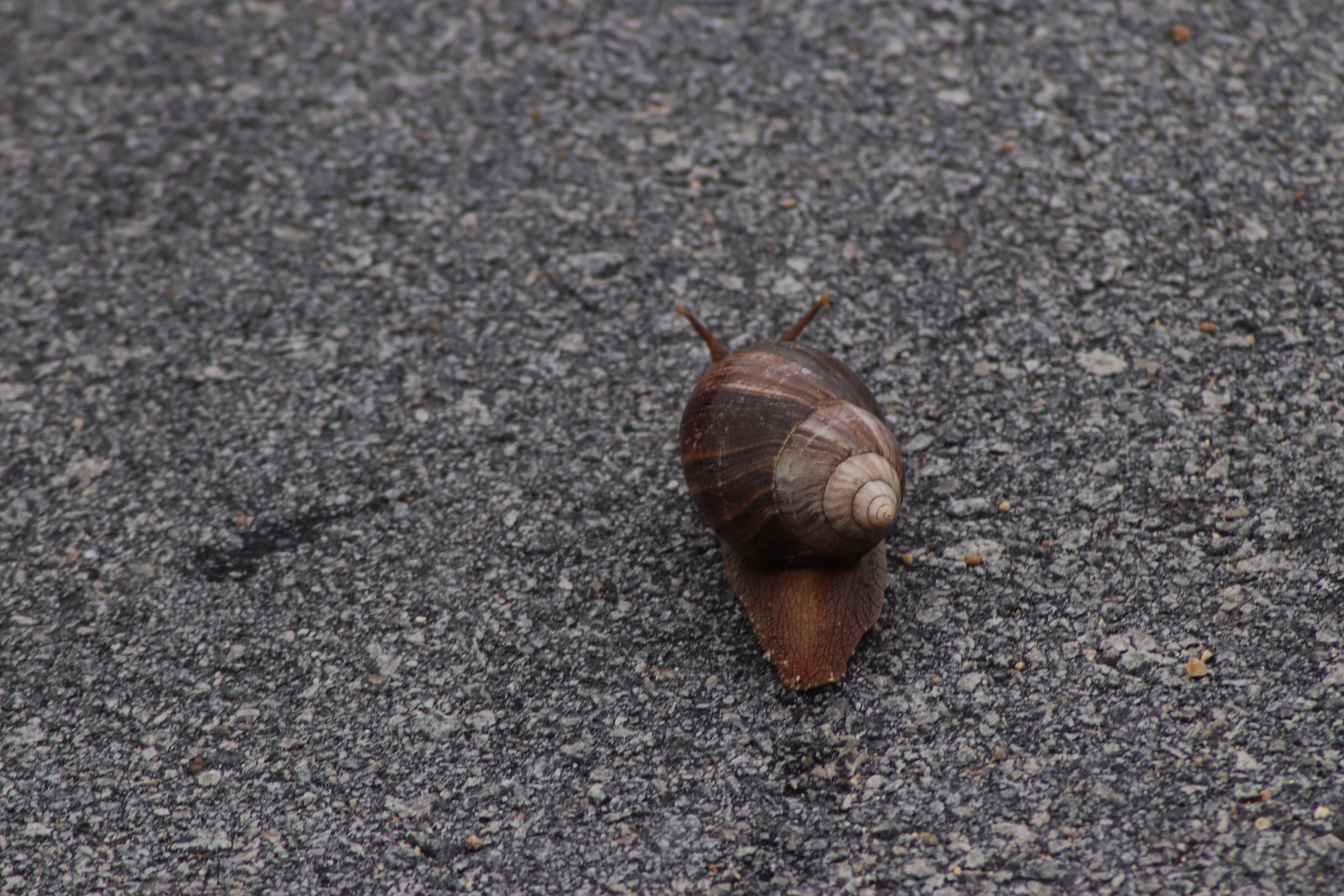
We continued along and had our first glimpse of elephants – although far off in the distance. Restricted by the roads we could only see them from so far and sat and watched for a few minutes before moving on. Without a lot of action, we were next looking at a giant snail on the road (giant as in, the size of a baseball) when another car passed us and the guide in the other car said ‘Ngala spotted just ahead.’ We knew this had to be big when our guide immediately stopped talking about the snail, switched the car on and said ‘everyone, I think I have something very exciting to show you.’ We’ll leave you in anticipation (as we were) for a bit and explain here that what the guides tend to do when talking to one another is to speak in Afrikaans and especially say the animal names in Schangaan or Zulu which are three of the 14 national languages of South Africa. They have their own safari code used between all the rangers at the different companies. This is mainly because they don’t want to get all of us in the car excited and then the animal goes away or something occurs and we don’t end up getting to actually see it. Or in the case of Sabi Sands (where they talked to one another over the radio on a speaker that we can also hear), since the part of the reserve belonging to our lodge is so big, an animal could be spotted several kilometers away from where the other vehicles are and they don’t want to disappoint the guests in the car if we didn’t make it in time and the animal wandered off the property, for example.
But, back to the Ngala. It wasn’t one of the animal names we had picked up on yet, but since we knew it was fairly common for the guides to not use English when a rare animal sighting occurs, we kept our fingers crossed it was something we had not yet seen. We drove quickly and saw three cars just ahead looking at a tree on the side of the road. Right before our eyes, laying down in the shade, but with his head held up looking around was the king of the jungle. The male lion – laying with his golden brown mane and looking to the side – was just a few meters away. The moment only lasted a minute or two as he laid down in the shade of the tree and nearly disappeared from our view in the bush and grass surrounding him. But our guide was determined and she drove us even closer around the other side as a tree and said she hoped he would pop his head back up again. Now as exciting as it is to see a lion, they unfortunately will sleep for 18-22 hours a day. That means they don’t animate much and you may not always get some action or movement when you see them. Still, we sat there intently for some time from our new, closer vantage point and watched in anticipation, hoping he would soon move again.
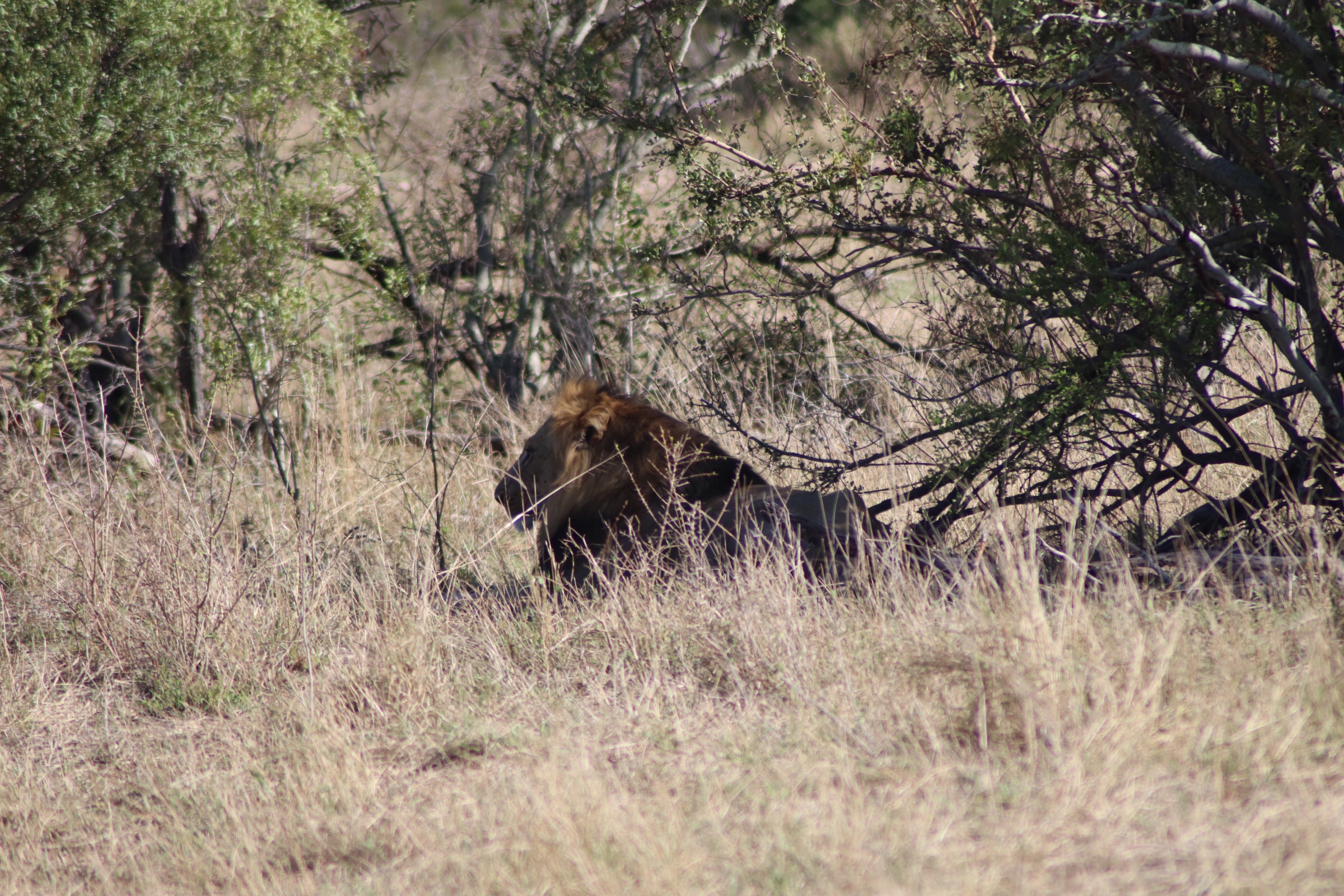
As we sat and waited on our lion friend (who seemed to be enjoying snoozing in the shade), we also watched as more and more safari vans arrived on the scene. Apparently word spreads fast and you can understand what we meant by it being more crowded in Kruger. At one point there were 20 cars there with us. If you estimate an average of 5 people per car (some with more, some with less) that is 100 pair of eyes staring at this lion, barely visible, sleeping in the thick grass. We were lucky to have arrived when we did and he was alert. As we stayed for another 10-15 minutes, hoping the lion would do something (along with his audience of 100+) we discussed moving on when for a brief 30 seconds he lifted his head again, but this time to the opposite side of us. We didn’t get to see his face this time but instead took in the back of his impressive mane. As everyone intently watched in anticipation, Mr. Lion decided it was time for bed again and fell back to the ground while everyone watching collectively groaned in frustration. It was time to move on, because in the end we had to remember he was just an animal, not there to put on a show for us but to live his life. As luck would have it with the lion we had those very short minutes of him looking around as we first arrived, prior to the swarm of safari-goers pulling in. In those moments it was really cool to be there, so close to him, even if we only had a look at his face for a few moments.
Satisfied with a successful day of cat-spotting we headed back to the lodge for breakfast and to check out the pictures we got this morning on the iPad.
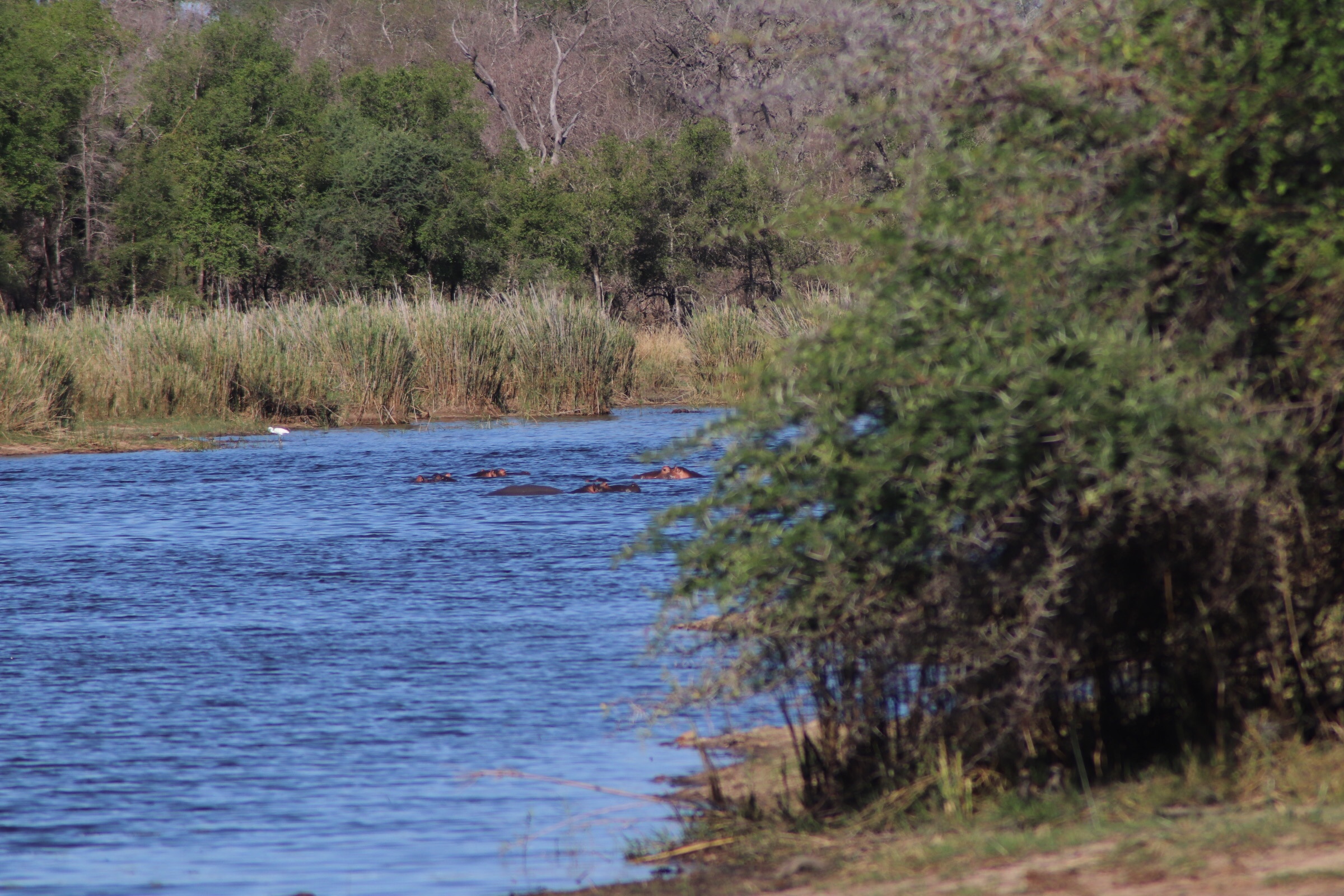
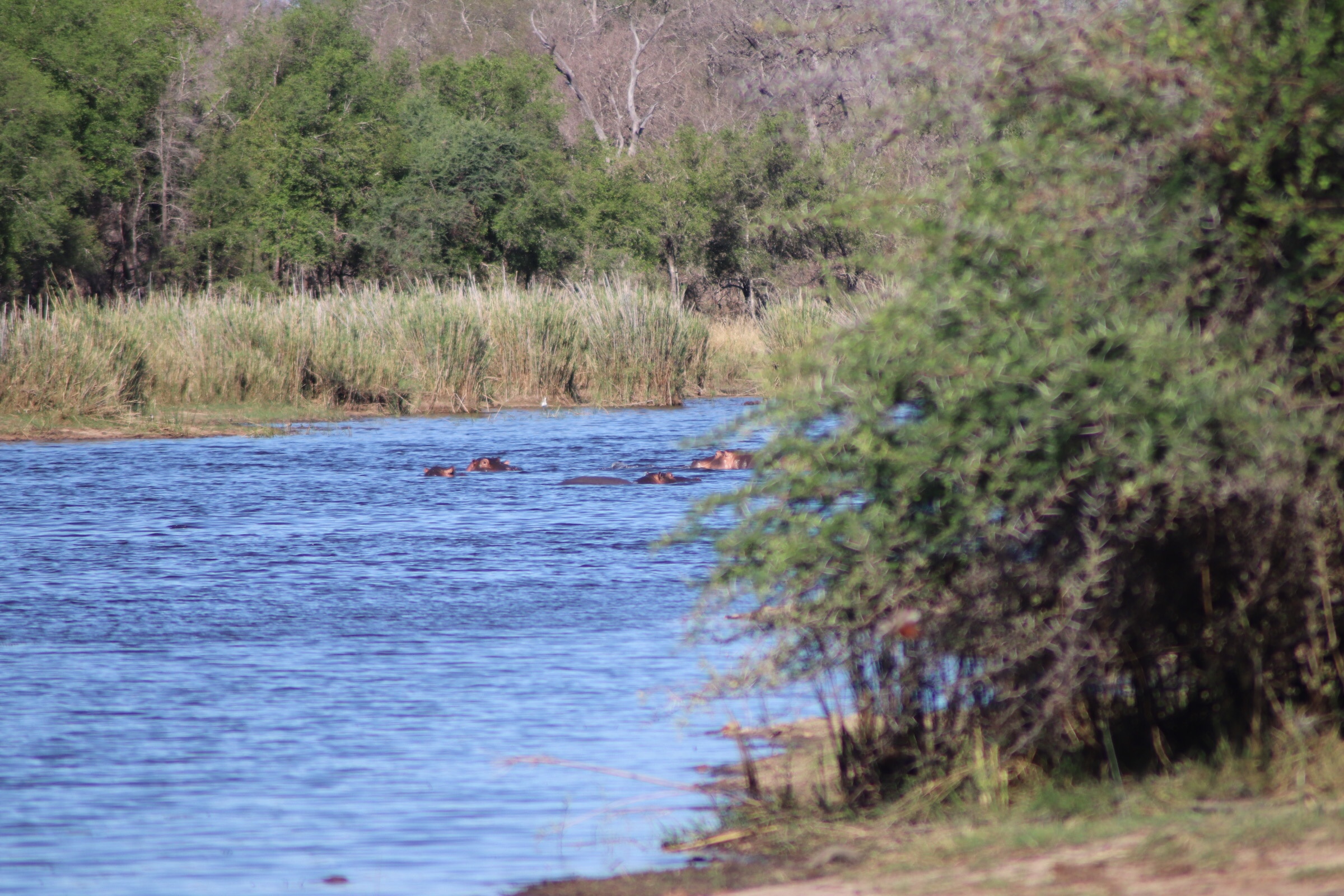
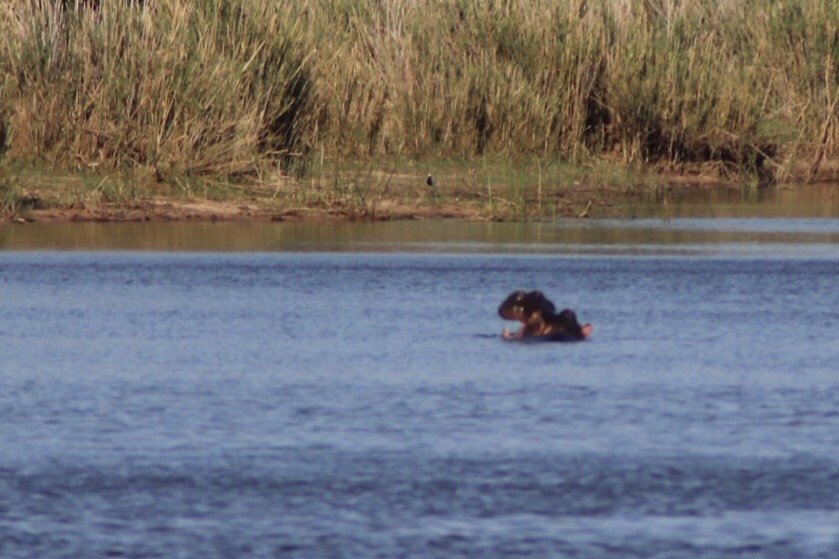
After resting and lunch we headed out at 3:00 with Drikus this time, a bit earlier this time since Kruger closes earlier and we had to be sure to have enough time for a good game drive. The drive started slow and you could sense some frustration with Drikus. Maybe some animals were still having their afternoon nap or perhaps the extra water from the storms had something to do with the inactivity. After we continued for a while without coming across much more than antelope, we stopped at a viewing blind along a lake to see if anything was around the water. We sat for a while, watching lots of birds, and then noticing off in the way way way distance (so far you could barely see it through the camera zoom) little pink/brownish heads bobbing in and out of the water. From a distance it almost looked like rocks (and there was one right next to them that made it difficult to differentiate) but you could see them coming to the surface and going back under, never more than a few inches above the water. We had our first hippo sighting! We sat patiently for a while, hoping they would make their way across the lake closer to us, or emerge from the water so we could see more than just the tip of their snout or ears, but it seemed they only wanted to stay in that one spot, barely bobbing in and out of the water. We left the lake, hoping we would get a closer look at some other hippos traveling along the road that was next to the river.
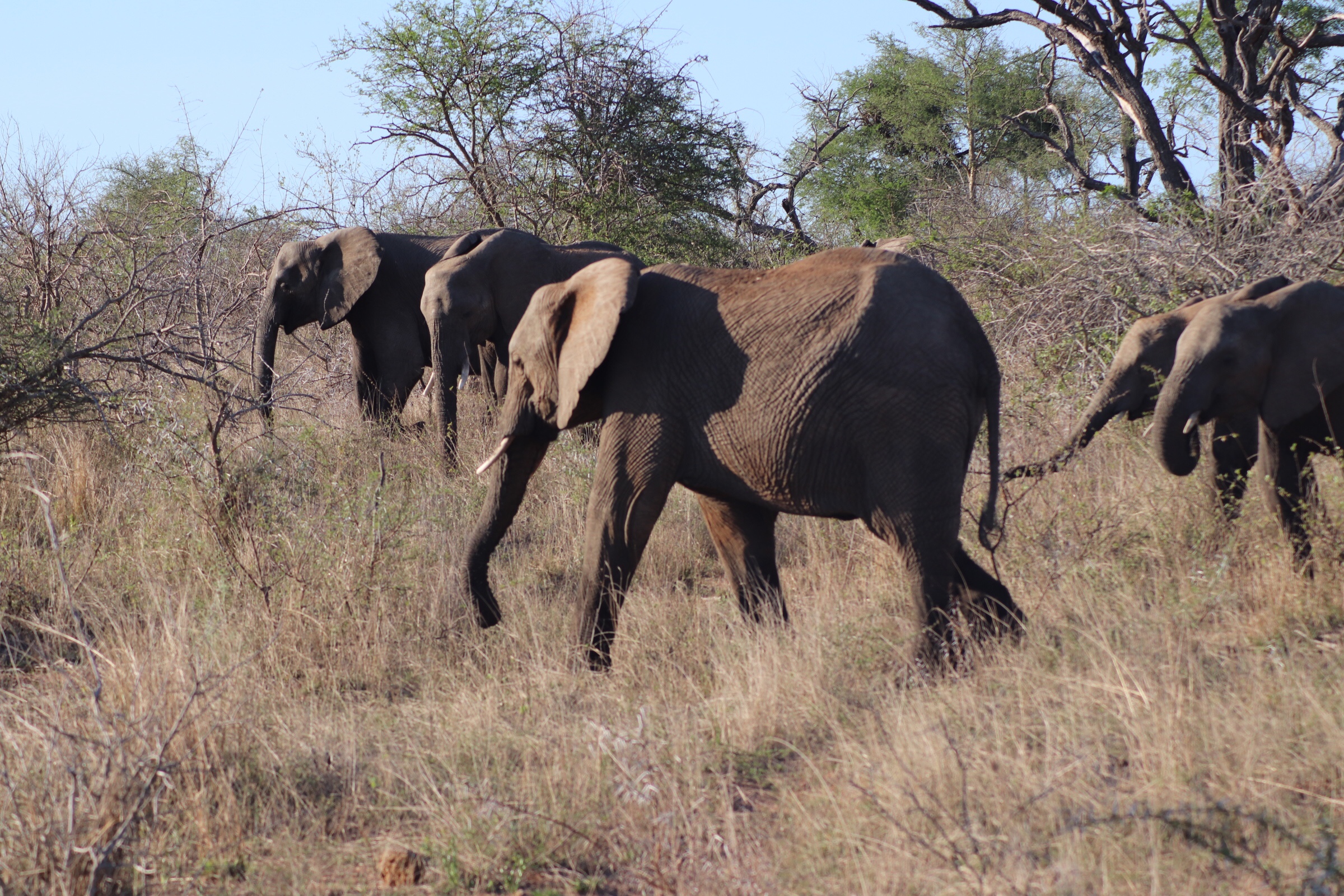
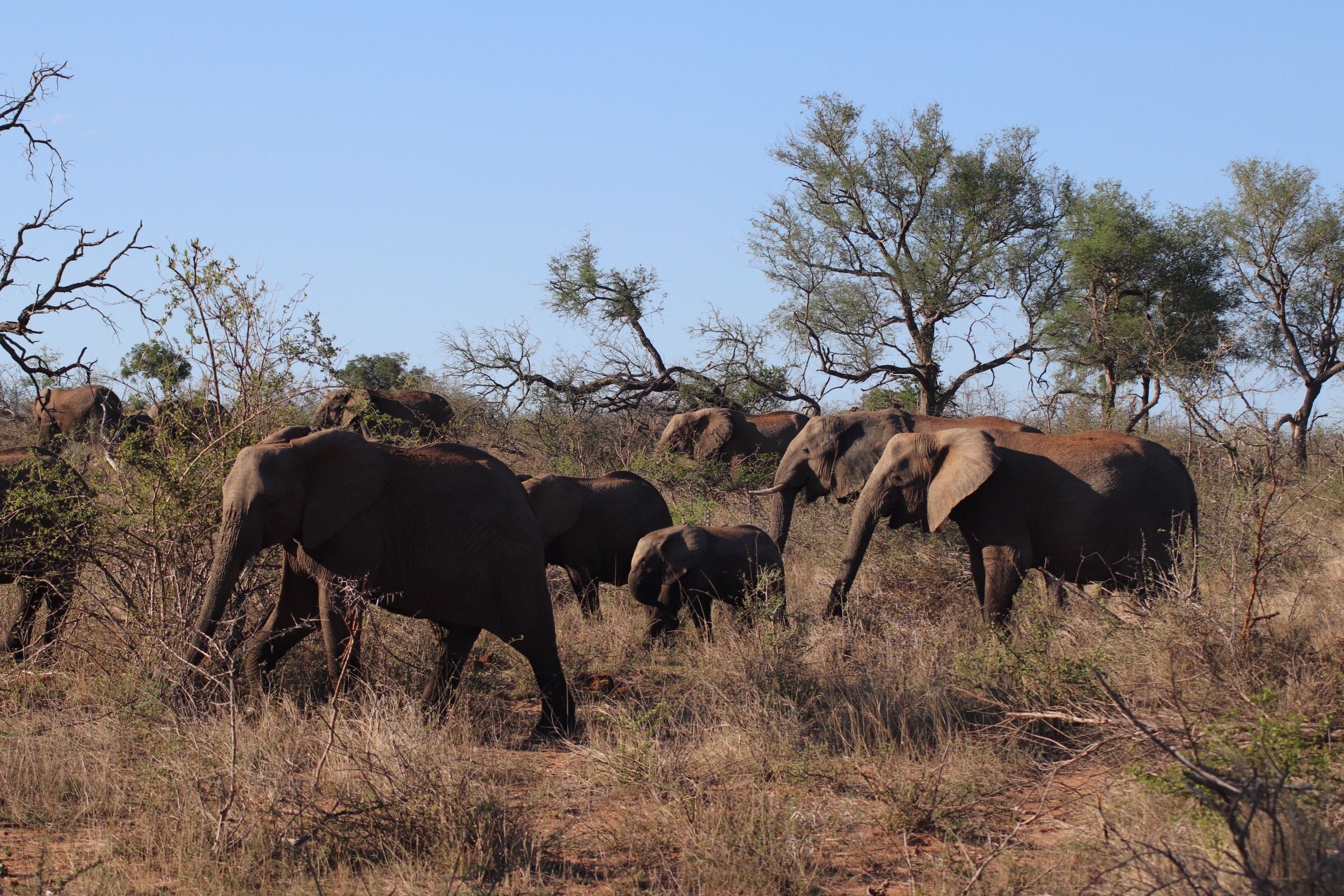
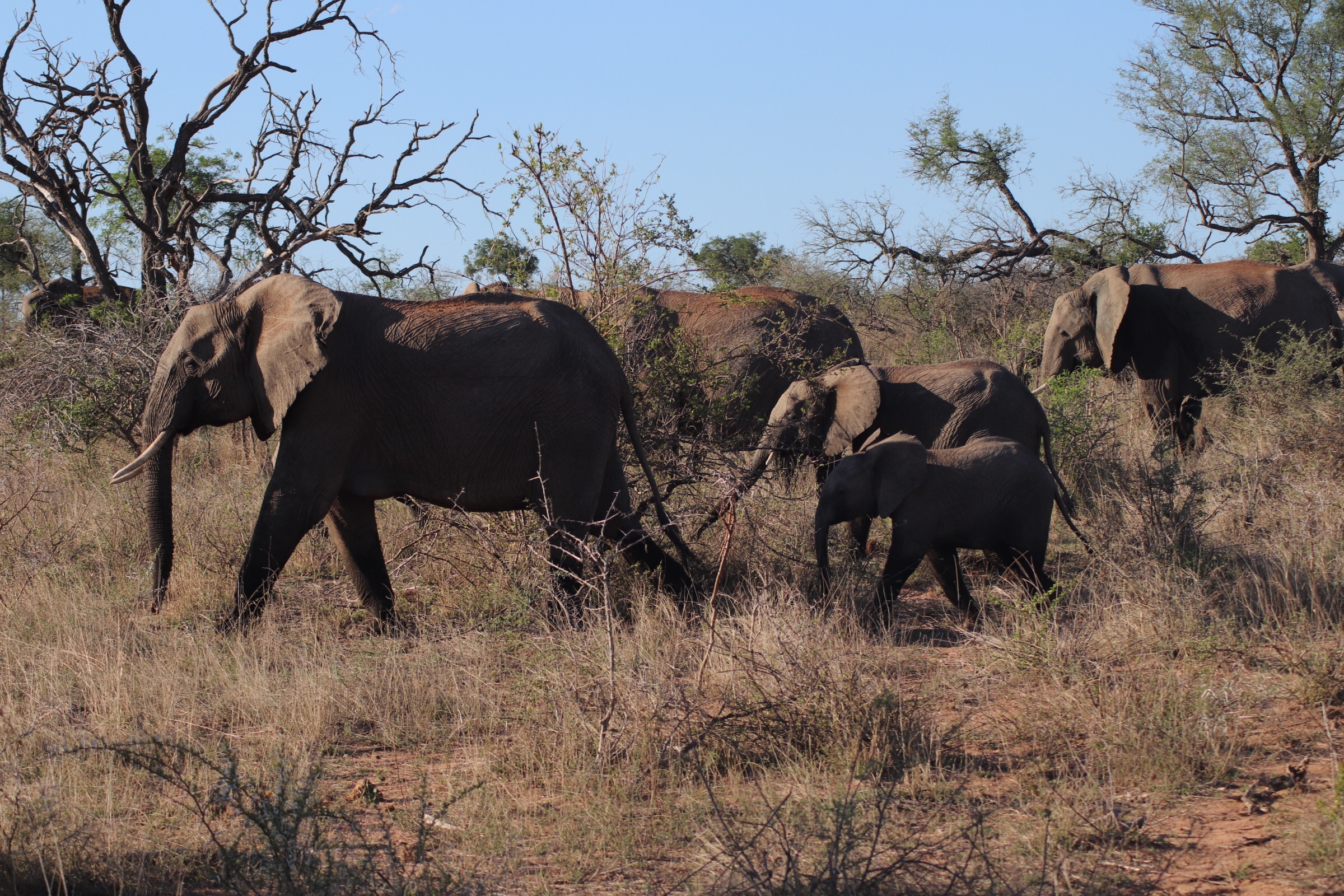
After the lake, we drove towards the river hoping to encounter more animal activity. En route, turning a corner, suddenly there was a herd of elephants next to us on the side of the road, including a few baby elephants and one that looked like a new born. How exciting to have these large creatures walking just a few feet beside you. We watched as they wandered past us and into the bush in the distance, happy to have finally had a closer elephant sighting. This is what we had been looking for all day. The elephants are typically a lot more common but had been absent on our drives up to this point.
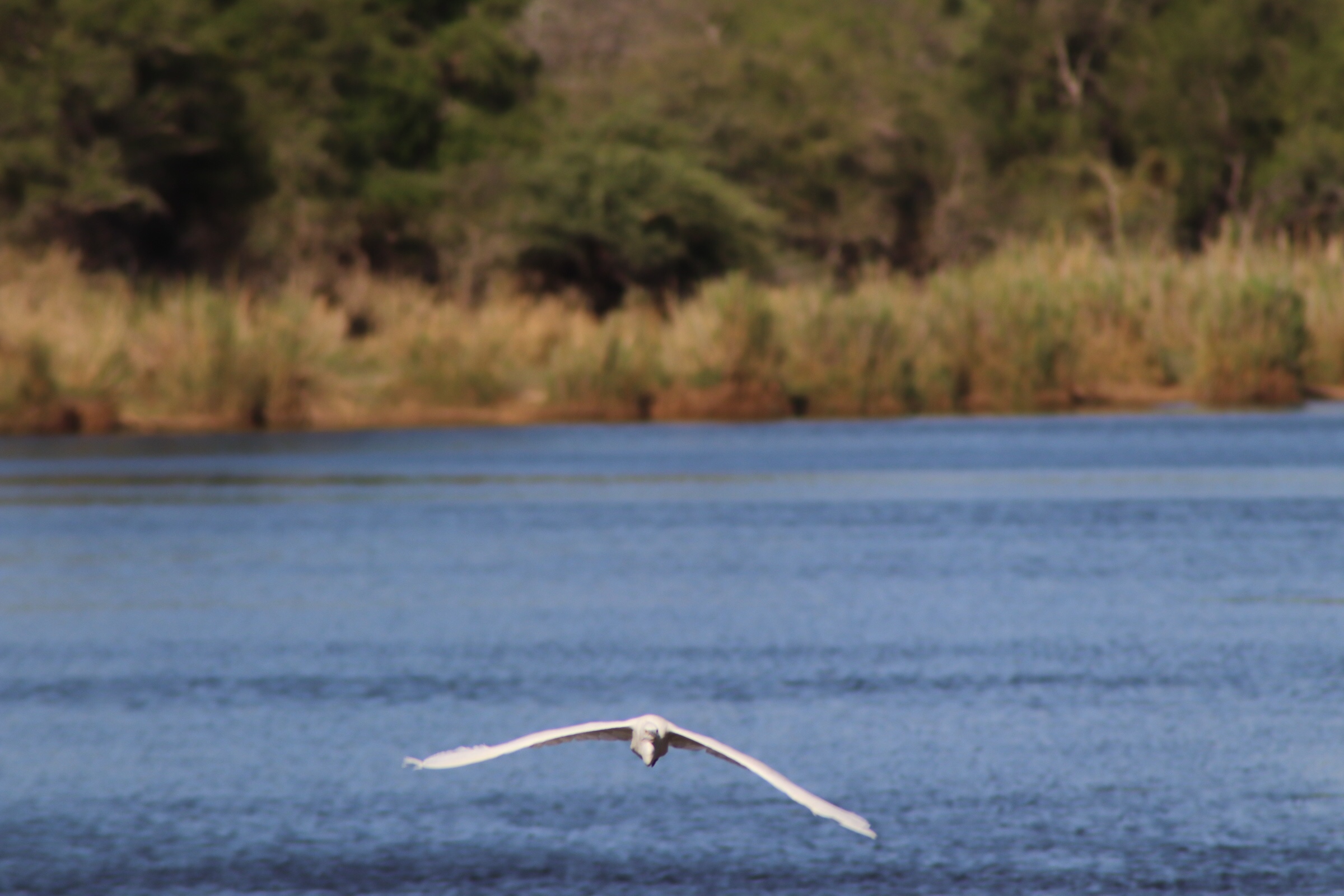
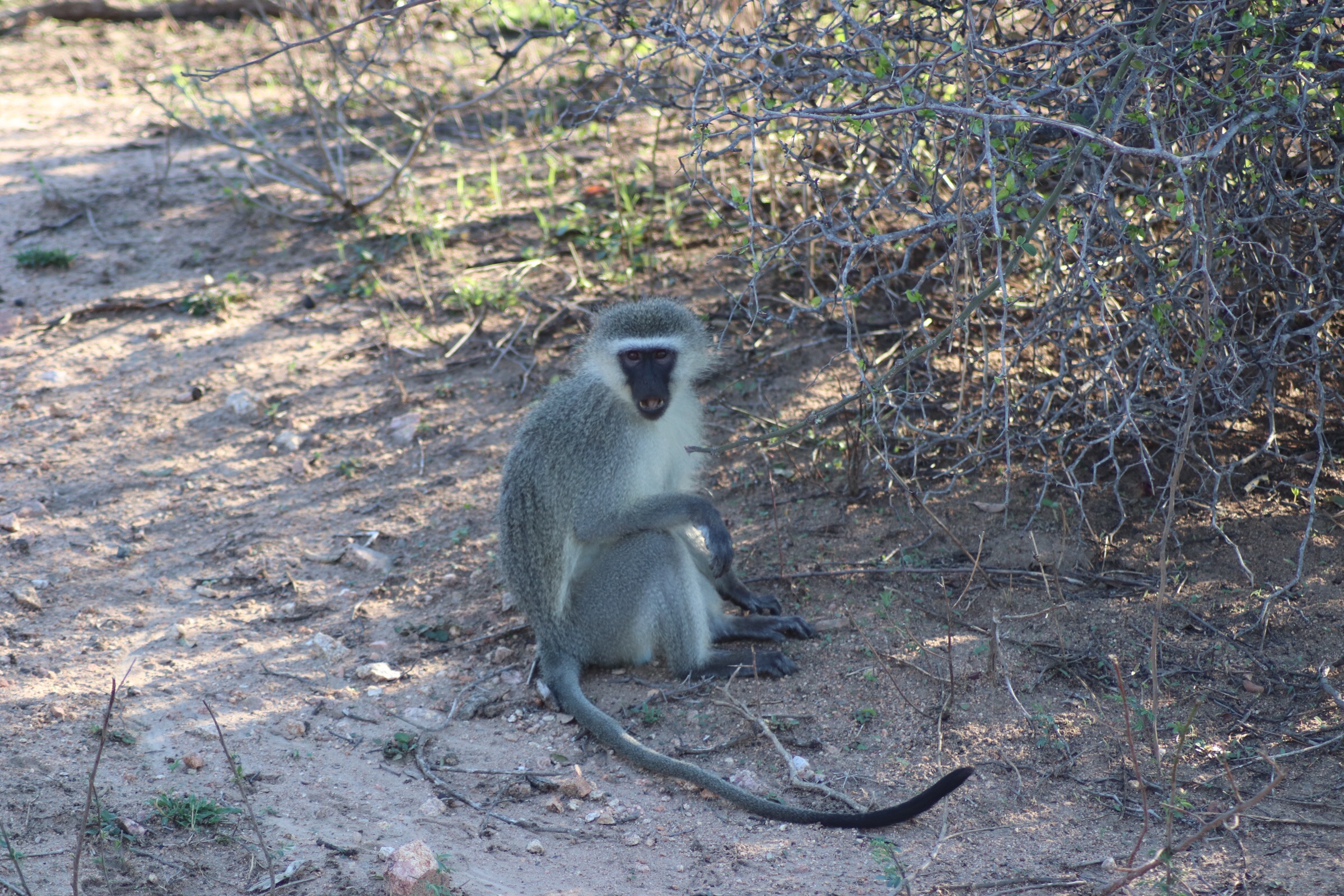
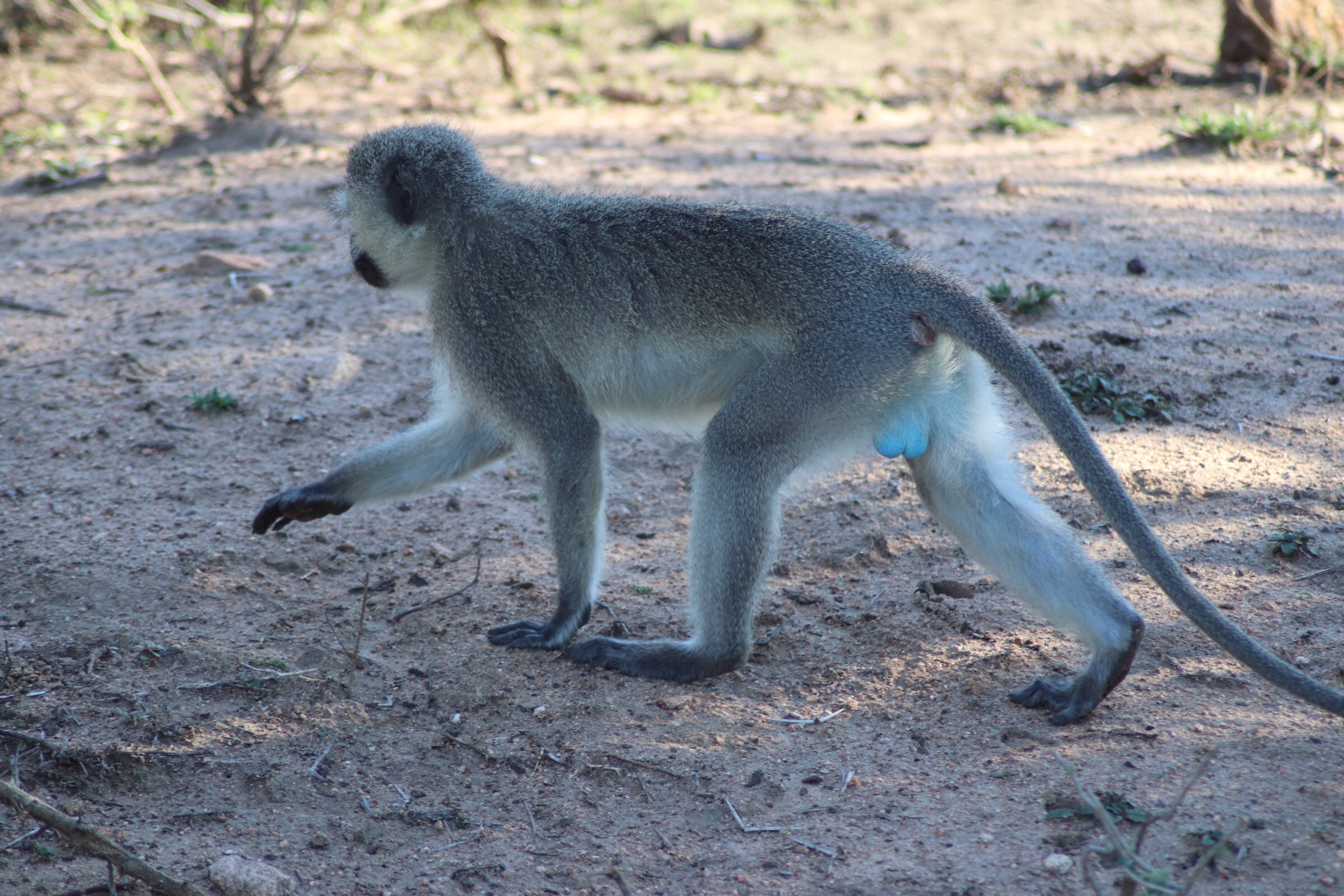
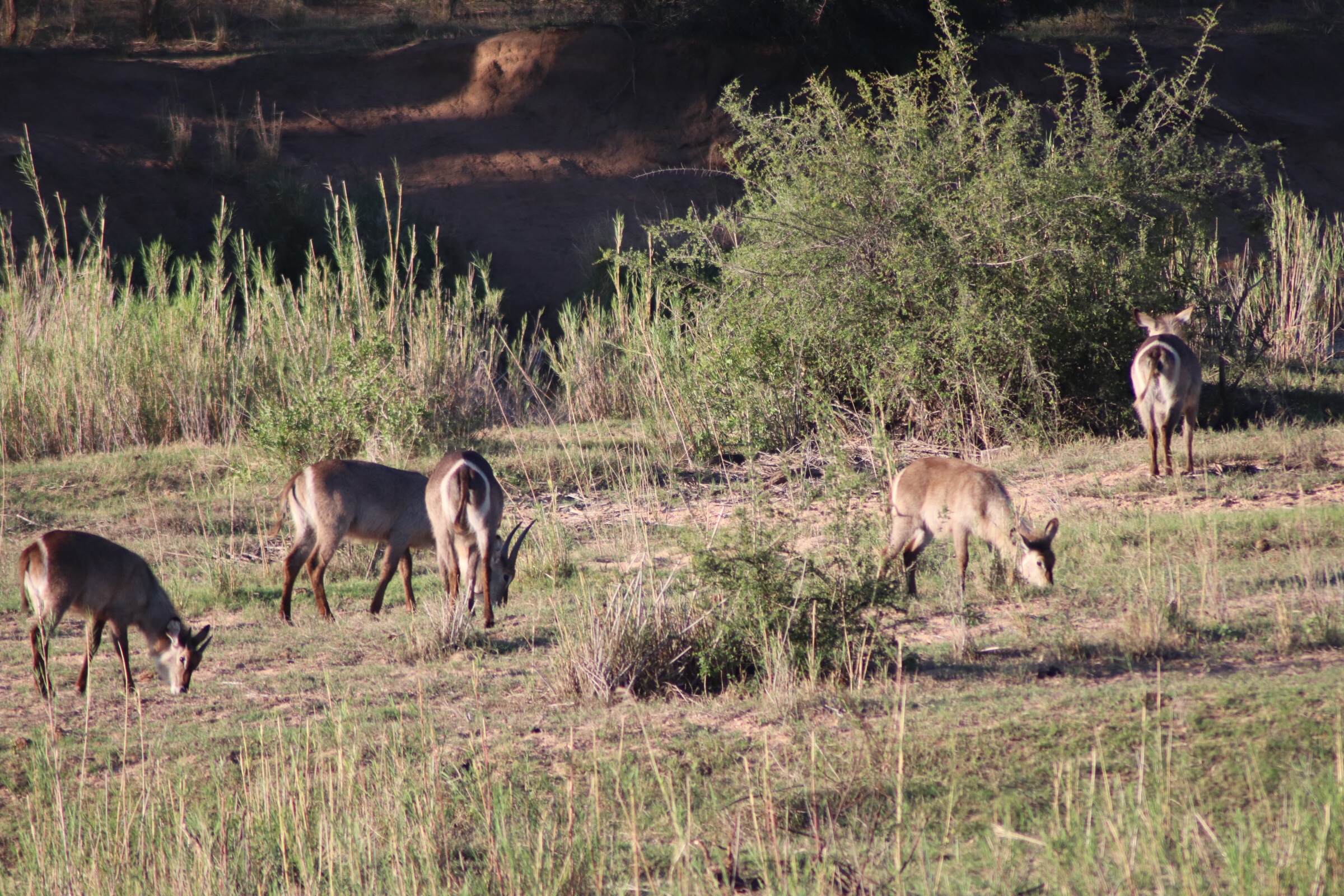
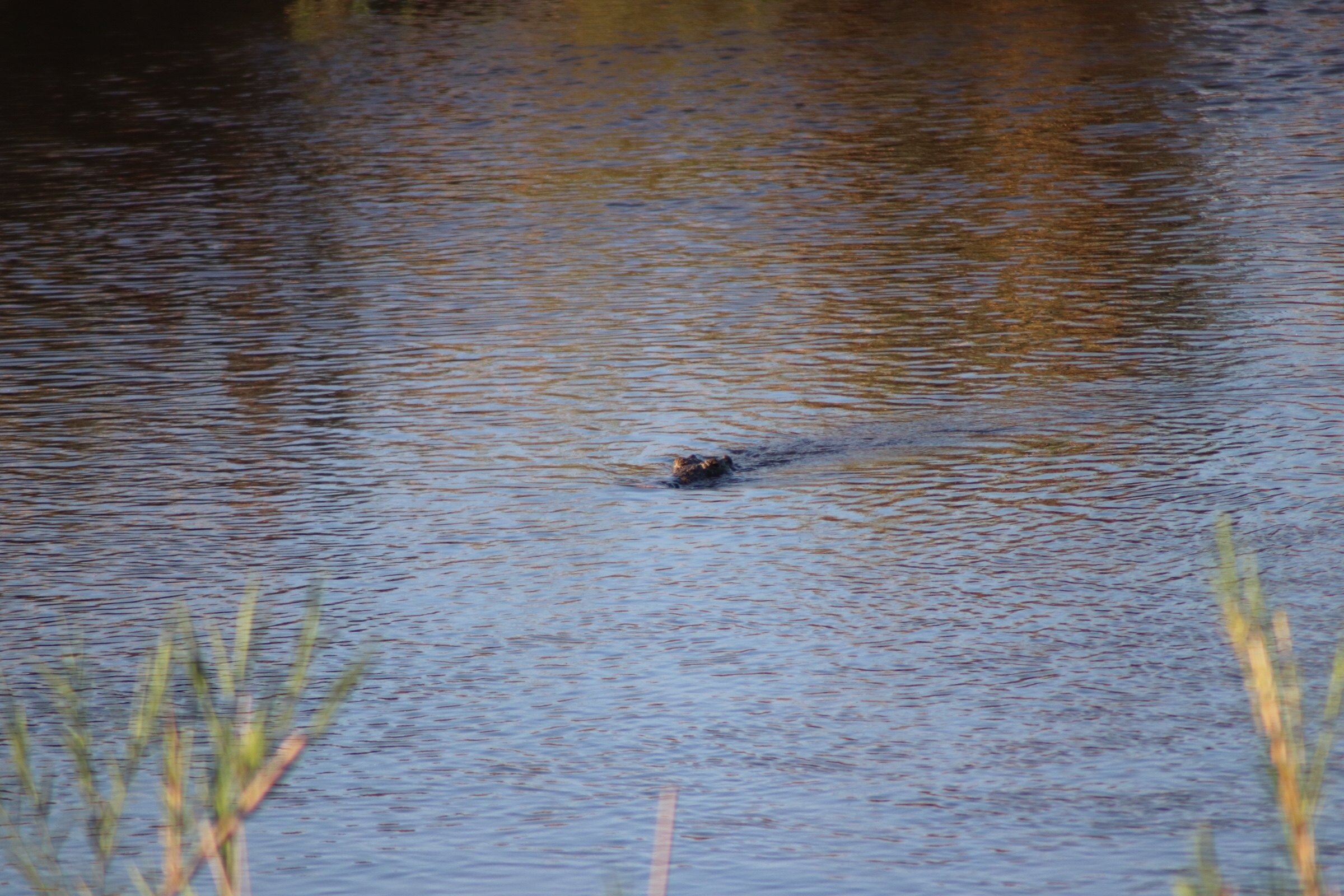
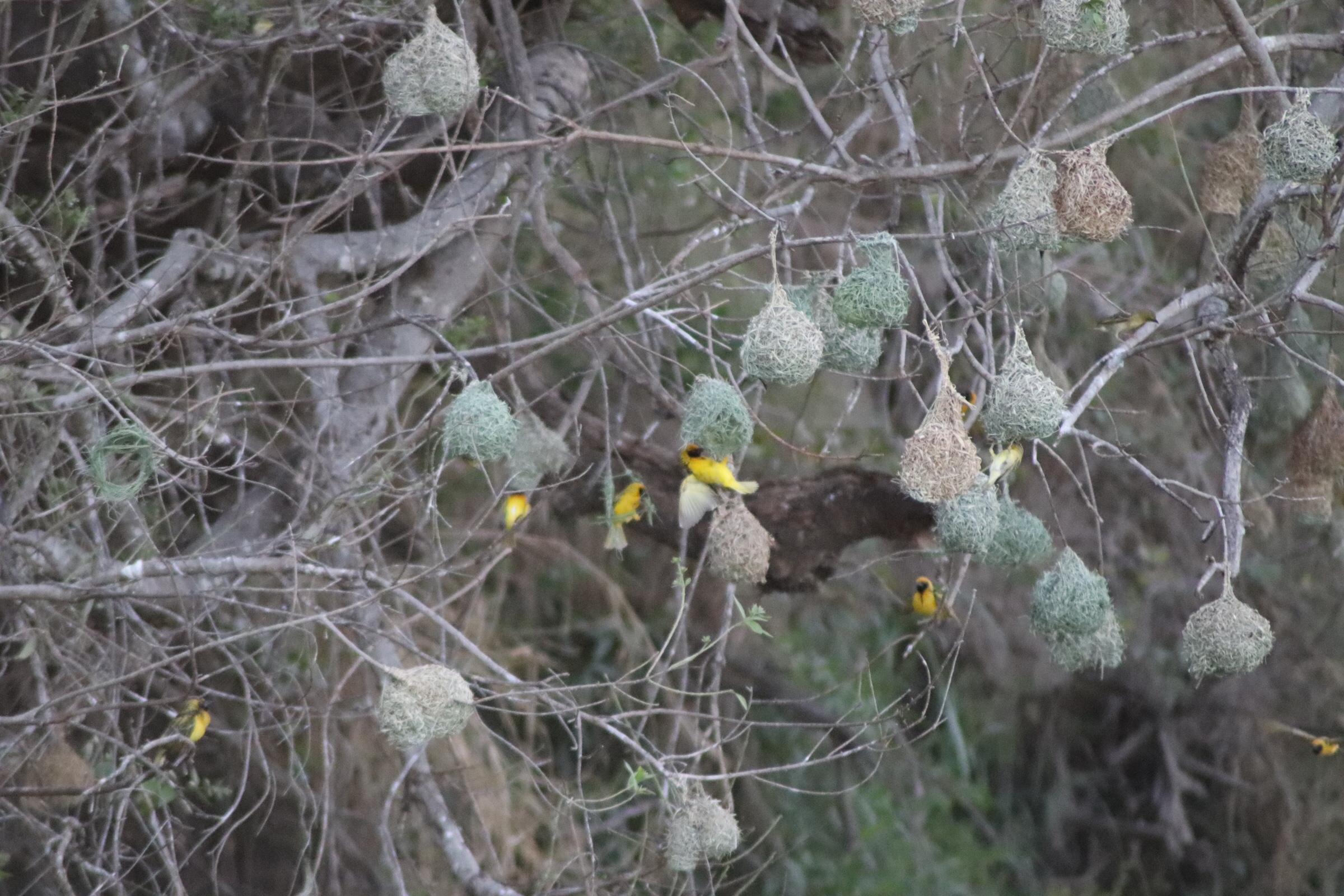
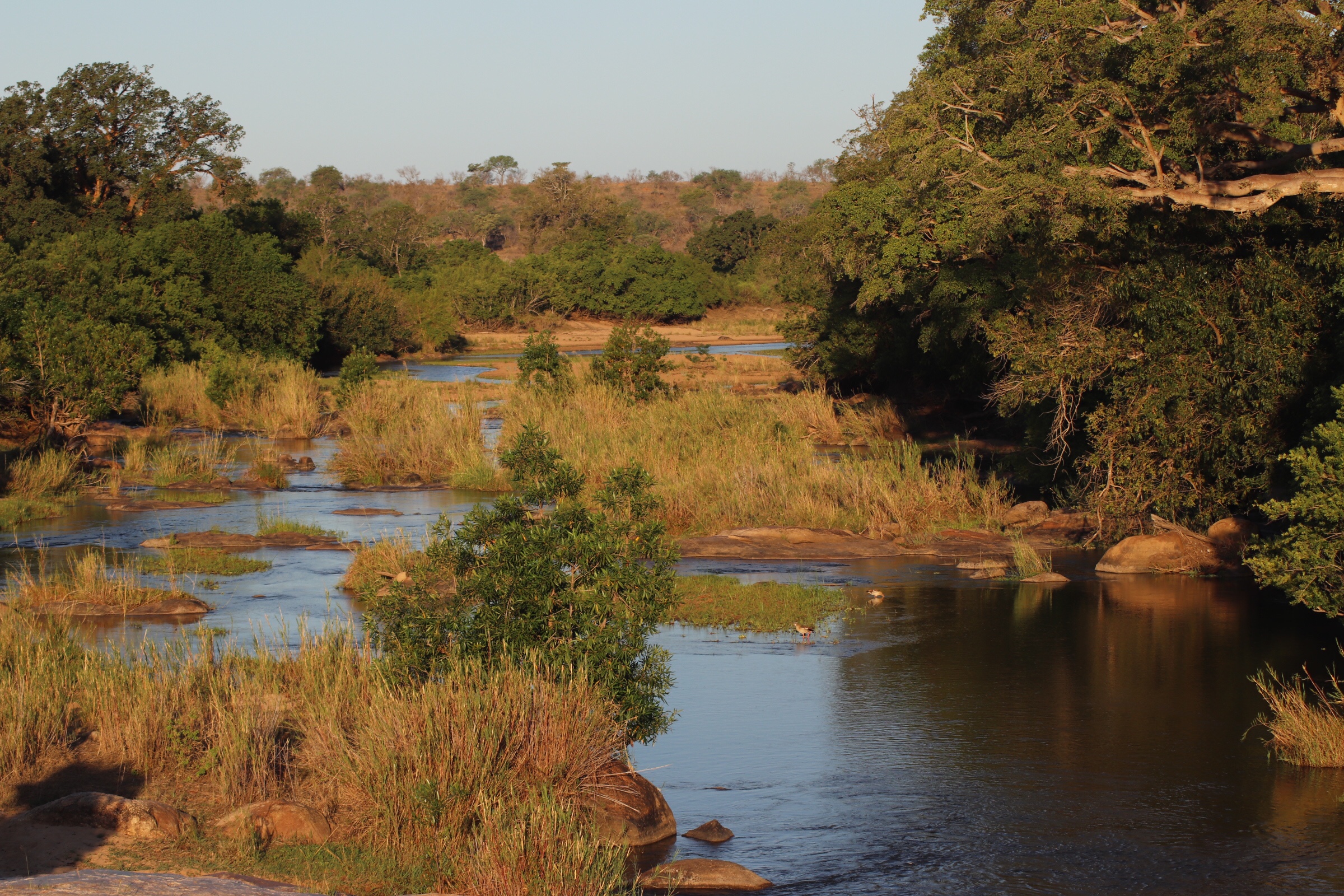
Continuing along we watched a group of monkeys for a bit as they were playing around and eating from the bushes. We learned and saw an interesting feature on these monkeys. (We will let you see if you can figure that out yourself from the pictures). We saw a bush buck, another of the antelopes in the park, and a group of water buck with the white rings on their behinds as they were grazing along the river. We also spotted a pair of crocodile eyes in the river. Although we never saw more than that – from the shadow underneath the surface you could tell it was a big one. We also saw hundreds of yellow birds making nests on a tree (and making lots of noise and commotion). Even though the animal sightings were minimal for much of this part of the drive, the scenery in the golden hour lighting was beautiful.
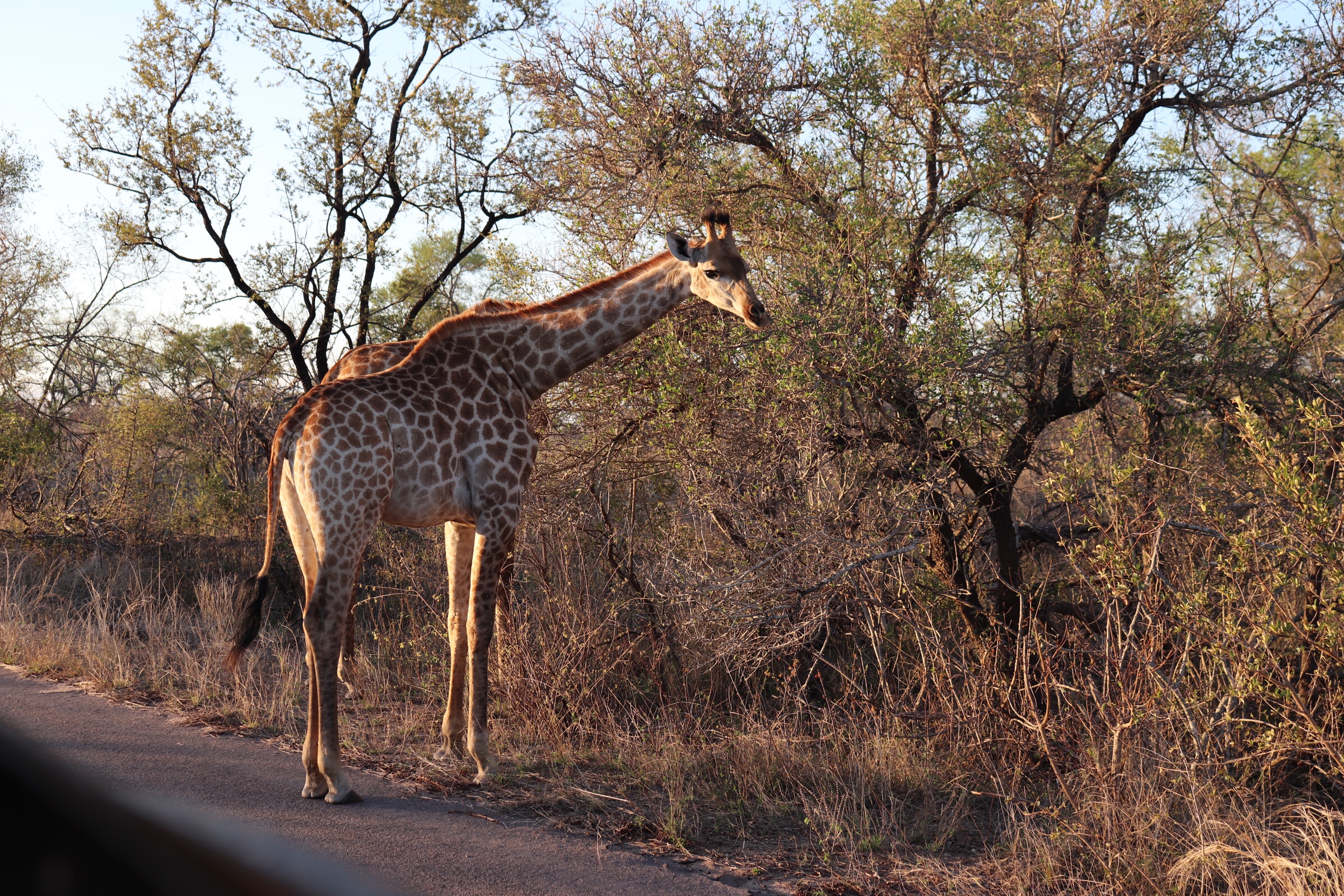
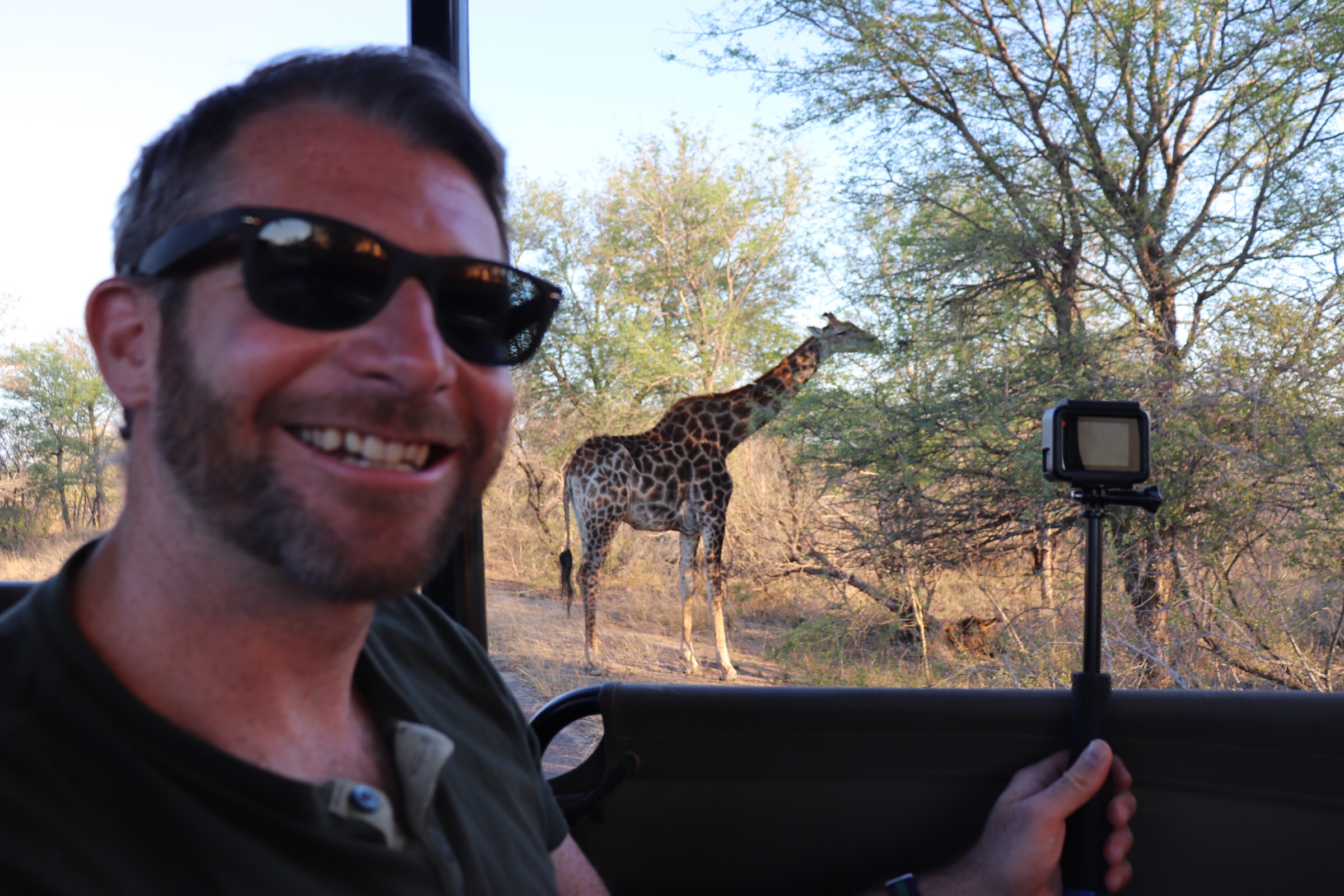
We thought our morning luck had run dry when we found ourselves with another exciting close up animal encounter – giraffe on the side of the road. This was another one we had been looking forward to seeing up close. We pulled up right next to them (and we mean just a few feet away) and watched them eating from the trees as they starred back at us, wondering what we were doing. They are really interesting animals to see in person and especially so close. And they are HUGE! Every time we pass them we are in awe watching them move along and can’t help but think about how somewhat funny looking of an animal they are with the long necks and legs.
We were out of animals for the day but enjoyed the landscape and beautiful sunset views on our drive out of the park and back to the lodge. We had our sundowners around the fire tonight rather than in the bush (thanks to the Kruger rules) and followed by a delicious dinner of South African cuisine by the fire. We chatted with the new people who had arrived and said goodbye to the Spanish friends we made as they were leaving in the morning, before heading to bed and getting ready for another early start the next day.
Day Four
We woke up with another 4:45 am wake-up call and headed off to Kruger at 5:15, same as yesterday. We had reached our last day of game drives but were excited and hopeful they would be successful. We had a lot of luck over the last few days and seen many incredible animals including the big five and the elusive cheetah. There was only one left on our list that we really wanted to see more of today – the hippo. The little bits of head and eyes popping out of the water in the distance yesterday was a tease and we were eager to see another one close up before we left Kruger.
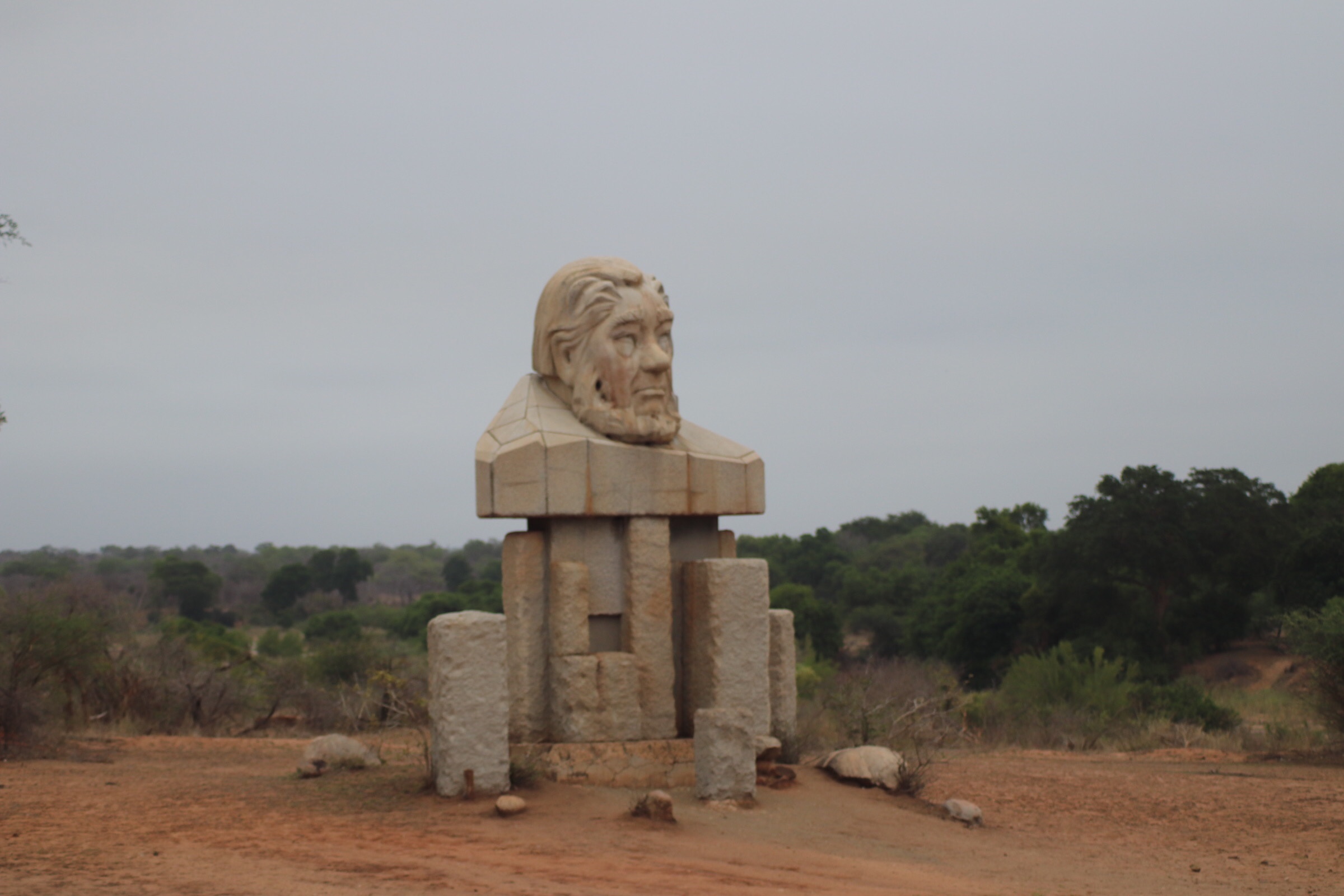
Our Spanish friends had left and today we were heading out with some Danes and a French couple who had arrived over the last few days. It was much cooler today than the last mornings and there were more clouds in the sky. After passing the statue of Paul Kruger at the gate and going through the check in process, we continued out of the entrance area and immediately saw a large giraffe by the side of the road. Our guide told us it was an old female and you could tell by the skin, because it was not as vibrant with bare patches and the hair falling out. Just after her, on the road were some kudu having their morning snack.
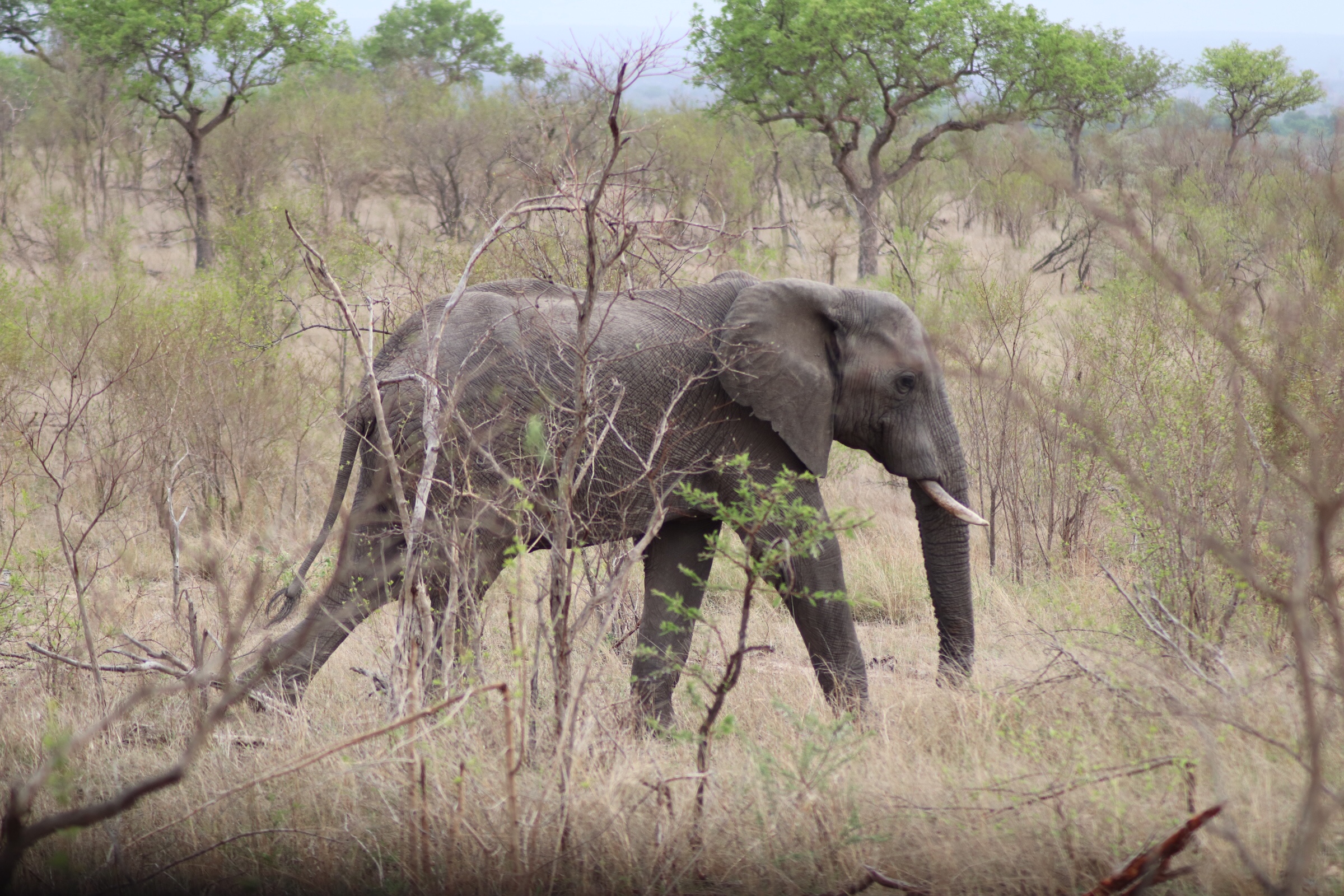
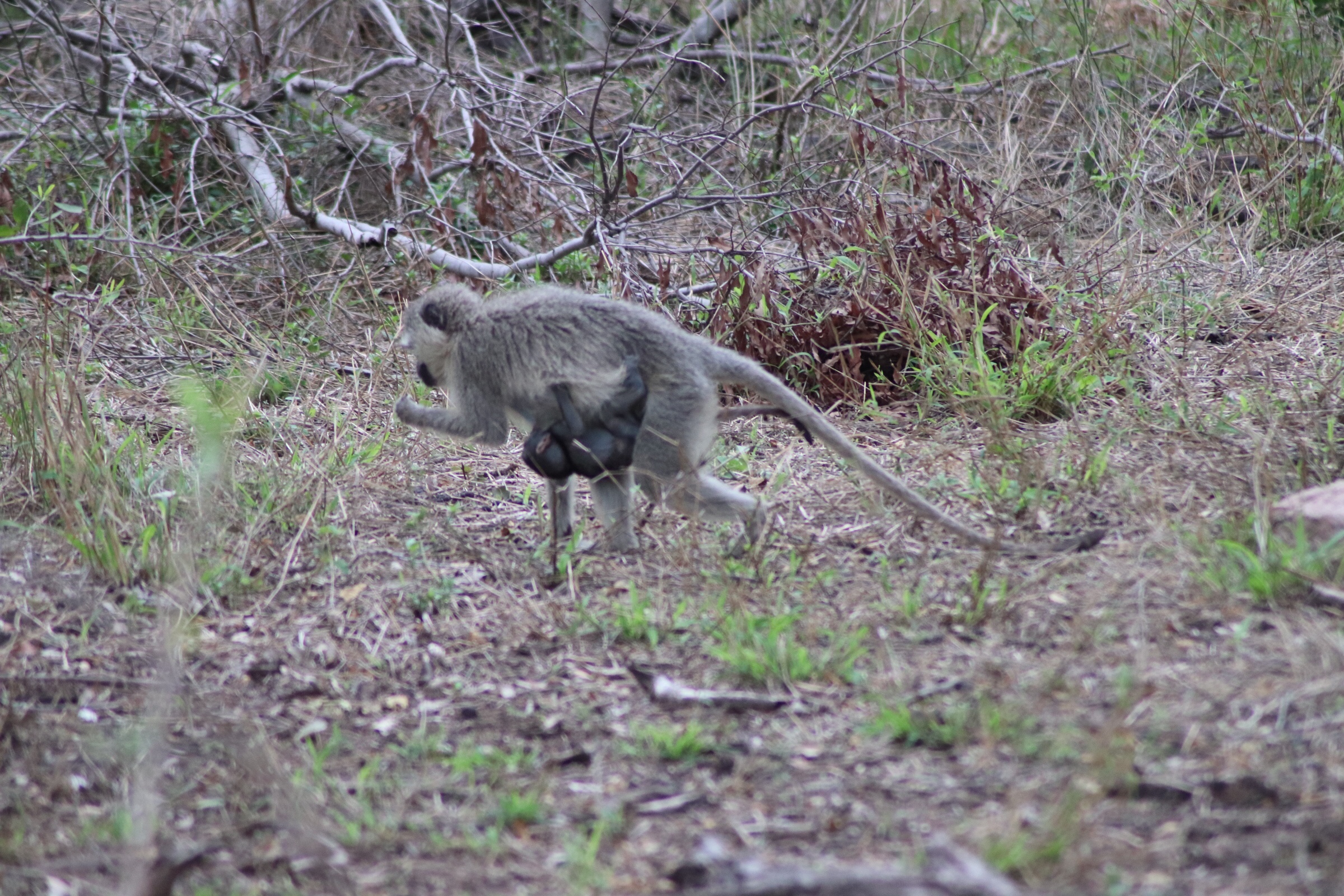
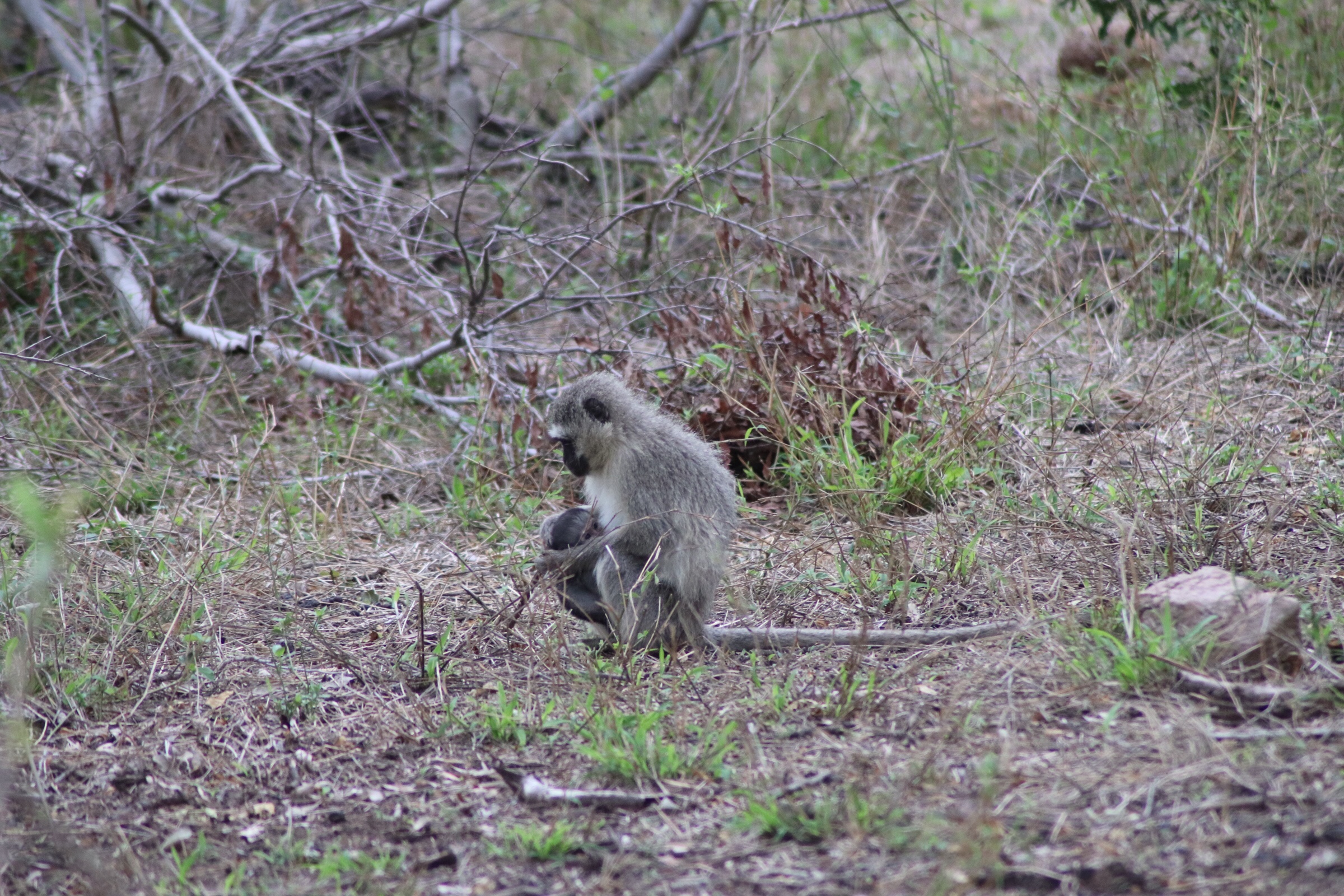
It was a quiet morning today in the bush. Some vultures, an eagle, a few other birds, wildebeest, and a lone elephant were our main sightings on the first half of the drive (along side plenty of impala of course). We also saw monkeys with newborn babies clinging to them, which our guide thought were likely born just yesterday.
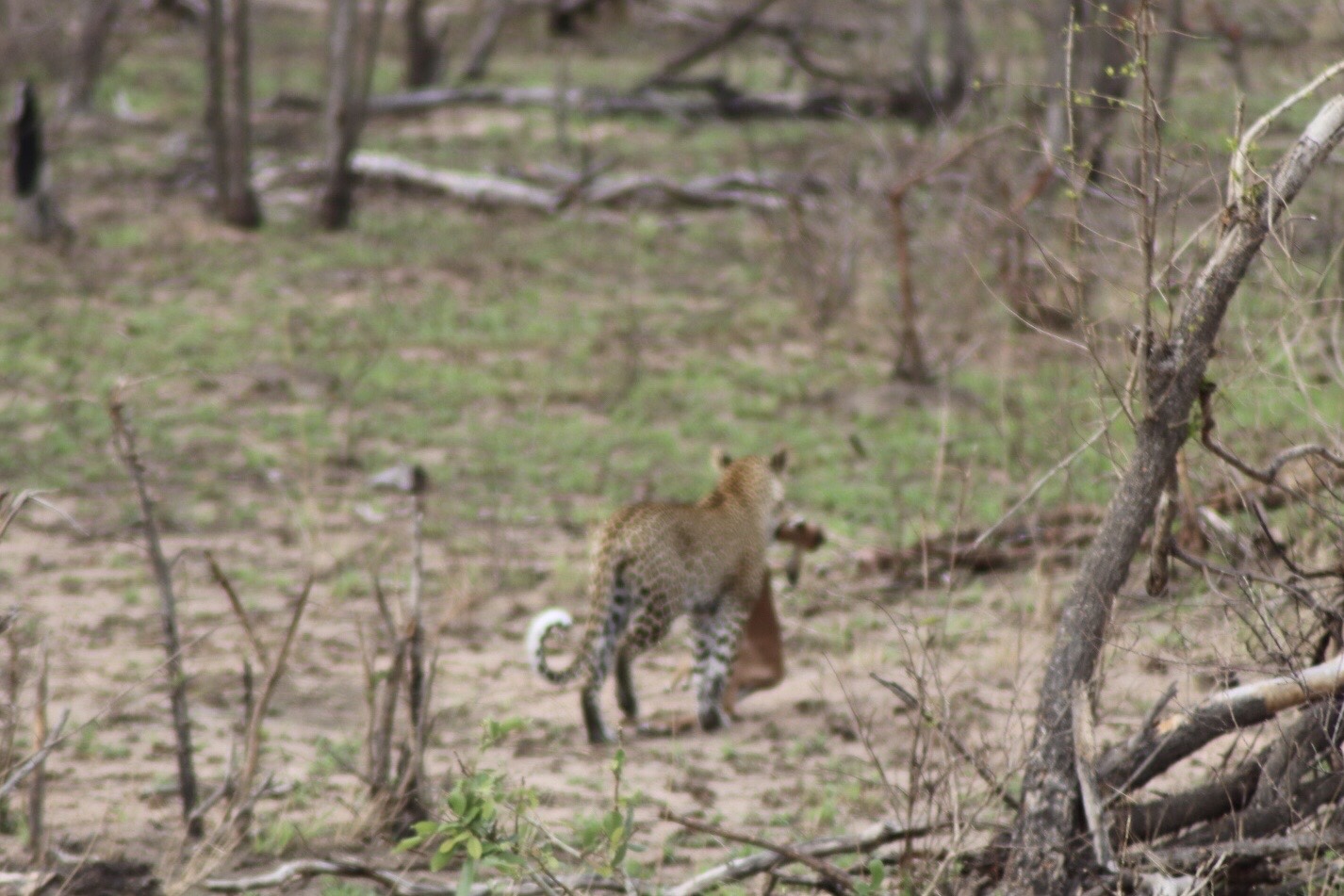
We checked out a few other animal haunts – the watering hole (quiet other than a few birds), the dry riverbed (nothing but grass) and continued to drive along without any luck. We saw two other safari vans ahead and pulled beside them and scanned the tall grass but could not figure out what they were looking at. We were about to pass the other cars when the older Frenchman who spoke limited English shouted out ‘Stop! Leopard!’ The guide quickly stopped the car and we looked to the right. There he was, partially hidden by the grass – a large leopard carrying an antelope in his mouth. He had just made the kill and was looking for a tree to put it in. He moved quickly and we tried to keep up before he was too far from sight and in the thick of the bush. In all the excitement Christina was trigger happy and unfortunately captured blurry pictures when he was in the open for that brief few seconds in the beginning, but got a few others as he moved further into the grass and trees. We knew he was looking for a tree for his kill, so we stuck around and tried to track him in the distance to see which tree he would climb and maybe see if we could get a better view. At this point, similar to with our lion friend the other day, another 15 cars and vans pulled up to see the leopard but could only see traces in the distance at this point. We knew he might not come back this way and our guide said that there was a road in the direction he was headed, so we decided to check there to see if we could get a view from the other side. Our safari comrades’ guides apparently had the same idea and our caravan headed that way. We stopped and waited for a few minutes where we thought he might have been headed, eyes peeled across the distance and periodically checking the taller trees to see if we could find him. Of the 20+ cars that had arrived by now, no one had eyes on the leopard. Had he changed course? Had he gone back in the other direction? Was he headed deeper into the bush and we would never see him? No one knew and we continued to watch, driving slowly along the road in case he was headed a different way, and retracing our tracks to see if we could find him again.
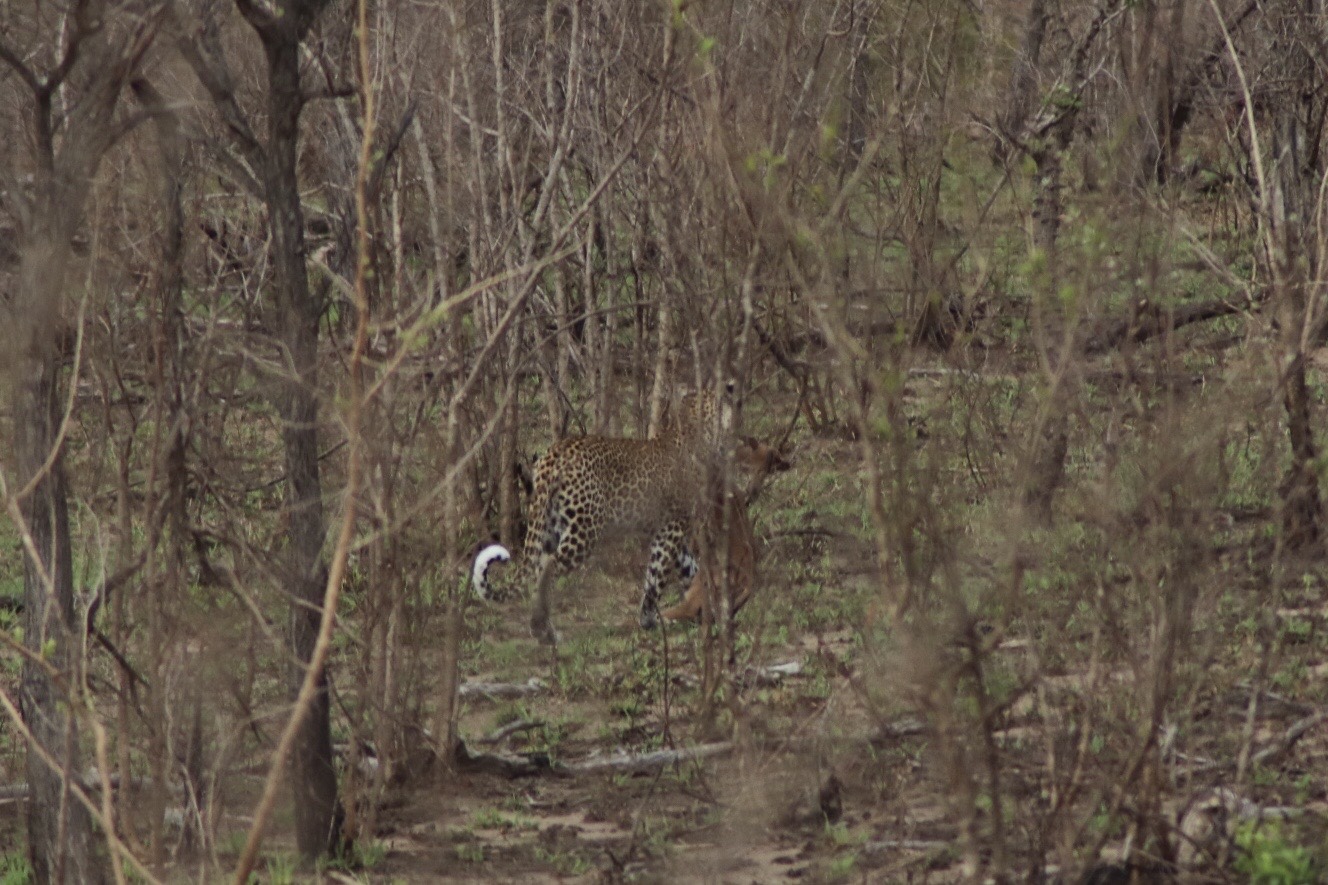
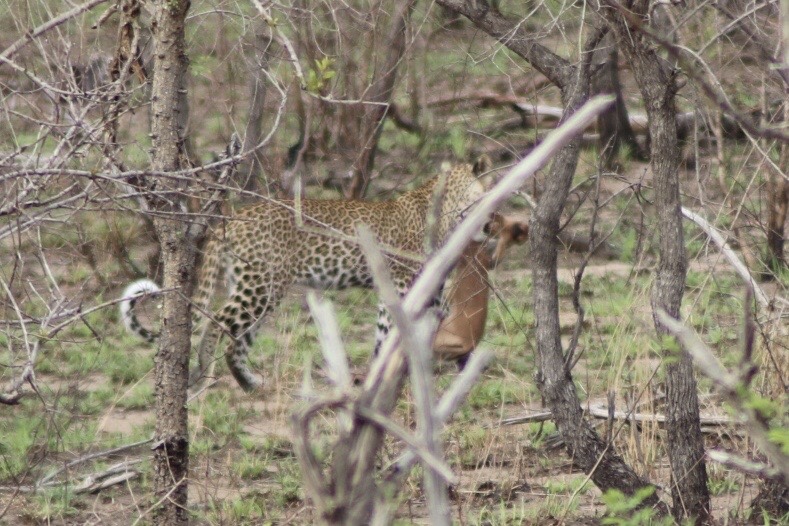
After some time we realized our leopard friend had probably moved into the thick of the bush, away from the roads. If that many eyes were on him and no one could spot him, it certainly seemed to be the case. At least we had our moment in the beginning, witnessing the incredible sight of him dragging this antelope with such ease and moving quickly through the tall grass. With that we continued on, and stoped at a beautiful lookout spot along the way. Every direction you looked the landscapes continued and we saw miles and miles of the beautiful South African bush with all of these incredible animals roaming around them. If only they would start coming out!
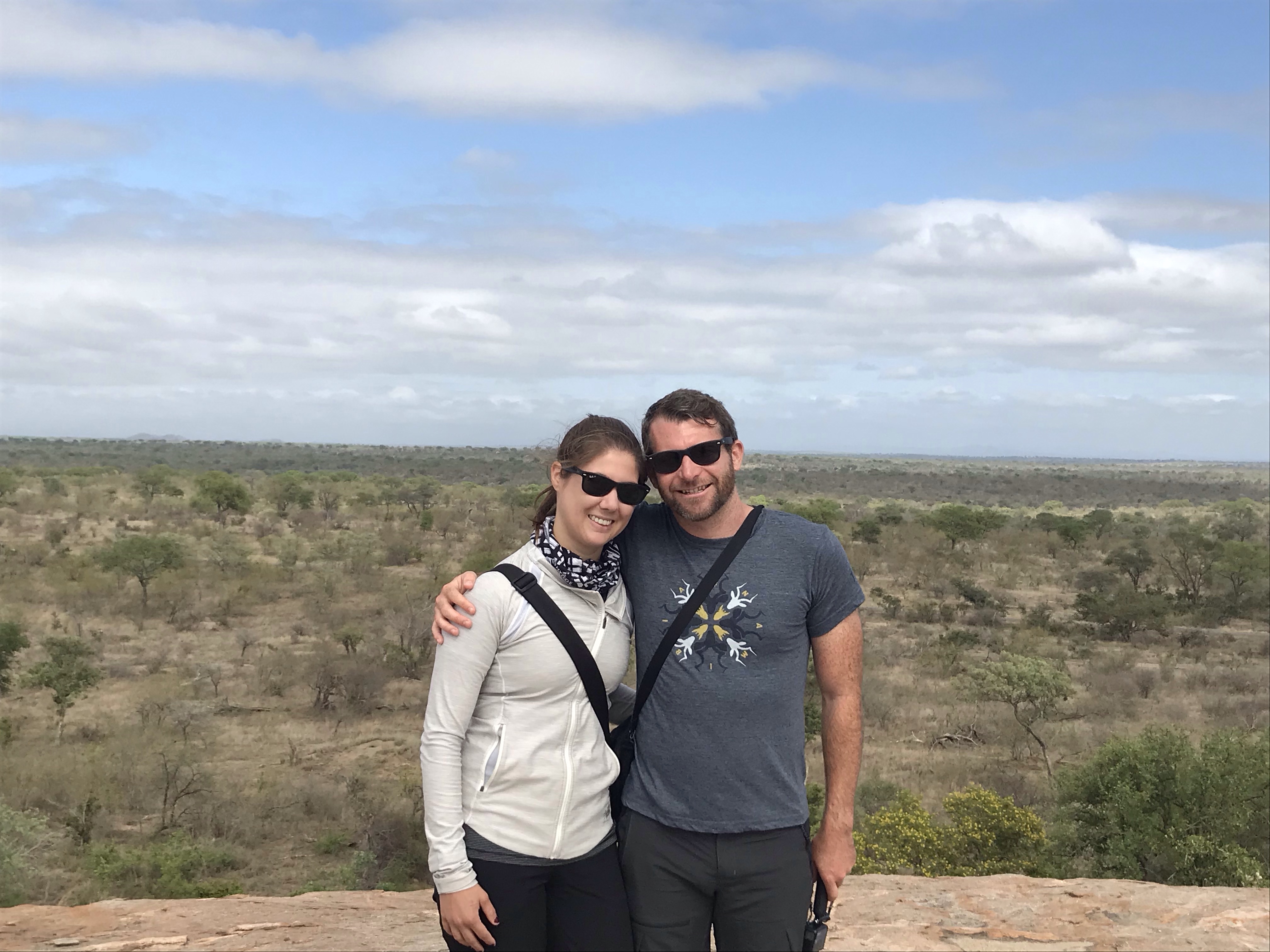
Other than antelope and another baseball sized snail our ride back was once again quiet. Where all of the animals this morning were, we did not know. But that is of course how it goes with nature. At least we had our leopard sighting to be excited about. Of course there is some tracking and skill involved to find these animals, but many times, especially in a place like Kruger where you are confined to the roads, it can be a bit of ‘right place at the right time’ and ‘safari luck’ that give you incredible viewing experiences. We were happy to have a few of those over the past few days, and kept hopeful that we would have some again in our last drive this afternoon. In the end it’s nature and it’s animals, and they are not there just to please us and pose for our photos. We are merely visitors in their homes, happy to have the opportunity to watch them in their natural environment.
With that we headed back to the lodge. Just after turning off the main road and onto the dirt roads leading to our camp we came across a half eaten animal carcass just past the fence on the side of the road. We knew that it had to mean one thing – there was a predator in the area and he or she would be back for its kill at some point. Maybe it was even sleeping in the bushes next to it. We spent some time closely scanning the area but saw nothing and with the fence along the road couldn’t advance further.
After getting back to our camp, we had breakfast and updated our safari bingo cards before getting some rest in. Yes, we had made our own safari bingo game to play the last few days. We were tied 1-1 so far, so tonight’s game drive would be especially important to figure out the ultimate winner.
After lunch it was back to Kruger, but first we would make a stop at the kill we had seen on the way and hope we would find something more there. We pulled up to the spot and there it still was – the lovely dead something. Everyone’s eyes were on the tall grass and looking through the rocks to see what we could find. We knew there had to be something close. Seonaid maneuvered the car into a few different positions so we could have a look from different angles and pulling forward she cried out ‘I see ears!’ We all looked closely and you could see it was a lion, the ears nearly blended into the grass, when she suddenly raised her head looking straight at us. Another lion spotting, and a female this time. We had to look closely to find her and we couldn’t see much more than her head rising above the grass but she was there and staring back at us. We watched her for a while as she yawned a few times and looked around at us. At one point she even moved and we got a good look at her before collapsing behind the brush and out of our view. We took the best pictures we could through the fence before moving on.
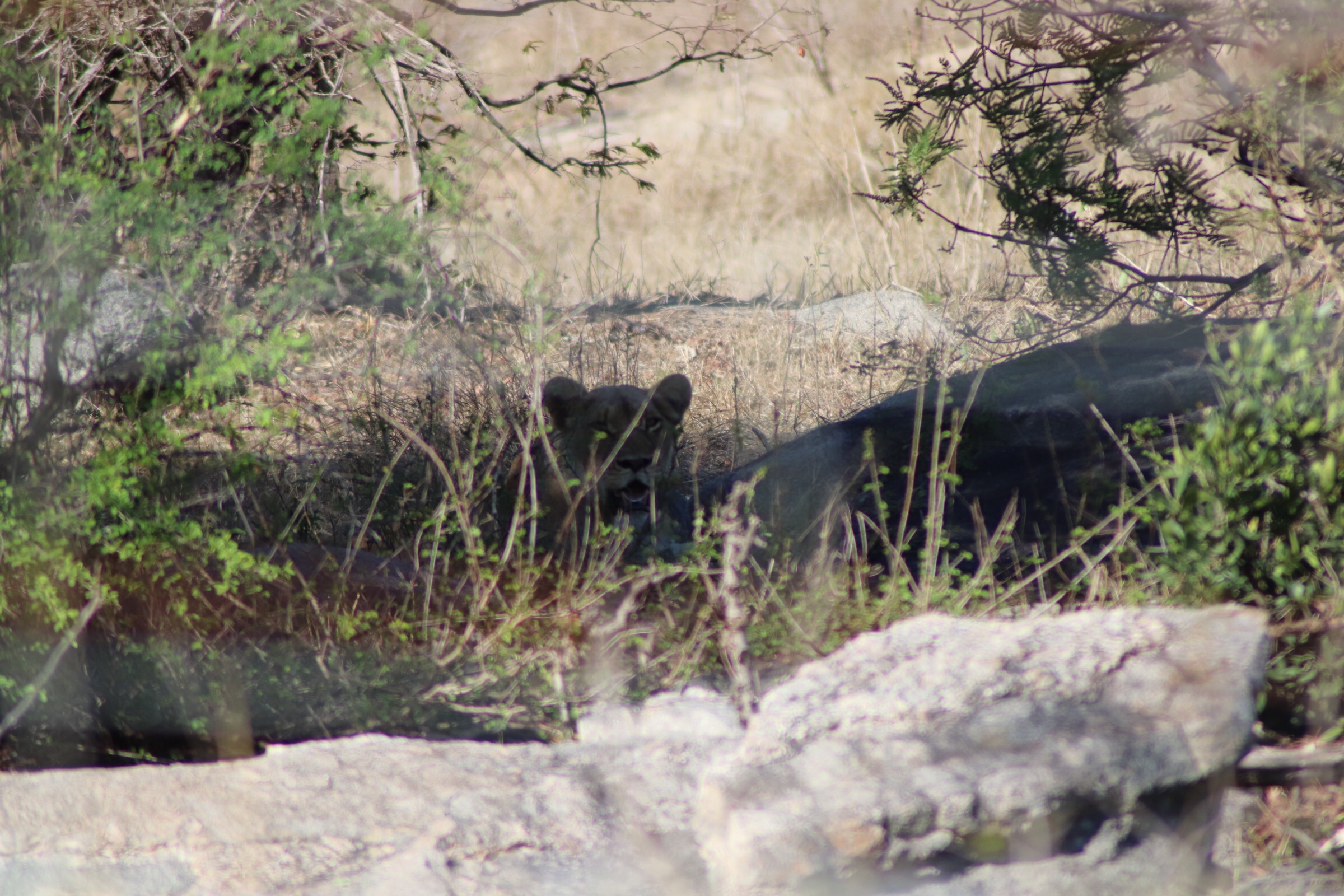
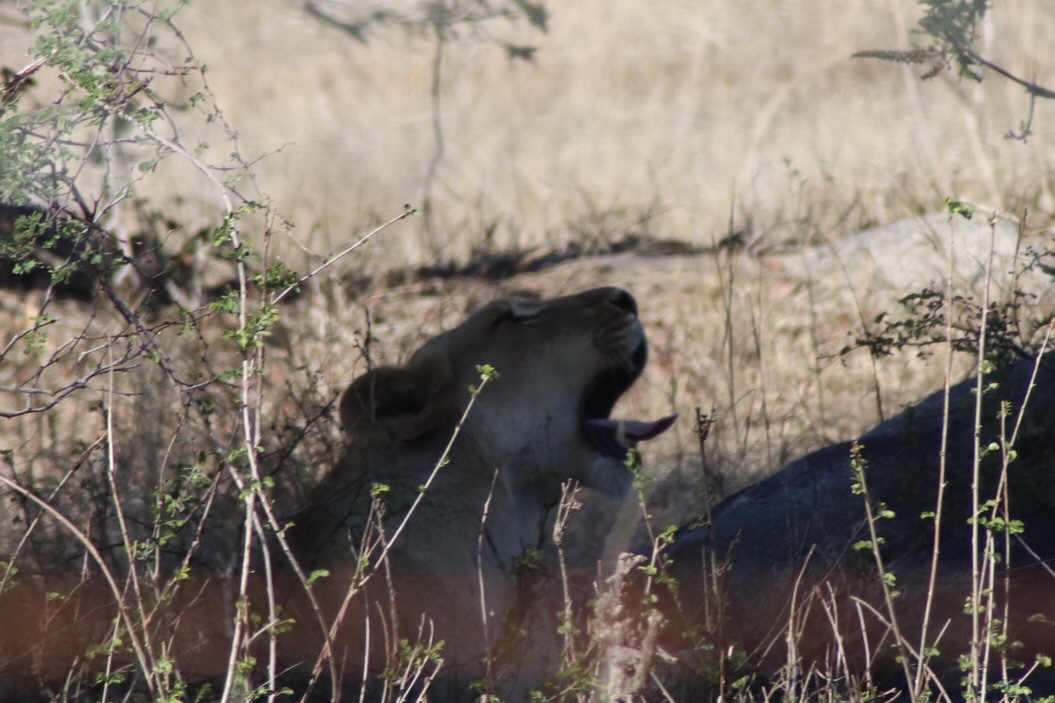
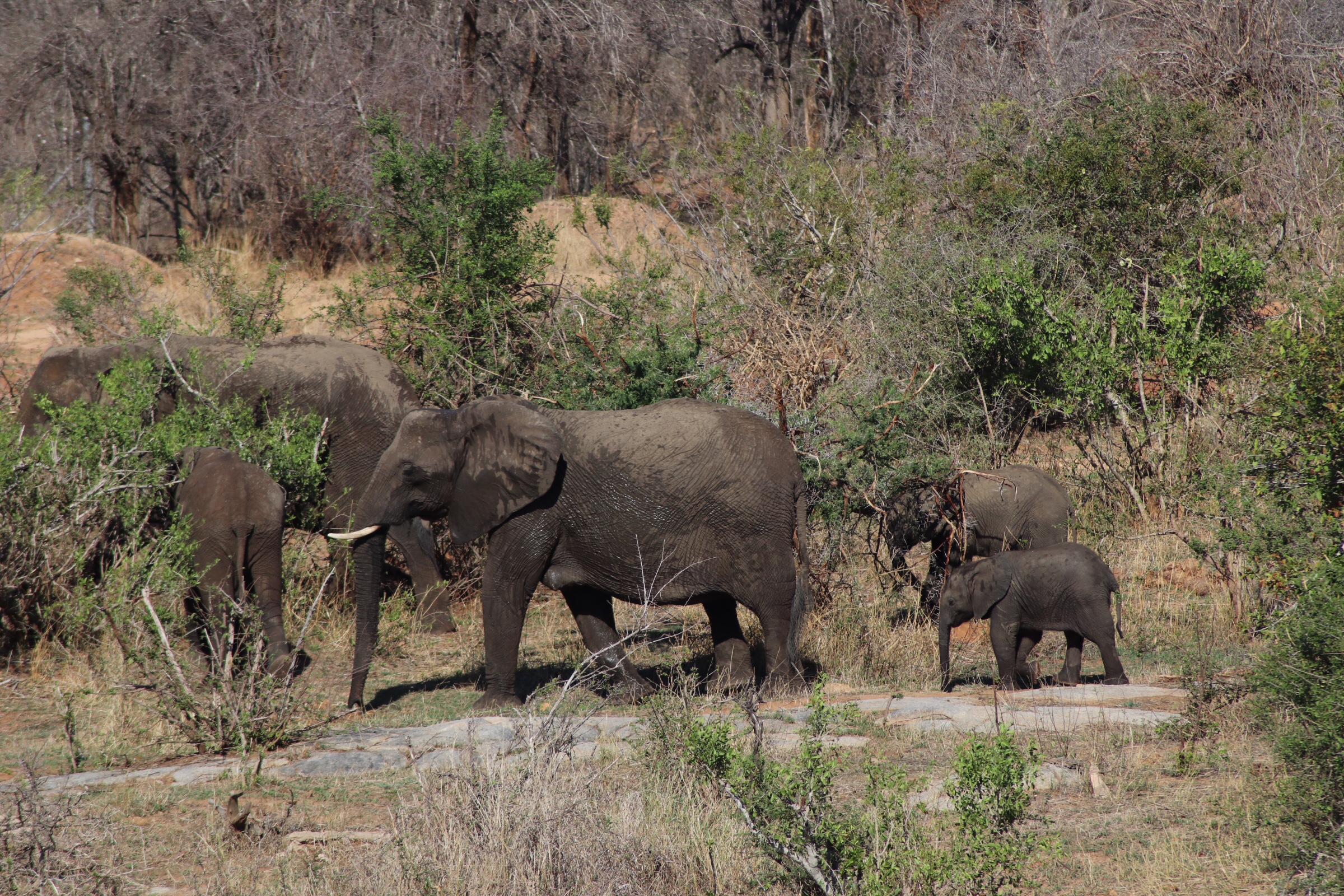
With that we headed for Kruger and between passing the first entrance gate but before even getting to the area with the check in, we took a look out at the river and saw a herd of elephants in the riverbanks. We watched them until they were out of view, and then a glimpse in the other direction and in the distance we saw buffalo and hippo in the water. We hadn’t made it fully into the park and already 3 of the big five and hippo. We hoped that was an omen for a successful day ahead.
Our first stop for the day was the same watering hole as yesterday. We had hoped the hippos we saw in the distance yesterday would be closer to us, but they were still in that same spot, only peeking the tops of their heads out a times to give us a view. We sat and admired the birds and the stillness of the lake before carrying on.
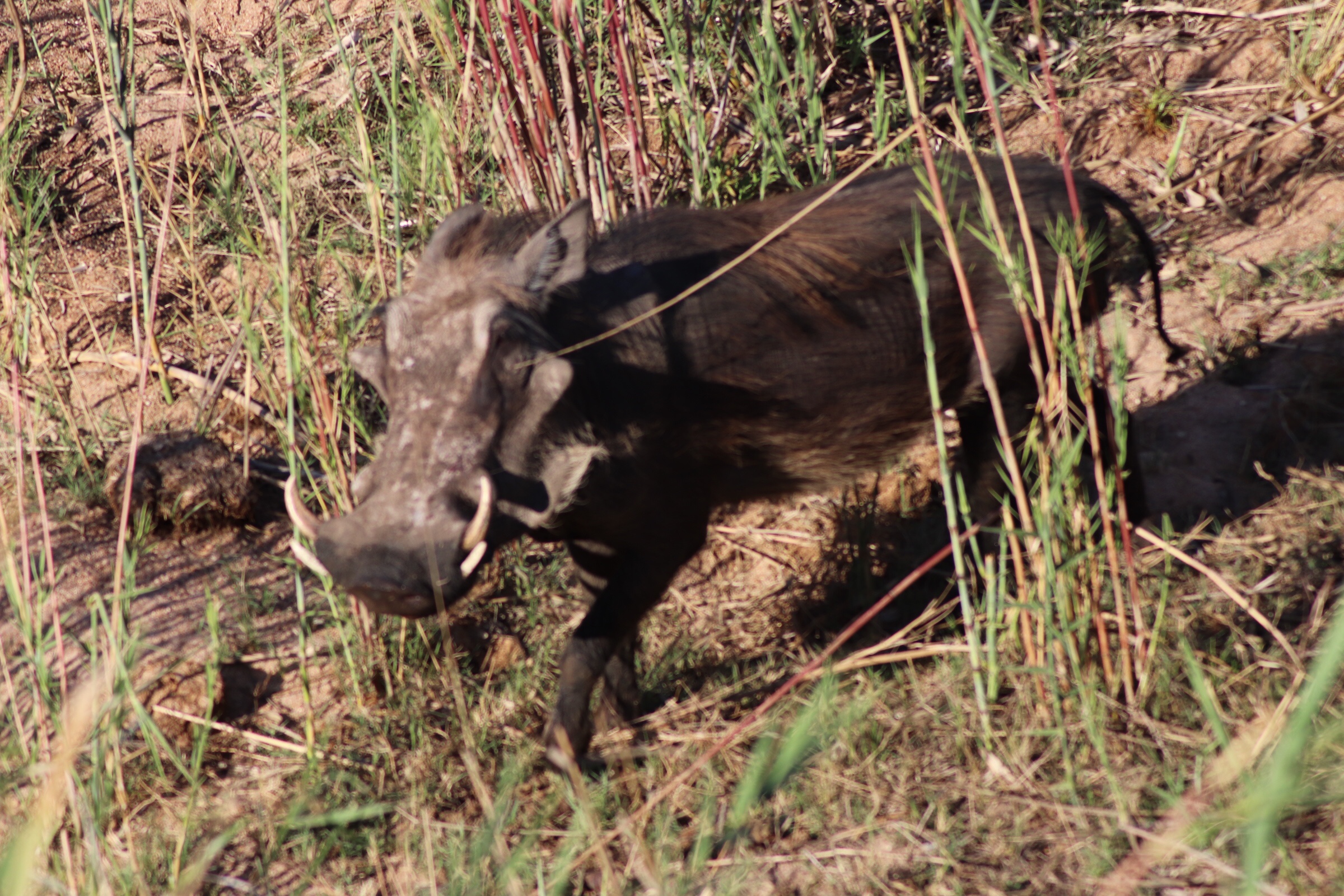
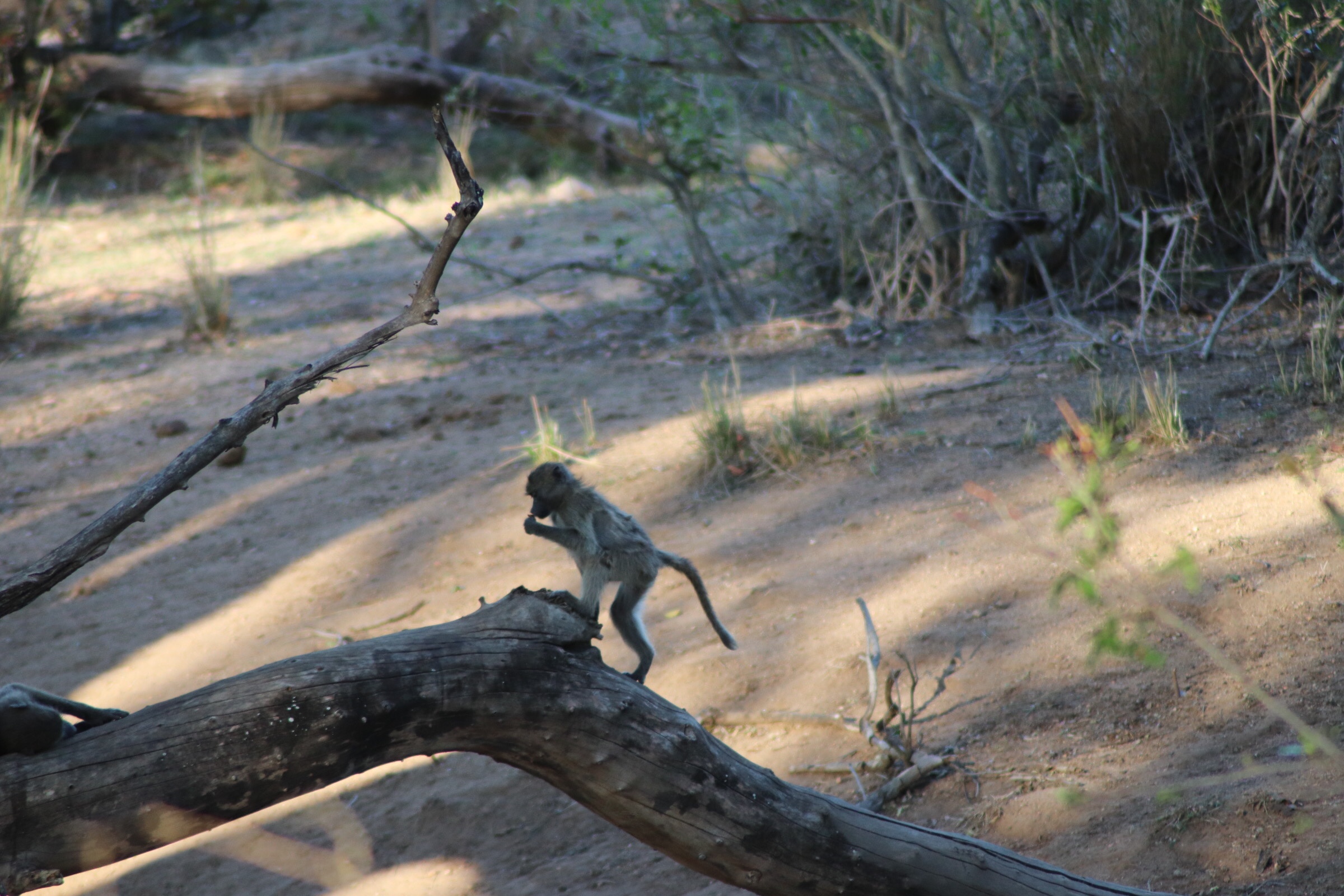
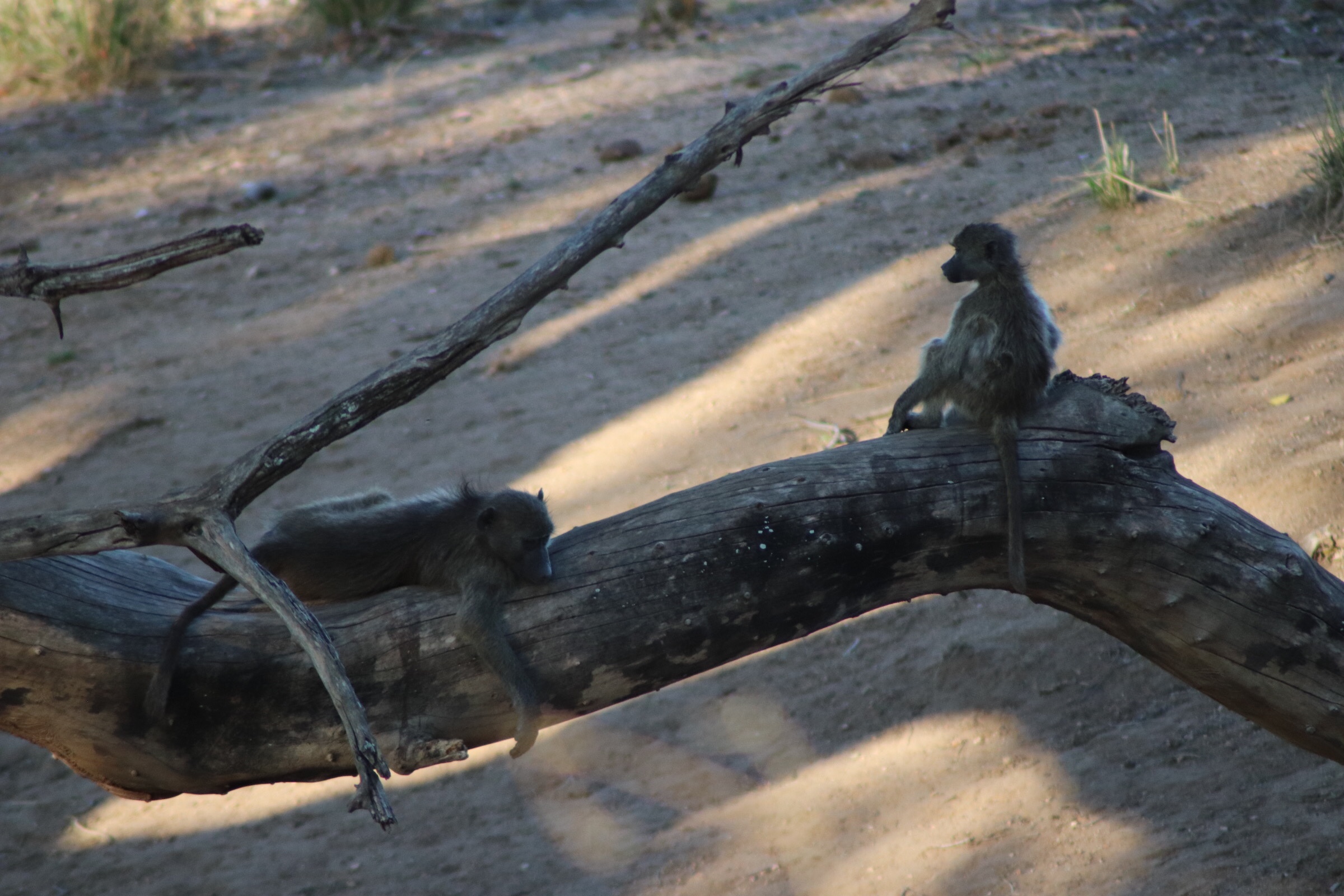
We passed a warthog in the grass en route to the river along with giraffe and some water buck. We stopped for a while to watch some baboons playing around and lounging including two young ones and a little guy climbing all over his mom. Along the river, we stopped for a while to watch a massive group of elephants – big and small – drinking and playing in the water. This was by far the biggest herd we had seen. While observing, our guide added some new facts. We learned these elephants will drink on average 125 liters of water a day. We also learned that the reasons elephants die is not of old age, but more frequently of starvation due to loss of teeth. They have 6 sets of teeth throughout their life, and when the last ones fall out, they are no longer able to chew on the rough bark they usually eat and end up dying of starvation as a result. Scientists think that if we could give elephants a set of dentures they would be able to live up to 200 years. They also never stop growing – imagine how big a 200 year old elephant could grow.
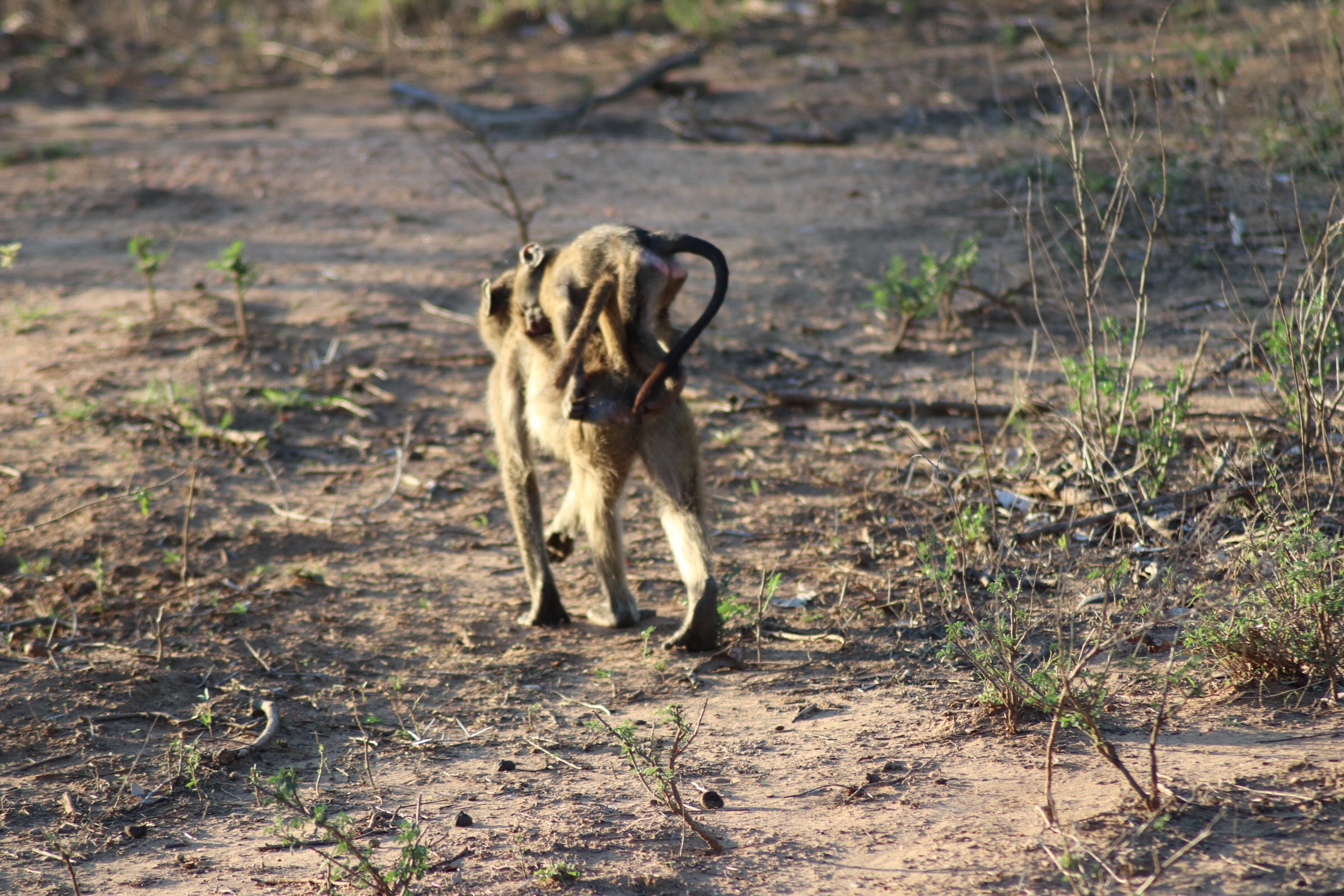
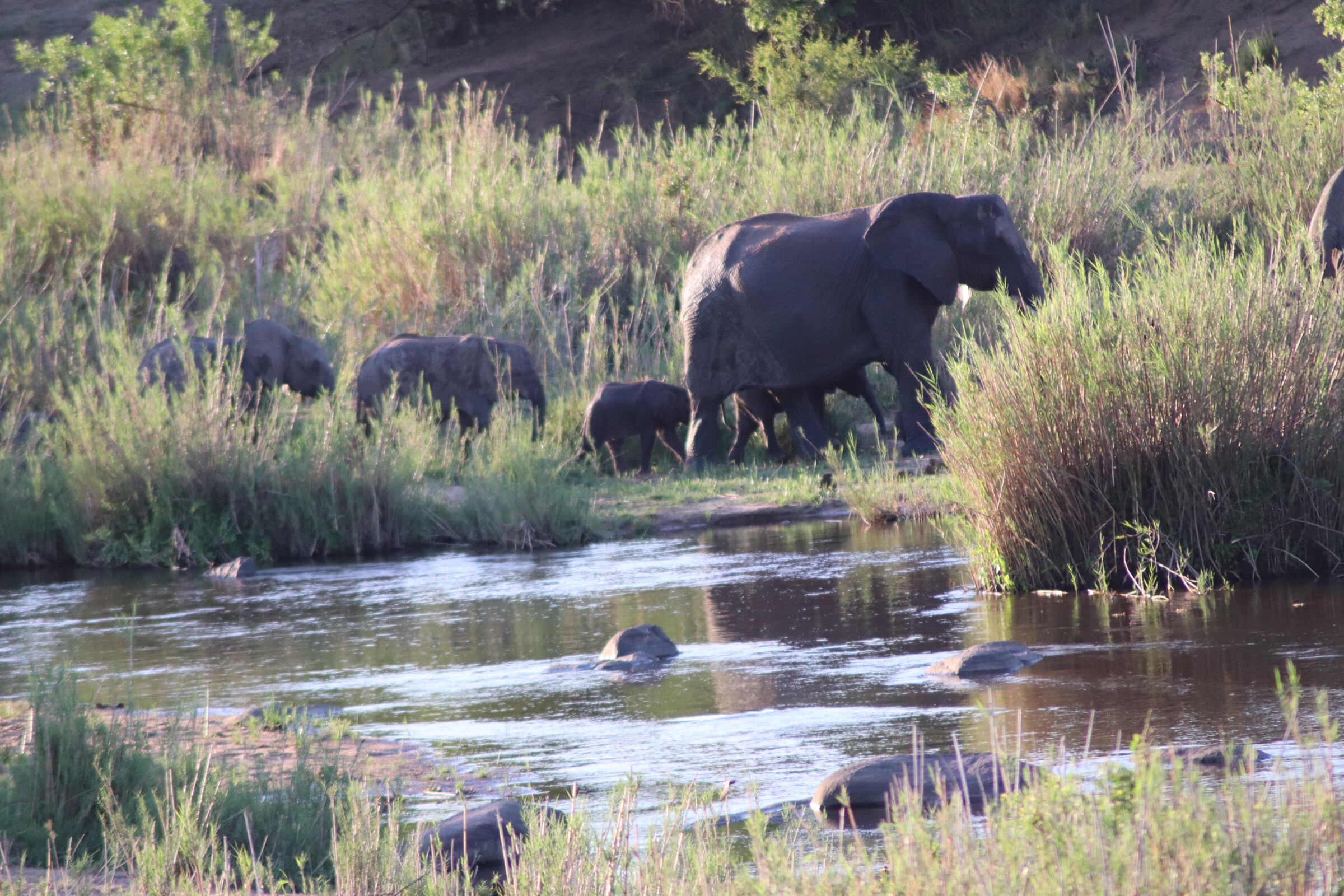
We continued along, stopping to admire more kudu and their beautiful twisted horns along the way. Unlike American deer where the antlers grow and routinely break and fall off, antelope horns are a part of their skull, and it is very painful for the animal if they break. They have one pair for life that continue to grow and evolve unlike the deer.
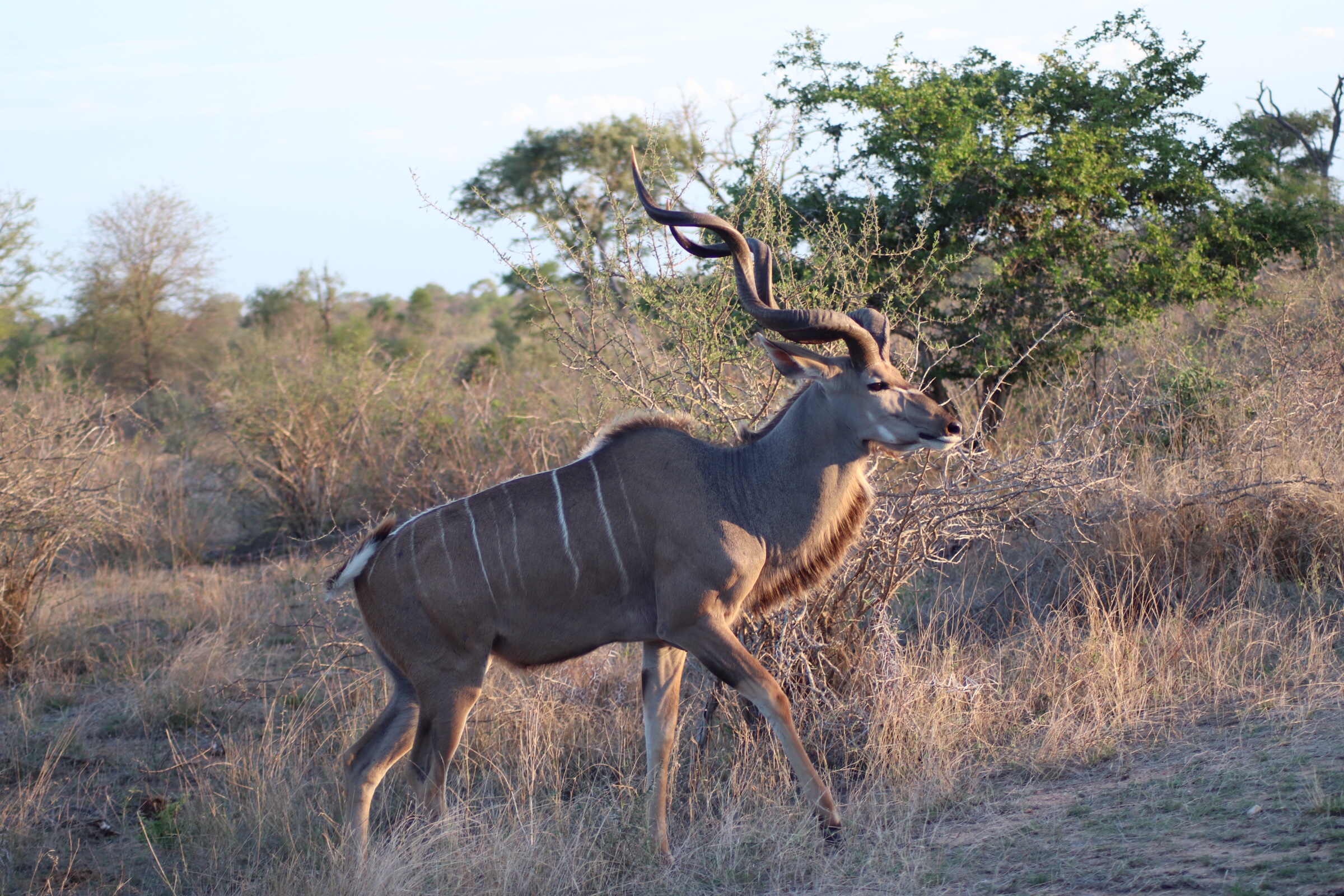
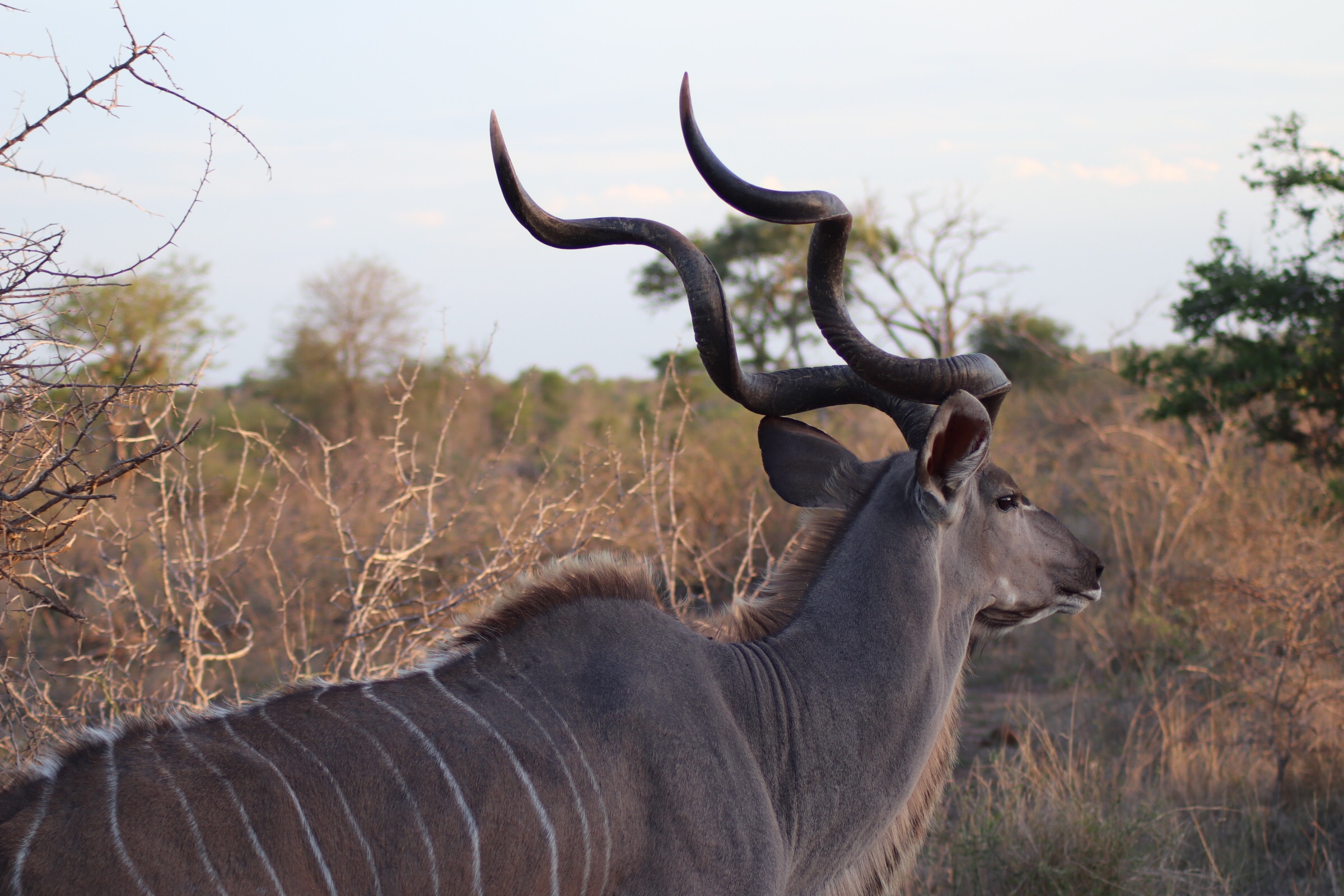
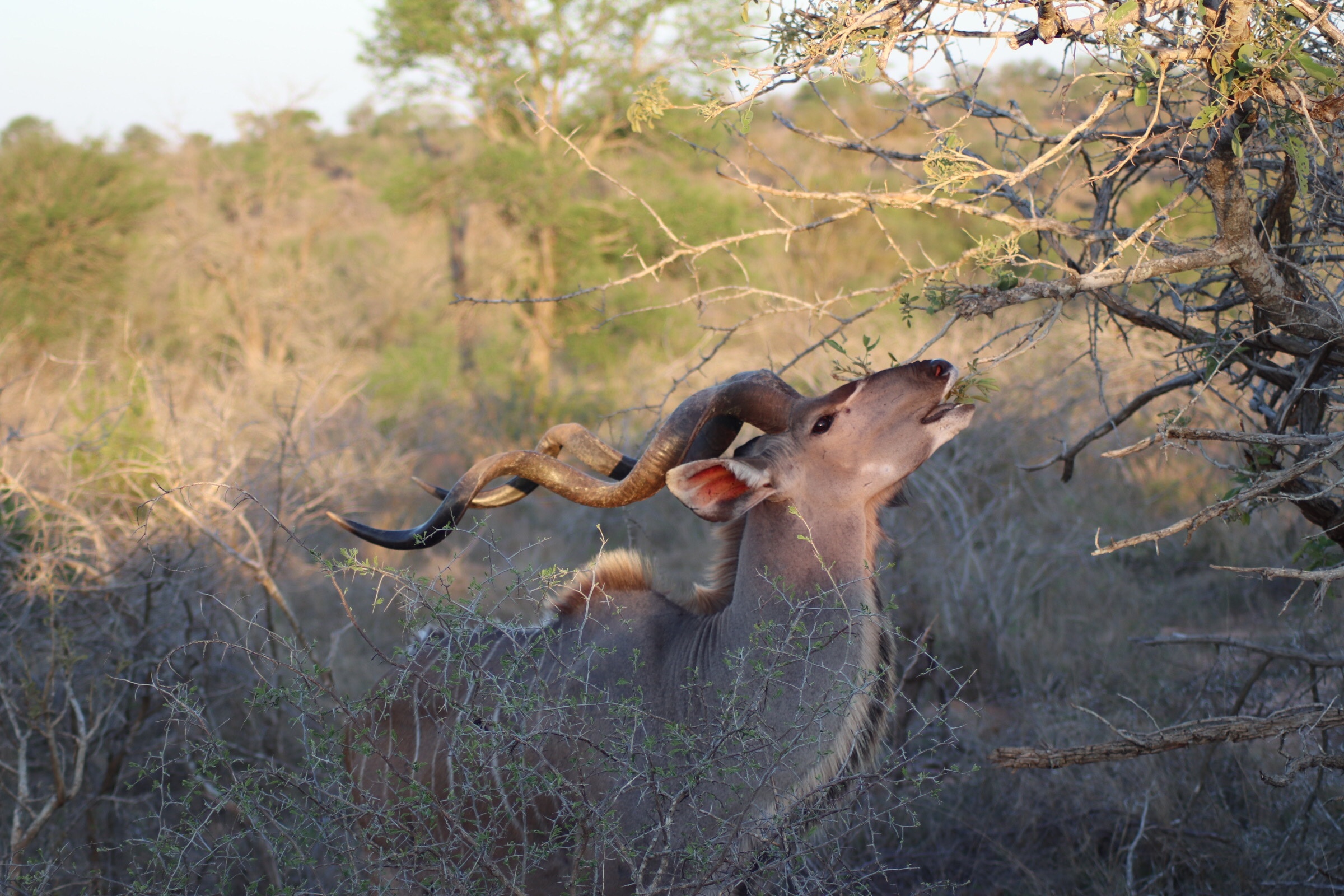
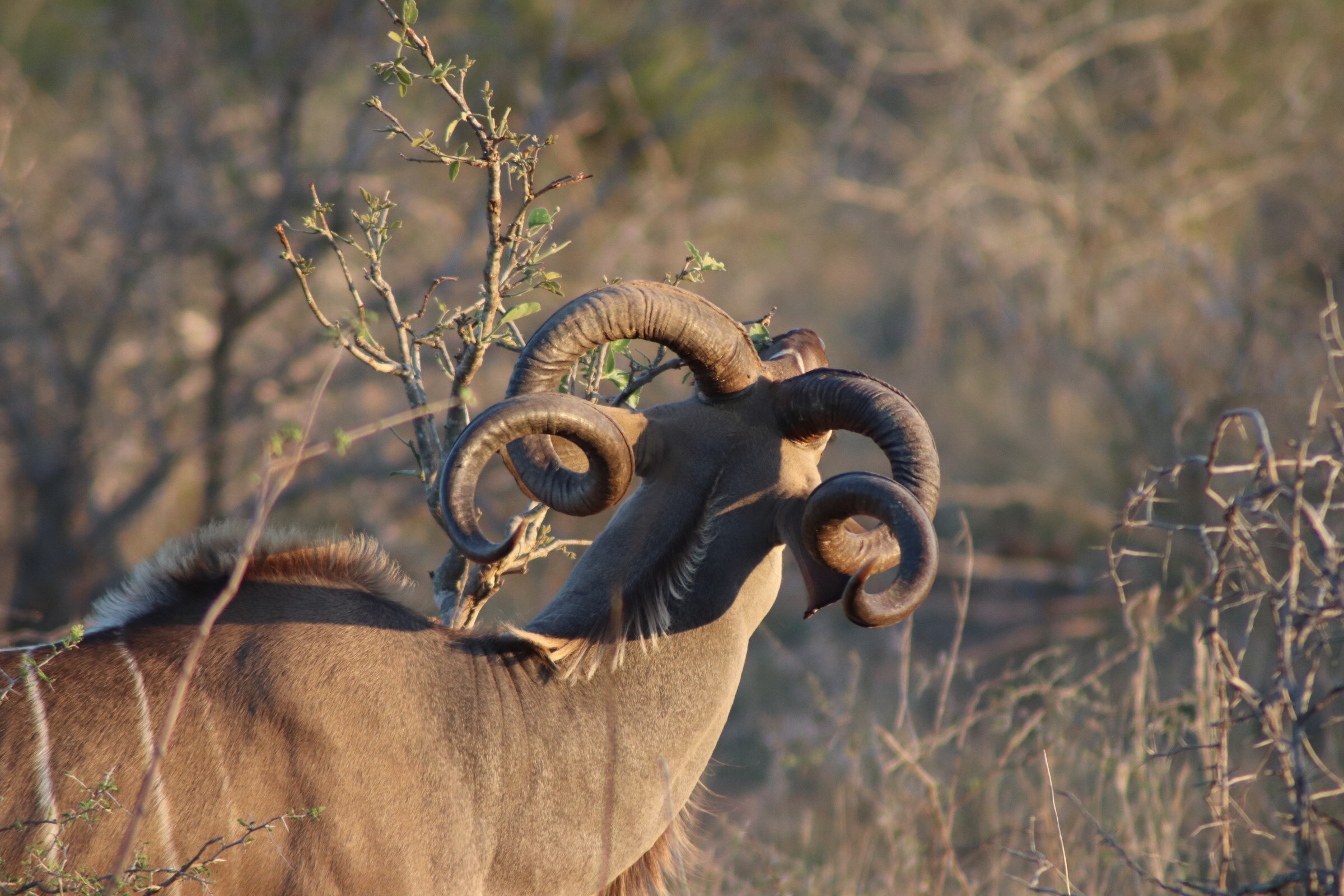
As the sun was setting and we drove to the exit of the park, we came across one last giraffe, and watched her in the evening light. We enjoyed the last magnificent views as we said goodbye to Kruger Park.
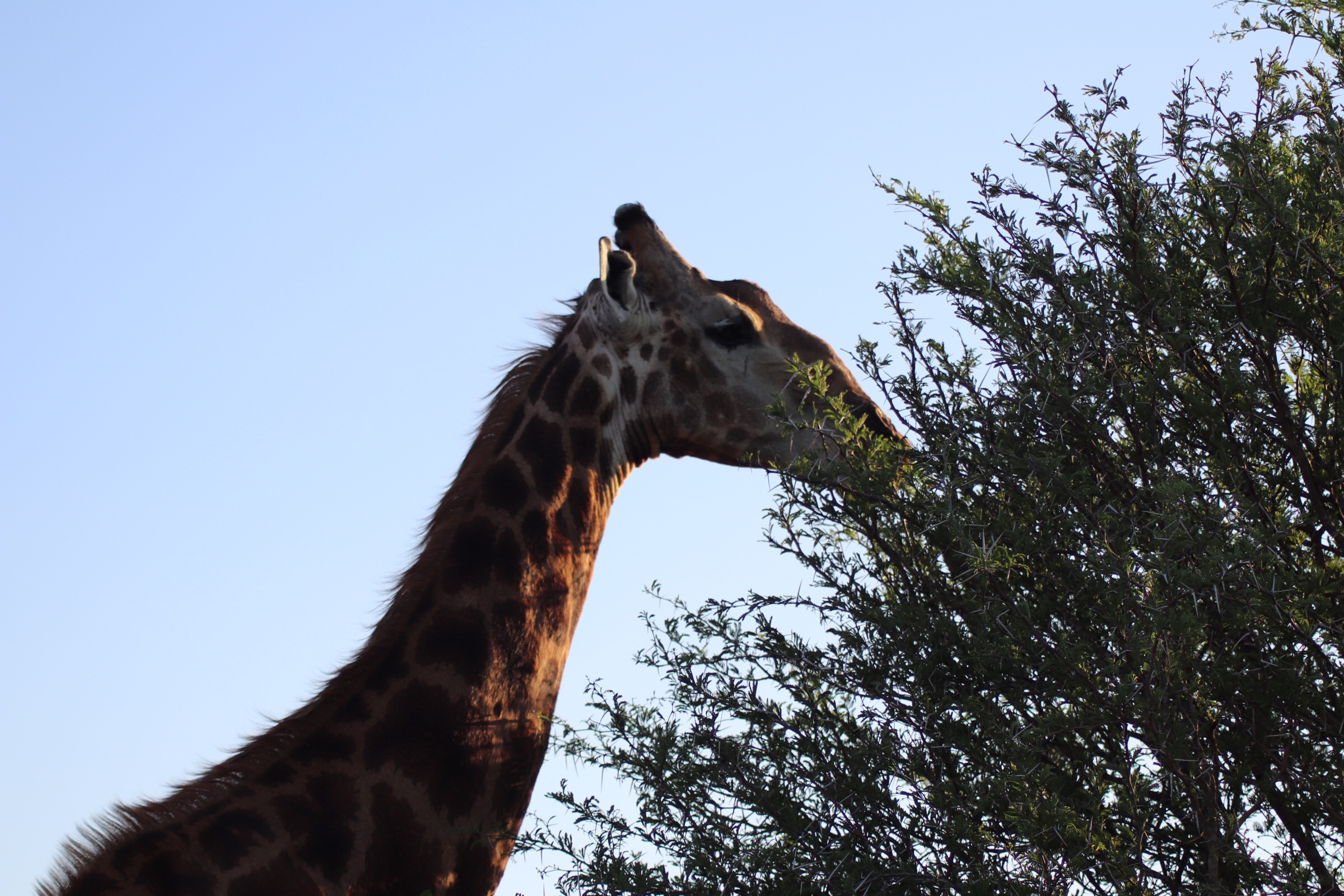
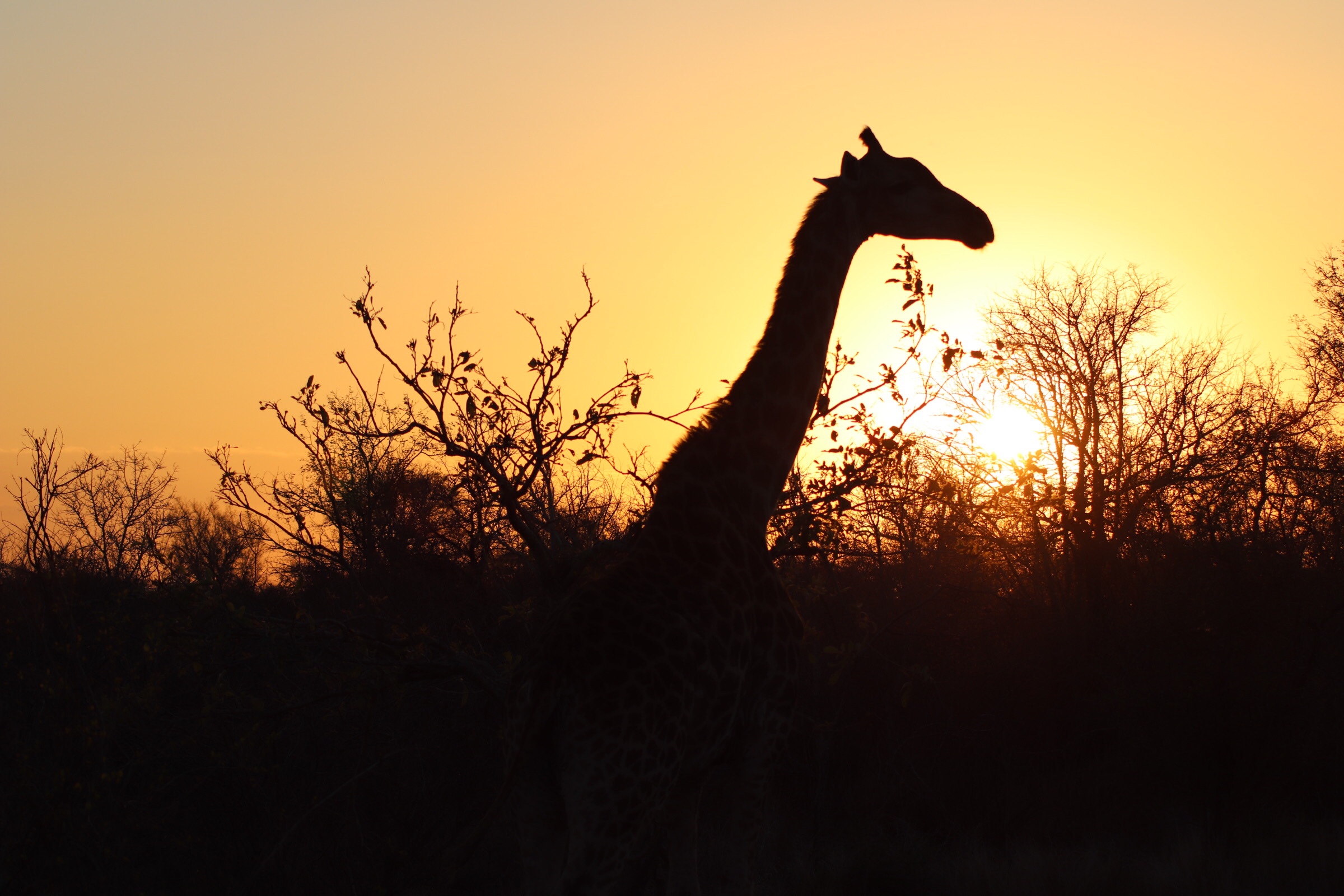
We were all in anticipation on the way back to the lodge, wondering if we would see our lion again. Unfortunately as we drove past, the carcass was gone. Either she had finished it, or dragged it behind the bushes just next to her and out of our view, or a pack of hyenas chased her away and finished it off. We still spent some time searching for her in the dusk, all of our eyes peeling through the grass hoping for another glimpse. Maybe she had moved on or she was sitting there looking back at us out of our view. We will never know. Feeling happy that we had such a good last few days, we headed back to the camp. The older French couple we had met and spent the last few days with invited us to share a bottle of wine with them and we sat chatting with them before dinner, hearing more stories of all of their retirement travels they had done and talking about the wildlife we saw. It had been a great 4 days. We had a delicious braai for dinner and headed to bed.
Day 5
Departure day. Another long drive back to Johannesburg, but this time taking the panorama route. Unfortunately, the sky was full of fog and rain so the “panorama” views were not visible or as panoramic as we might have hoped. We did make one stop at at waterfall called Lisbon Falls and got somewhat of a nice view despite the weather.
We arrived in Joburg a few hours later and met up with a friend whose parents had kindly agreed to let us stay at their house for the night. We spent the evening with him and his family and enjoyed a delicious home cooked meal. The next day we spent time just relaxing and getting ready for our next leg of the journey (and Fred got his second travel haircut) before heading to the airport late afternoon.
And so ends our time in Africa. What a great last month it has been with so many different experiences that we will remember for a lifetime. One month of traveling left. Flying to Abu Dhabi for a quick two day layover en route to Thailand where we will start our next adventures in Southeast Asia.
 Traveling Teufels